
Last updated September 20, 2026
Free on-site gate assessment - hinges, posts, and your LiftMaster or Nice gate operator checked before anything is quoted
The assessment is free and the quote is the invoice.
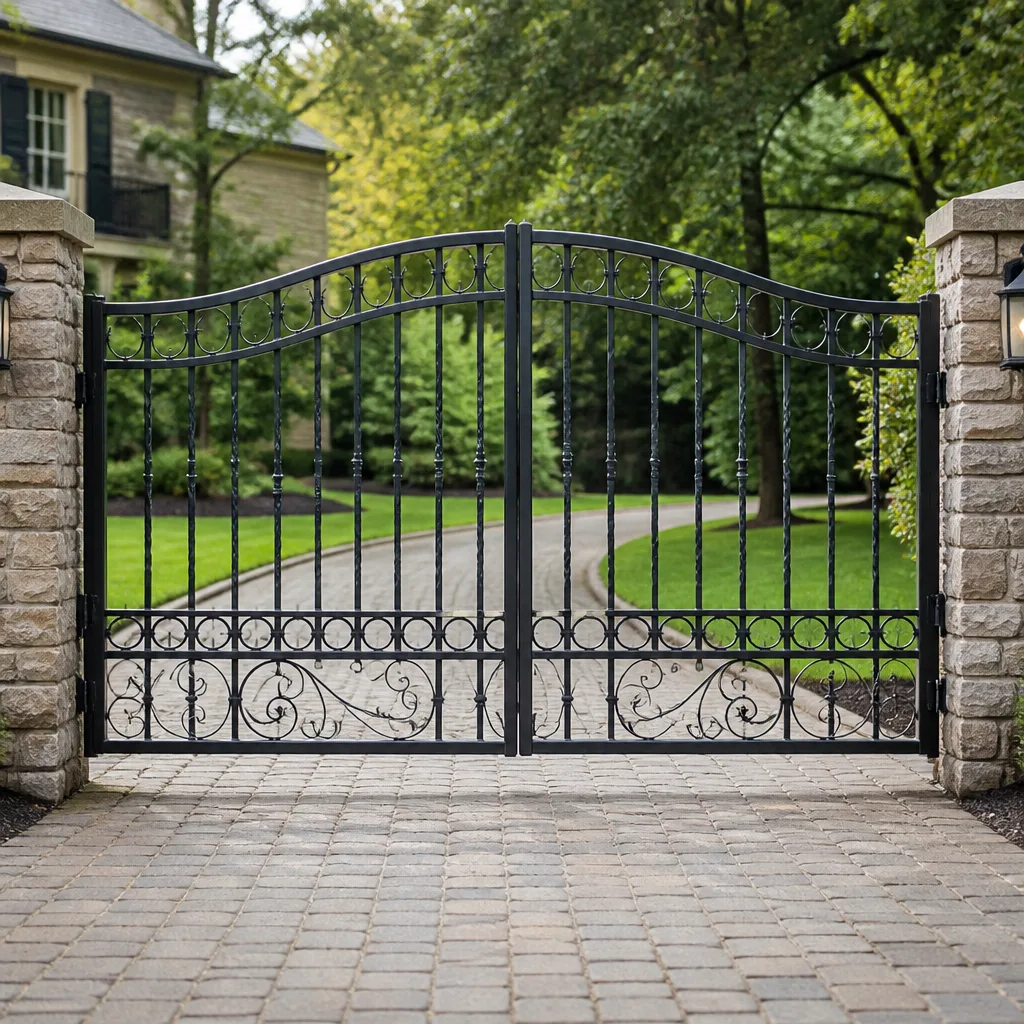
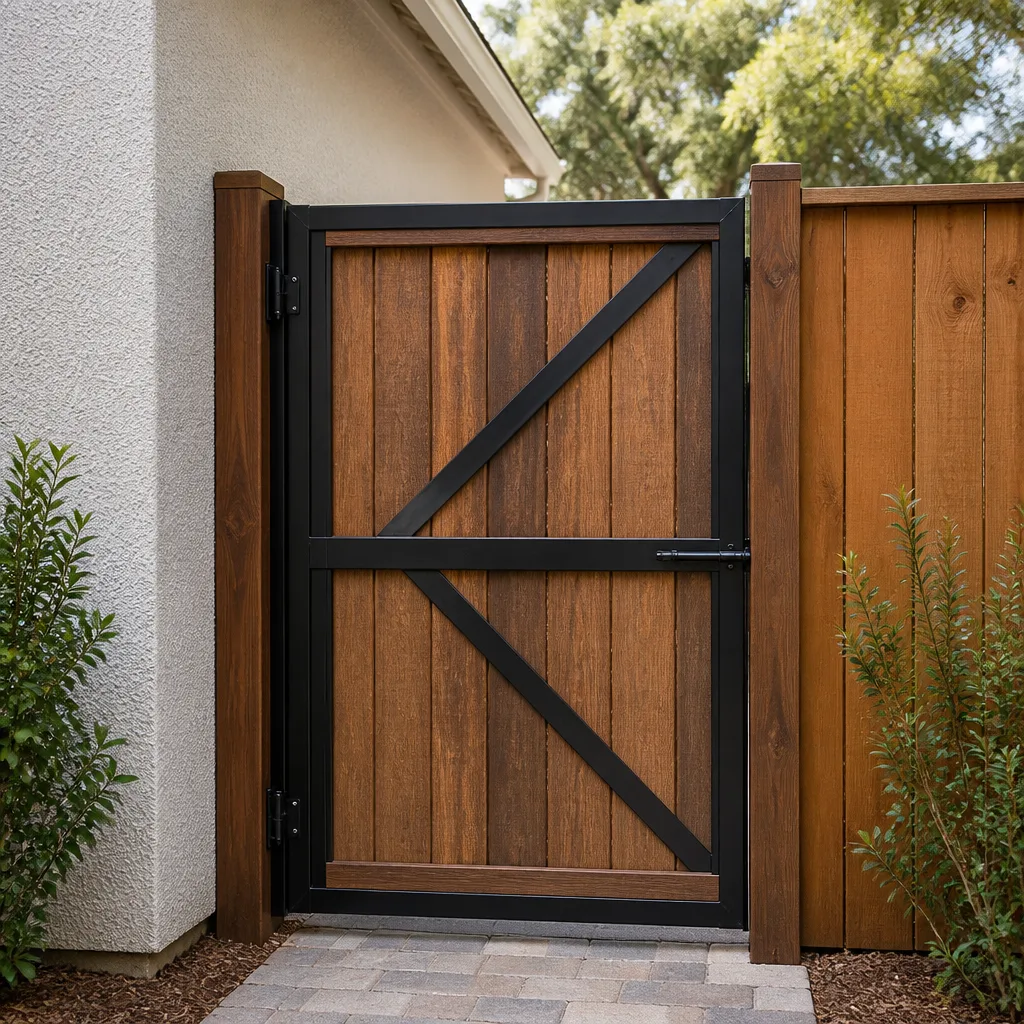
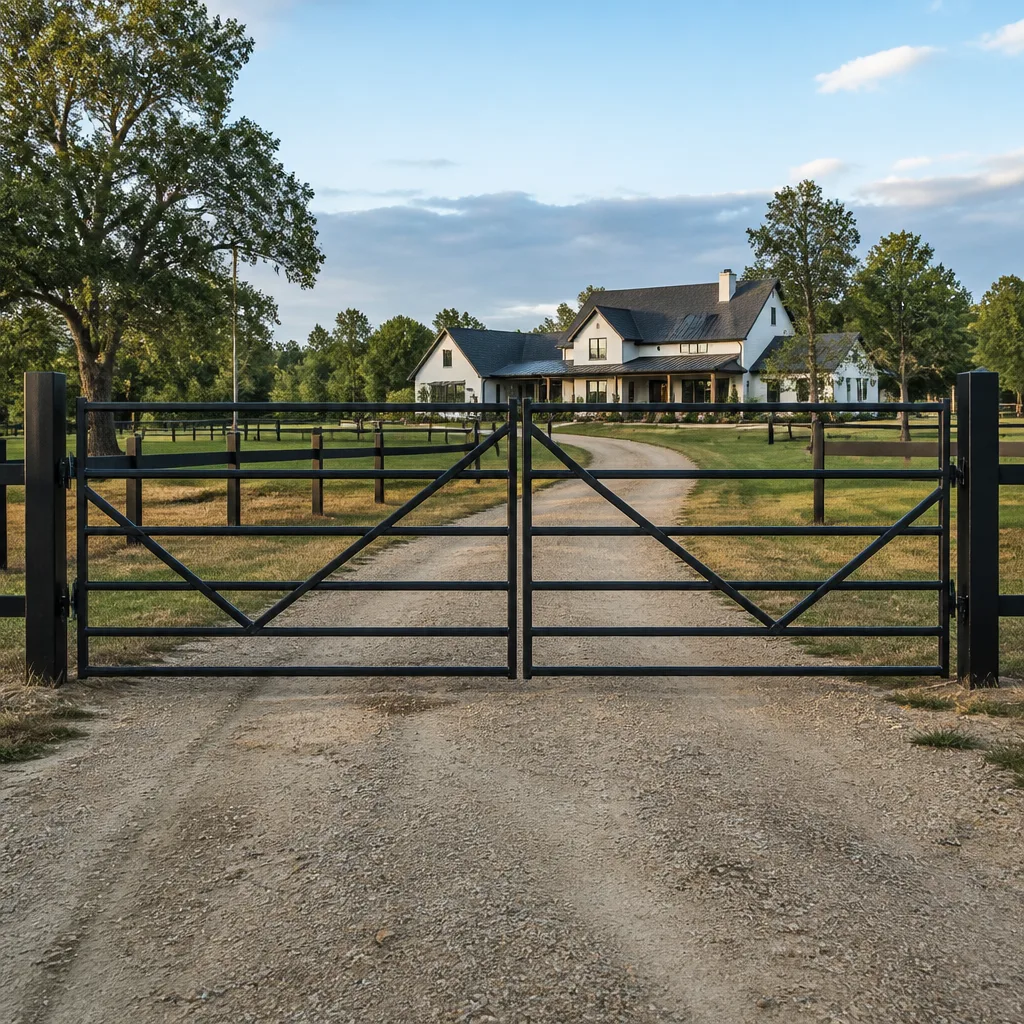
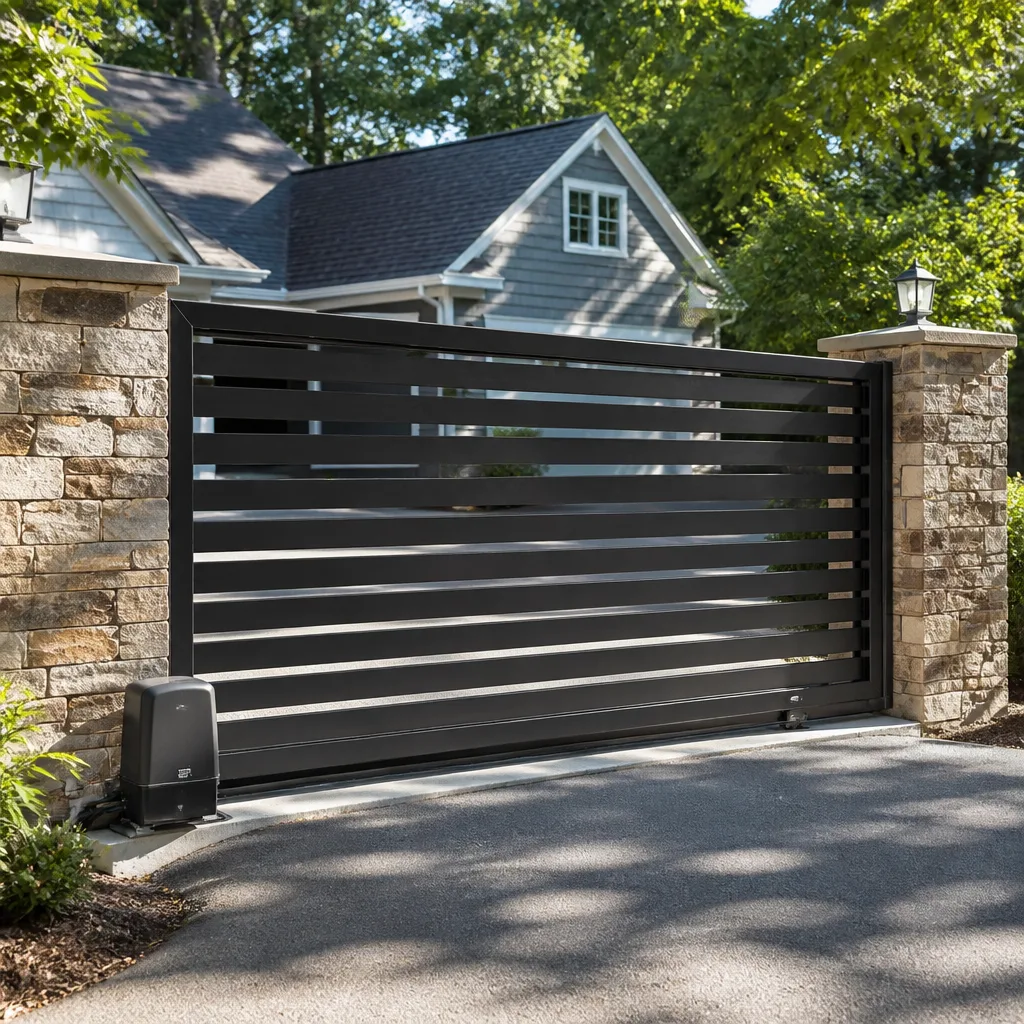
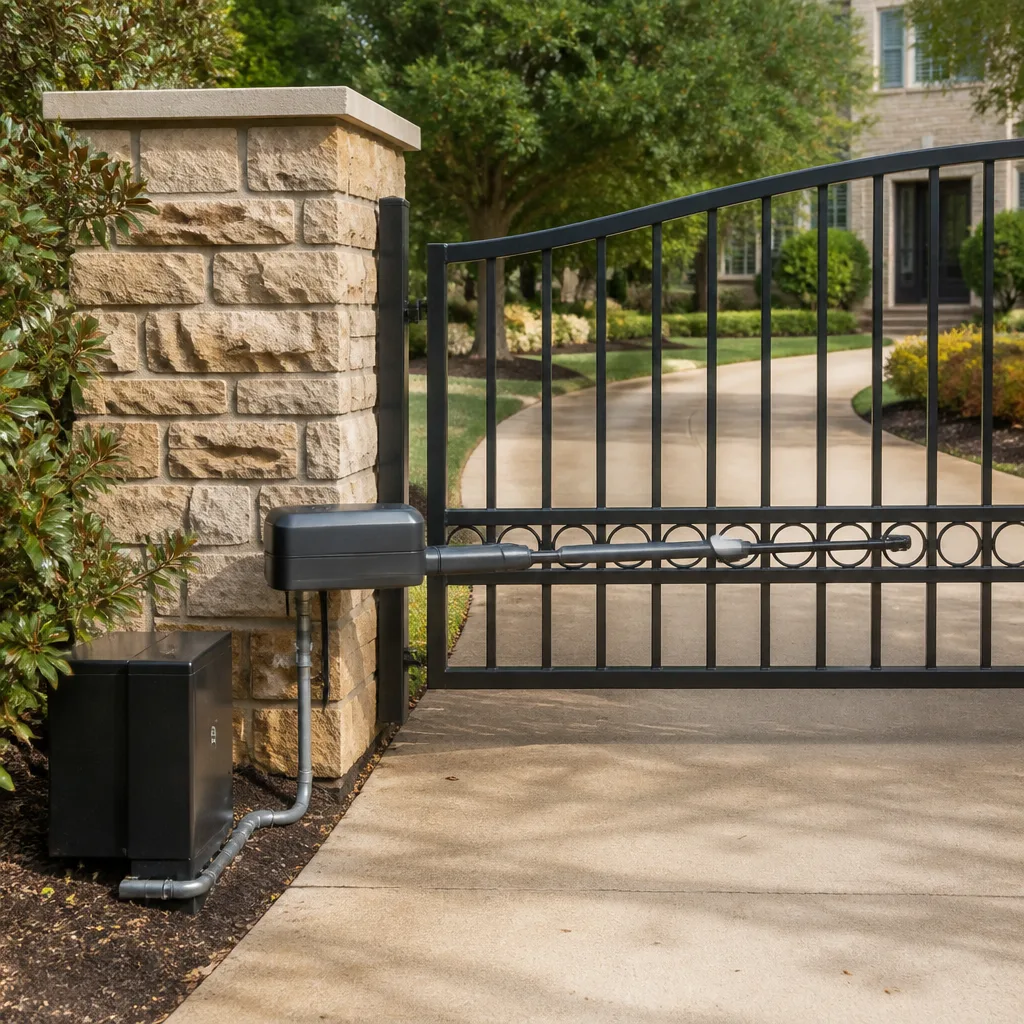
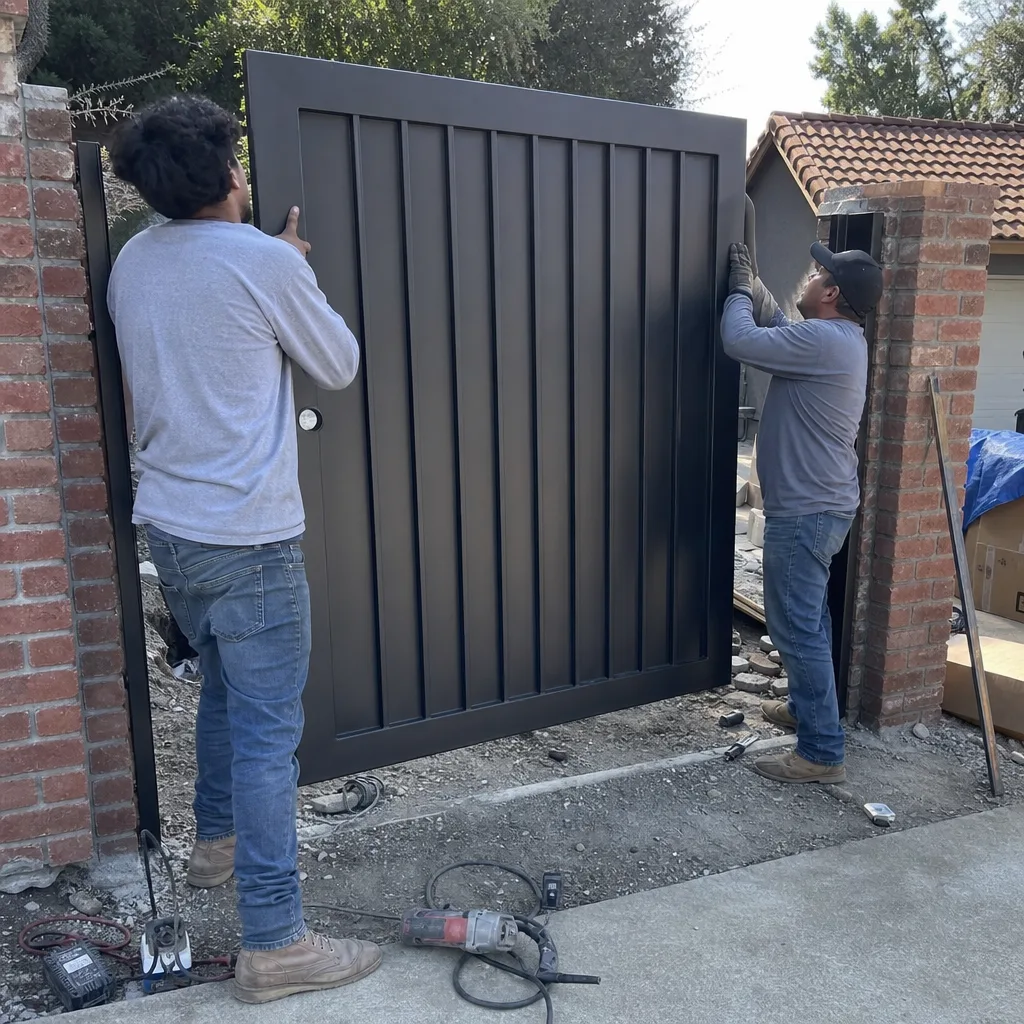
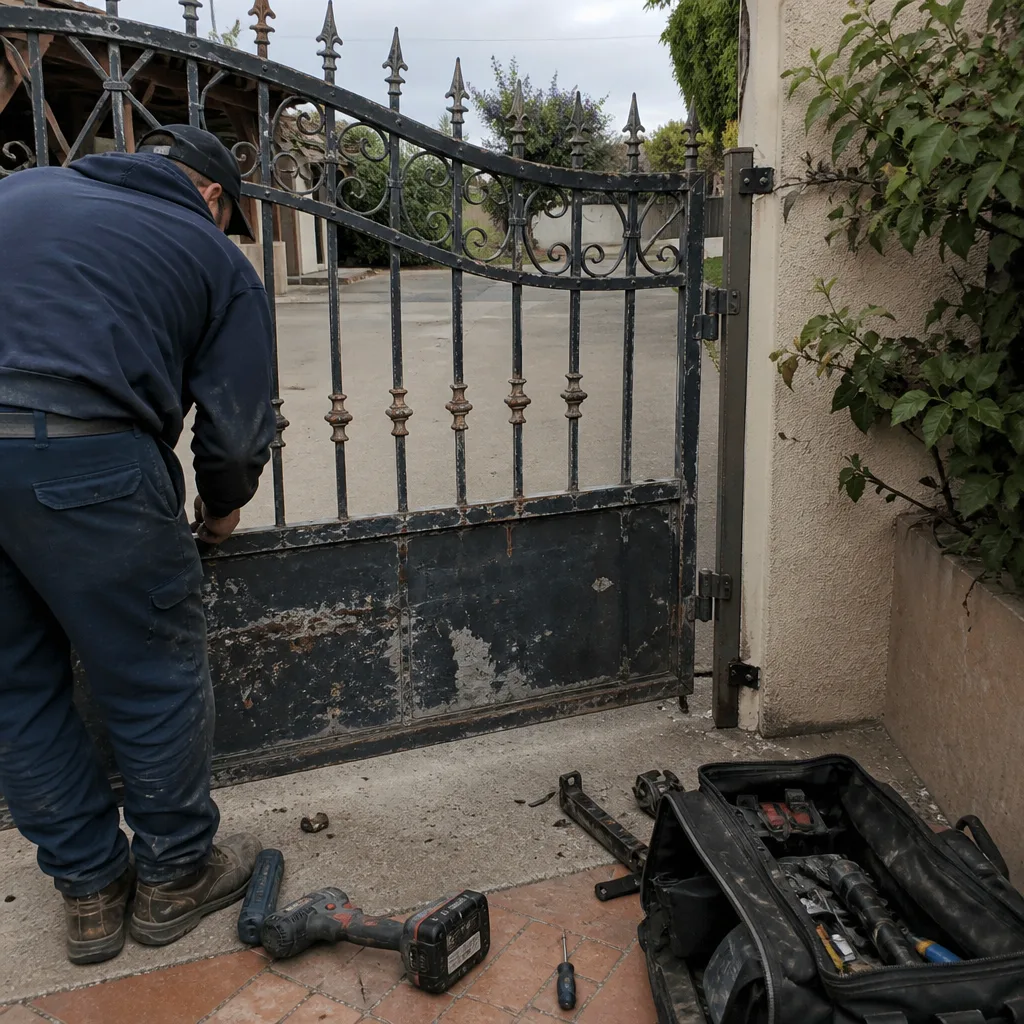 Before
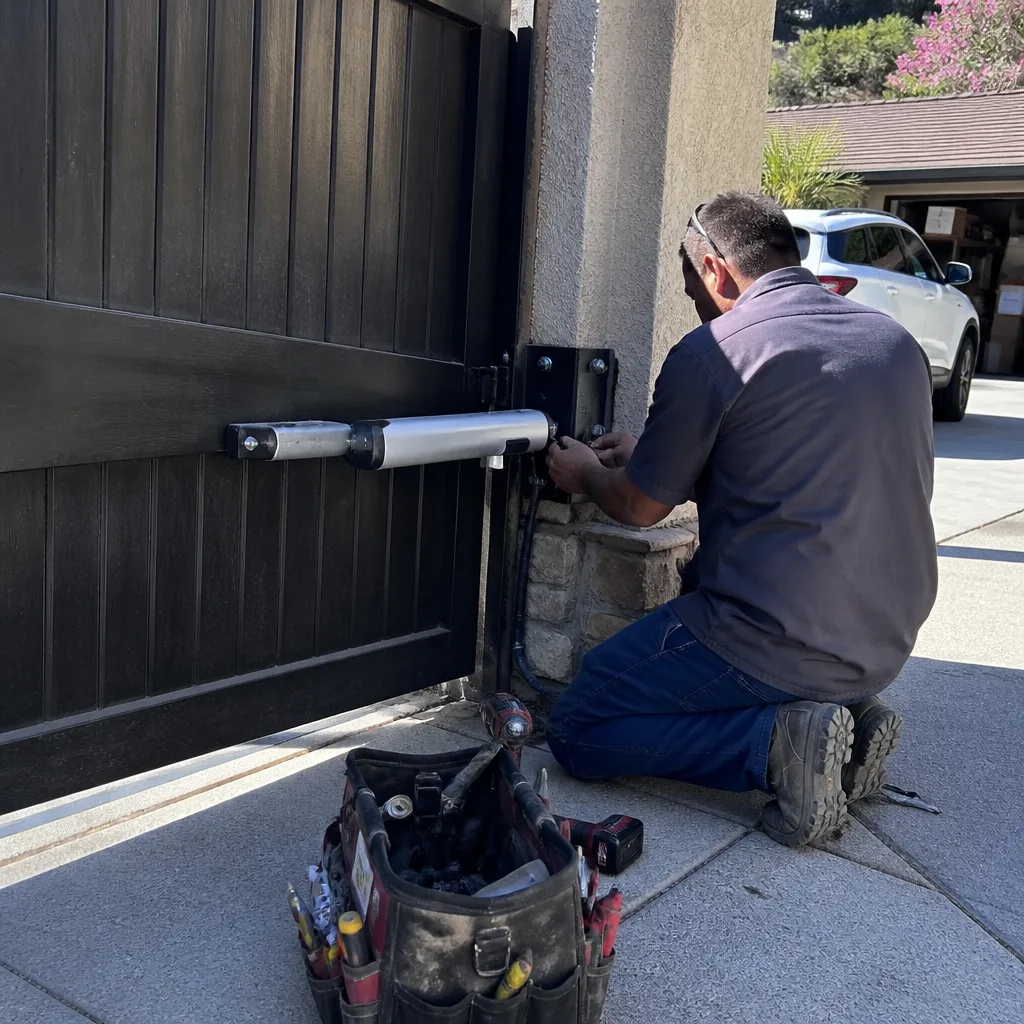 After
After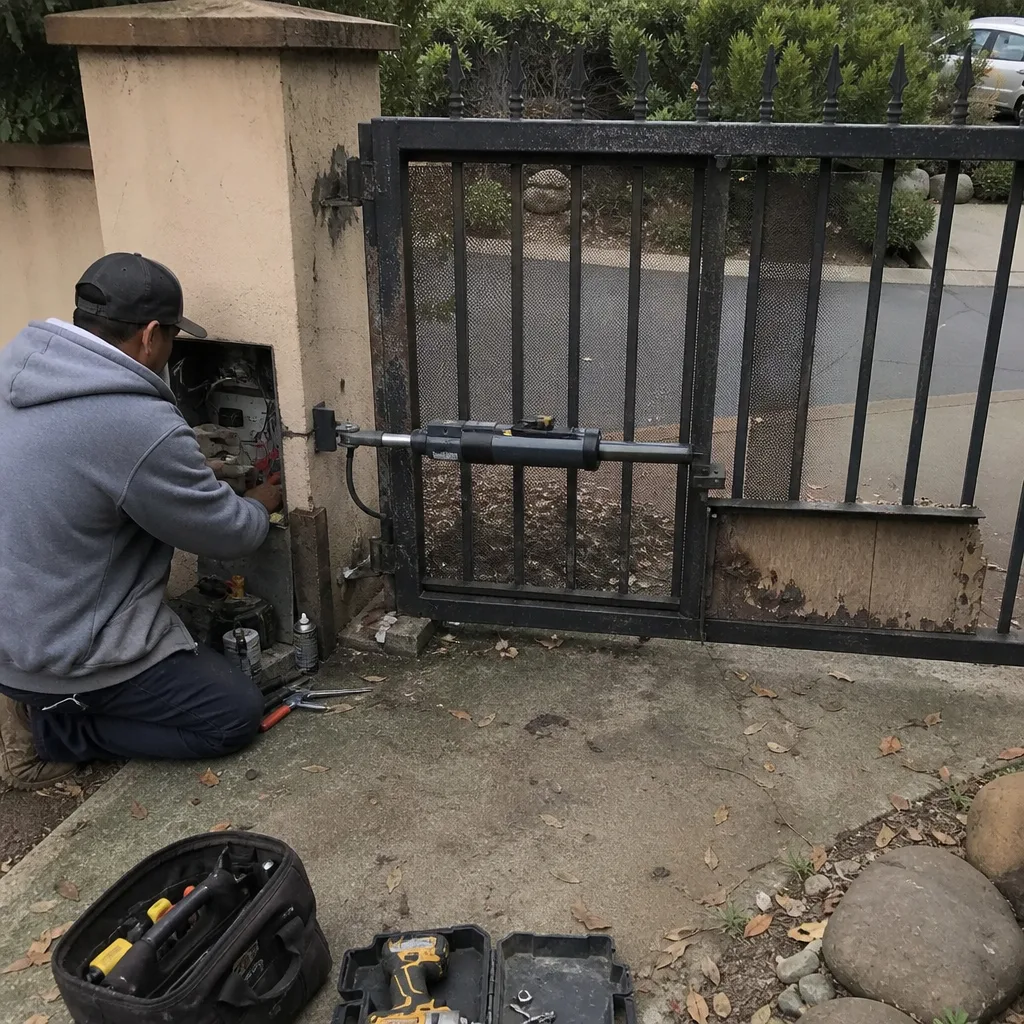 Before
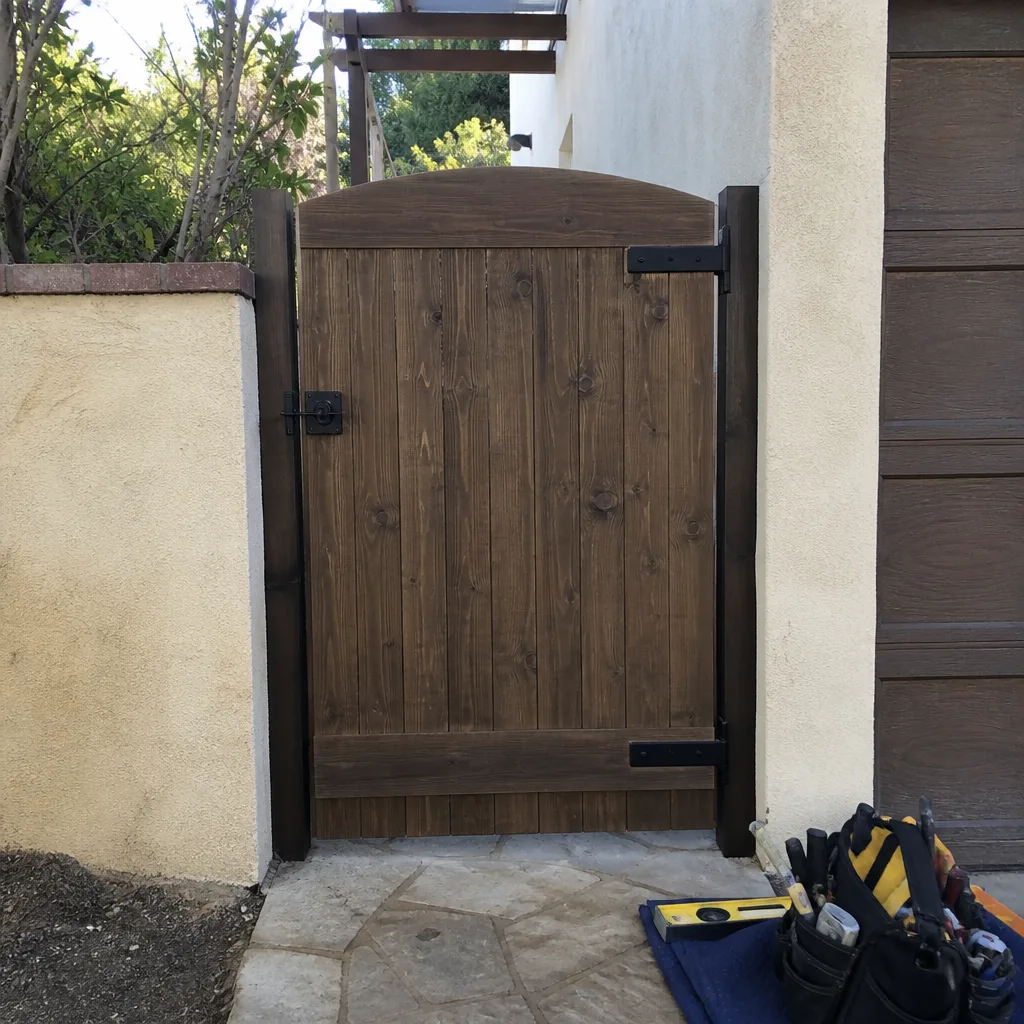 After
After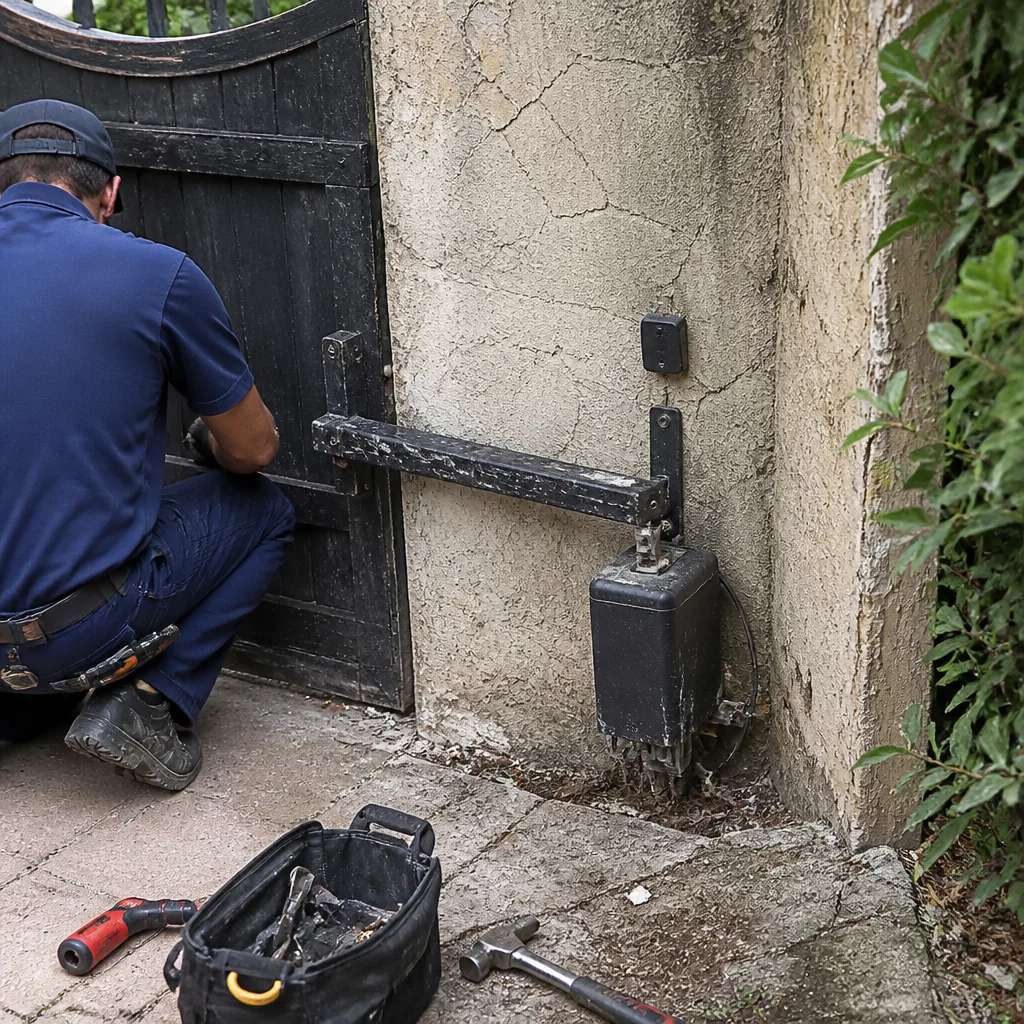 Before
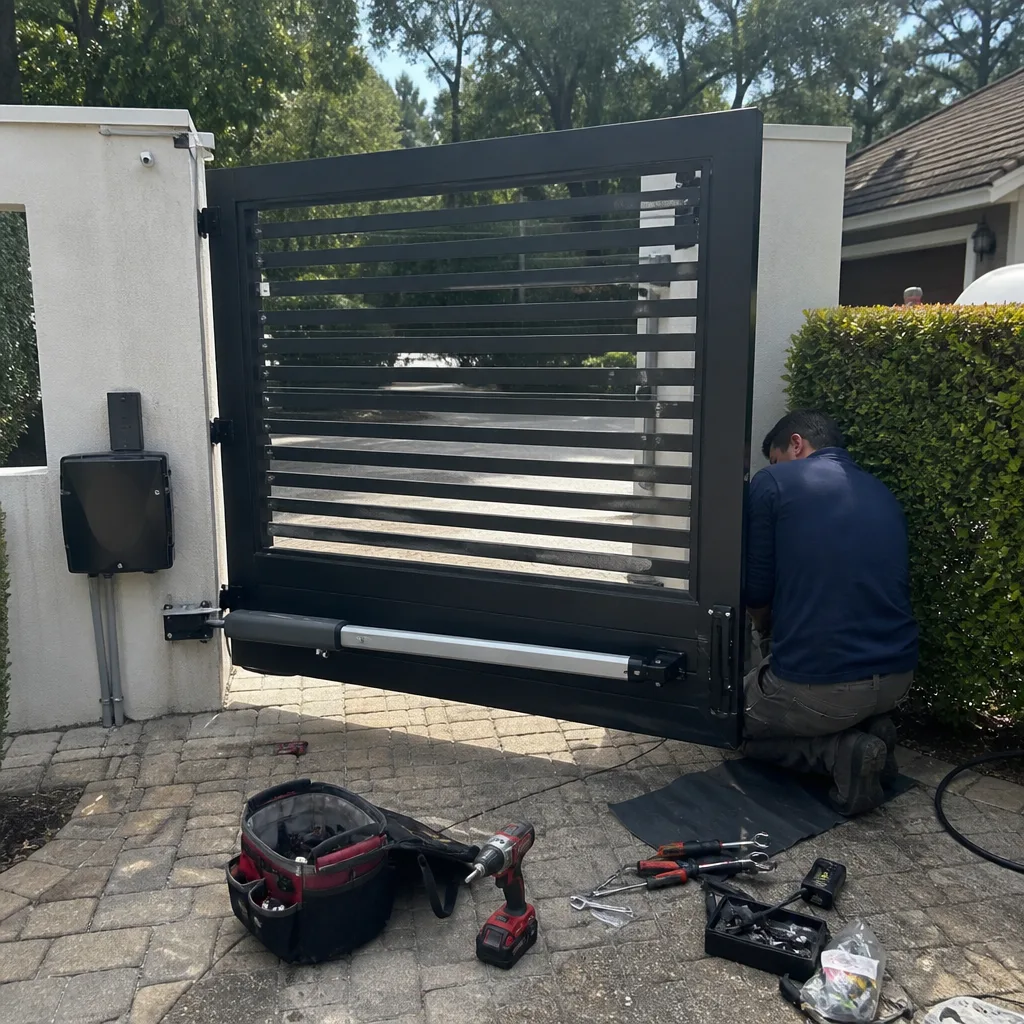 After
AfterGate Repair Permits, Codes & Inspections in CA: What You Need to Know
Here’s the counterintuitive reality of gate work in California: a new gate operator, the motorized arm that swings or slides a residential gate, can legally be installed without a permit in most cities. But run a new 20-amp dedicated circuit to power that motor and you’ve just triggered an electrical permit requirement that most Agoura Hills homeowners never see coming. This guide-along with our Gate Repair Warning Signs: A Agoura Hills Homeowner’s Reference Guide-walks through the three layers that govern gate repair in California: the state building code, the UL 325 safety standard, and local jurisdictional quirks that differ between Los Angeles County and the City of Agoura Hills.
Quick Answer
Most residential gate repairs in California don’t require a permit. Replacing a motor, a control board, hinges, or a photo-eye is routine maintenance. What does require a permit is structural work: modifying gate posts, pouring new footings, moving a gate’s physical position, or running new electrical circuits. The dividing line is whether the physical structure or the electrical supply changes, not whether the automation equipment gets swapped.
Table of Contents
- The California Building Code Threshold: Repair vs. Structural Alteration
- UL 325 Entrapment Protection: When It Applies and Who Enforces It
- Los Angeles County vs. City of Agoura Hills: Which Rules Apply
- Documenting Permitted Work So the Record Stays With the Property
- The HOA Layer: Agoura Hills CC&Rs and Gate Modifications
- What Gate Permits and Inspections Actually Cost in California
- Safety Devices Required on Every Automated Gate in CA
- Common Mistakes to Avoid
- When to Call a Professional
- Frequently Asked Questions
- The Bottom Line
BeforeAfterThe California Building Code Threshold: Repair vs. Structural Alteration
The California Building Code (CBC) uses one word to separate routine repair from permitted work: structural. If the work touches the gate’s physical structure, the posts, the footings, the concrete, or the electrical supply, it crosses into permit territory. If the work only touches the mechanical parts bolted to that structure, it stays firmly in repair territory.
Here’s the practical breakdown for a typical driveway gate:
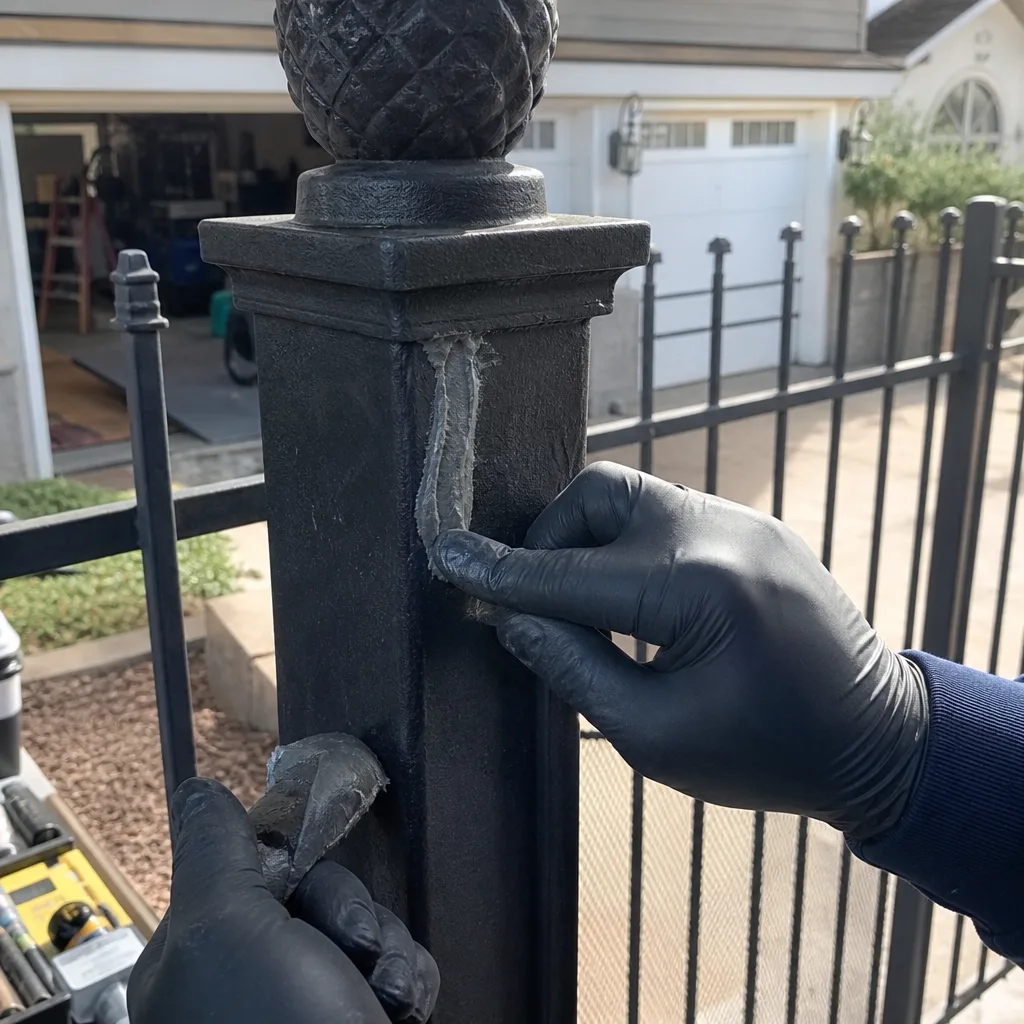
- No permit required: Replacing a gate motor, control board, remote receiver, photo-eye, limit switch, capacitor, or battery backup. Adjusting travel limits or force settings. Replacing hinges, rollers, or wheels that bolt to existing hardware. Welding a cracked weld on the gate frame itself, as long as the posts and footings stay untouched.
- Permit typically required: Replacing or relocating a gate post. Pouring a new footing or enlarging an existing one. Changing the gate’s swing direction or slide path. Adding a cantilever to a slide gate that wasn’t engineered for one. Running new electrical conduit or a new circuit from the panel.
- Gray zone (check with the jurisdiction): Replacing a post that’s rusted through at the base but keeping the same footprint. Widening a driveway opening. Adding a pedestrian gate next to a vehicle gate where none existed.
In Agoura Hills, the threshold matters because much of the housing stock dates from the 1970s and 1980s. Older gates in neighborhoods like Old Agoura and Liberty Canyon often sit on footings that were poured before current wind-load standards existed. A contractor who replaces a post without a permit in that situation takes on liability that a permitted inspection would catch. We’ve seen post replacements in the Las Virgenes area where the original concrete crumbled on excavation and the new footing had to be engineered, not just repoured. That’s a permit situation, not a repair.
The California Building Code defines what triggers a permit primarily in CBC Section 105.2, but the wording is broad enough that each city interprets it. Los Angeles County follows the CBC with amendments. The City of Agoura Hills, which incorporated in 1982, enforces the CBC through its own building department and adds local amendments for hillside grading and fire zone setbacks. For gate work specifically, the structural test is the one that matters most.
UL 325 Entrapment Protection: When It Applies and Who Enforces It
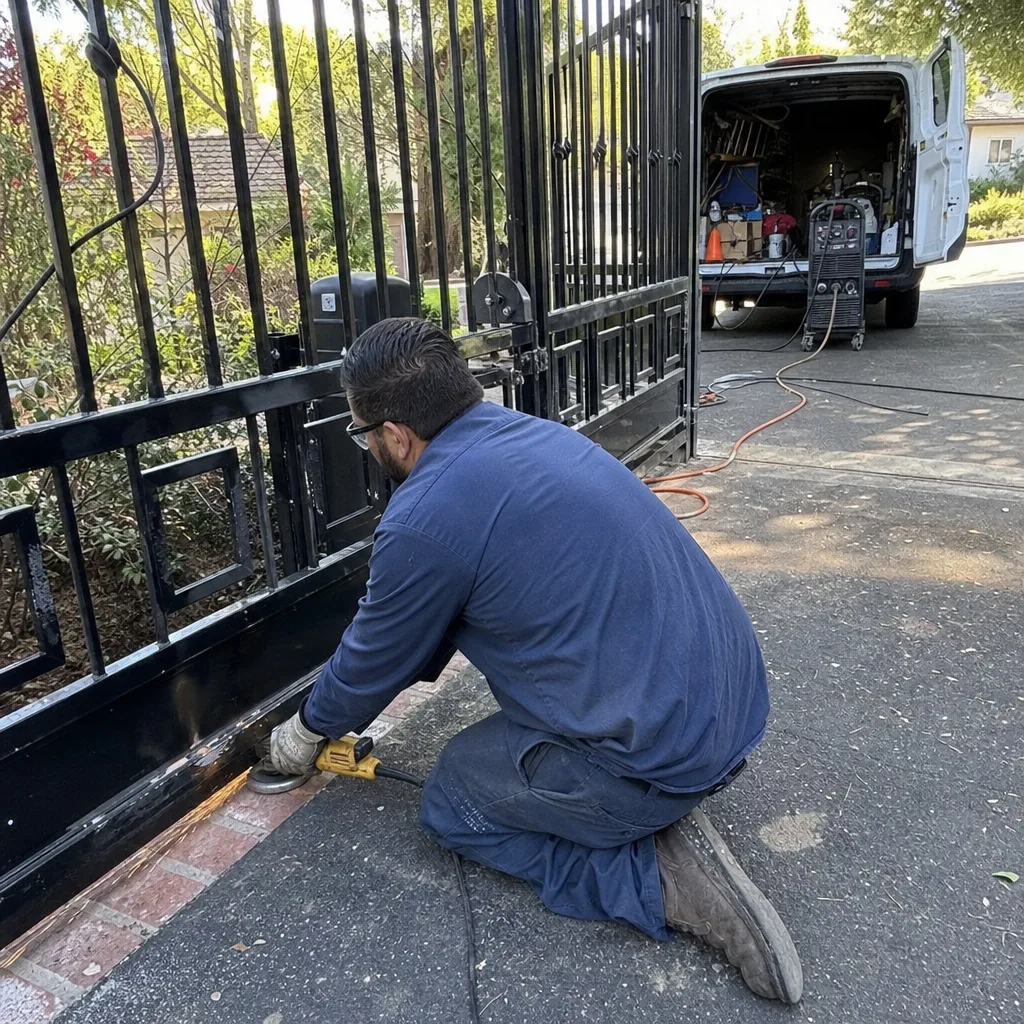
UL 325 is a safety standard, not a building code, but it functions like code in one specific way: it applies the moment a gate operator is installed, replaced, or serviced, regardless of whether a permit was pulled. The standard governs entrapment protection for automated gates and applies to every brand you’re likely to find on an Agoura Hills driveway: FAAC, BFT, Linear, Viking, and the rest.
What UL 325 requires on a residential gate:
- Two independent entrapment protection devices on every automated gate. One is always the inherent system: the operator’s internal force sensor or current monitor that reverses the gate when it meets resistance. The second is an external device, almost always a photo-eye (the infrared beam that stops and reverses the gate if anything crosses the path) or a contact edge (a pressure-sensitive strip mounted on the gate’s leading edge).
- Monitored devices on gates installed after January 12, 2016. A monitored photo-eye sends a continuous signal to the control board. If the beam is blocked or the device fails, the gate won’t move. Non-monitored devices only register when they’re actively interrupted, which means a dead photo-eye can go unnoticed until someone tests it.
- Warning signage required on both sides of the gate, visible from the approach.
What happens when an installer skips UL 325 compliance is not theoretical. A gate that reverses on force alone, with no photo-eye, can pin a child, a pet, or an adult against a post. The gate motor doesn’t know the difference between a trash can and a person. In residential settings, the common failure we see is a photo-eye that was never installed because the original gate predates the 2016 monitoring requirement. The gate works fine until it doesn’t, and the homeowner has no idea their gate is operating below current safety standards.
UL 325 enforcement is indirect. Building departments inspect for it when a permit is pulled. Beyond that, the standard lives in product liability law: if a gate injures someone and the operator wasn’t installed to UL 325, the installer’s insurance carries the exposure, and if the installer is gone, the homeowner’s policy may be the next stop. This is one area where Gate Repair in Agoura Hills work should always include a safety-device check, whether or not a permit is involved.
Los Angeles County vs. City of Agoura Hills: Which Rules Apply
Agoura Hills is an incorporated city, which means it runs its own building department and enforces the CBC directly. It does not fall under Los Angeles County’s building jurisdiction for permit purposes, even though the county surrounds it. That distinction matters because county and city interpretations of the repair-versus-structural threshold are not identical.
Three specific differences that affect gate work in the Agoura Hills area:
- Hillside grading review. Agoura Hills sits against the Santa Monica Mountains, and many properties in Morrison Ranch, Chumash, and the neighborhoods south of the 101 fall under hillside grading ordinances. Any gate work that involves excavation, even for a post footing, can trigger a grading review from the city that would not apply in a flatland county jurisdiction. In practice, post replacements on sloped driveways in Agoura Hills often take an extra week for plan review.
- Setback enforcement. The city enforces a 20-foot minimum from the property line to a vehicle gate where feasible, which matters because many Agoura Hills driveways are short. If a gate needs to be relocated, even by a few feet, the city’s setback rule can require a variance. The county applies different setback standards in unincorporated areas like Cornell and Malibou Lake.
- Fire district interaction. Agoura Hills depends on the Ventura County Fire Department for fire code enforcement, even though the city is in Los Angeles County. Automated gates in the Wildland-Urban Interface are subject to fire access requirements, including a Knox key switch or siren-activated opening system on gates that serve as the only access point. The city building department checks for fire compliance on new gate installations, and the fire district inspects separately.
For a homeowner in the Las Virgenes area, the practical takeaway is this: ask the city, not the county, about any gate work that involves structure, excavation, or electrical. And if the property backs up to open space or sits on a hillside, expect an extra review layer that flatland cities don’t have. Our Gate Installation in Agoura Hills work routinely accounts for hillside grading and fire-access checks that never come up in the Valley.
Documenting Permitted Work So the Record Stays With the Property
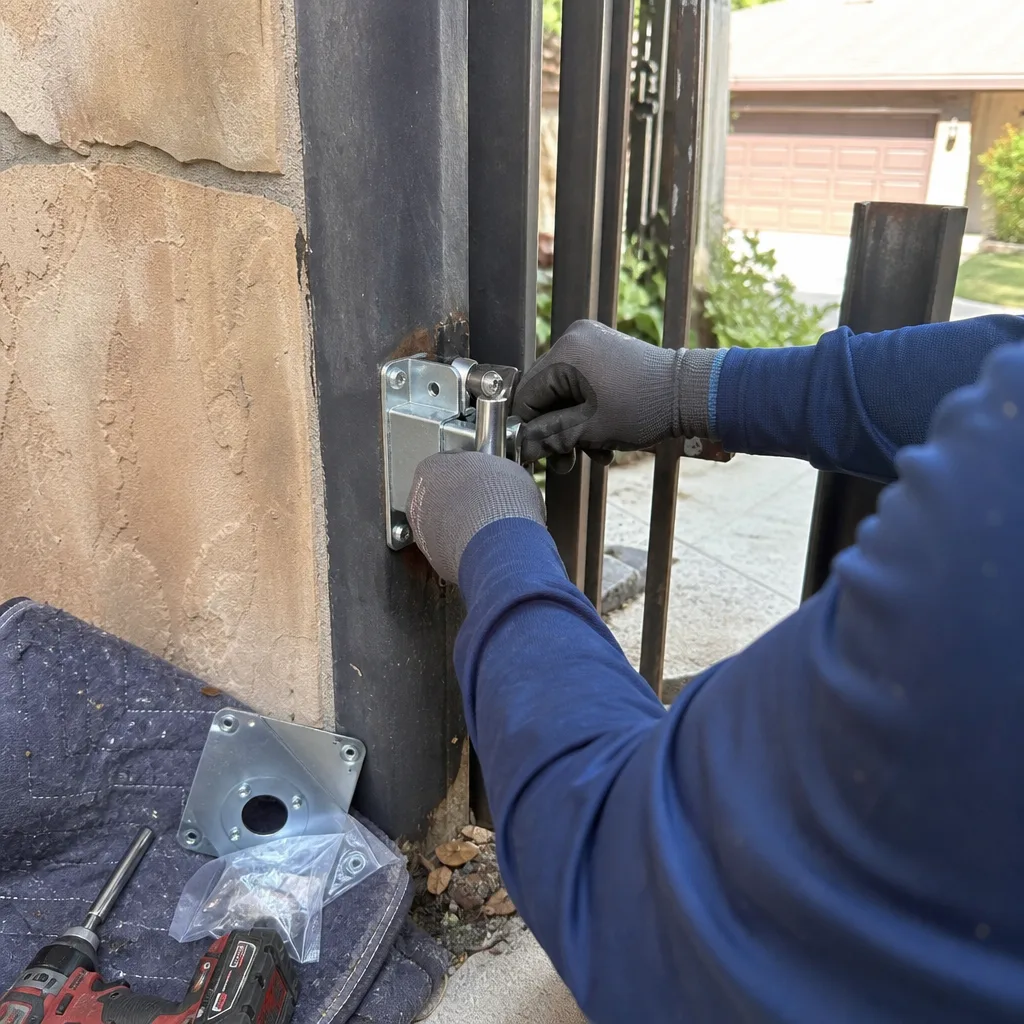
A permit is only useful if the record survives the contractor relationship. In California, building records live with the jurisdiction that issued the permit, not with the property owner. The City of Agoura Hills keeps building files at City Hall, and the record is public. But the enforcement history, the inspector’s notes, and the final sign-off only exist if the contractor bothered to close the permit.
Here’s the failure pattern we’ve observed: a gate contractor pulls a permit for post replacement, does the work, passes the rough inspection, and then never calls for the final. The permit sits open. Years later, the homeowner sells the property, and the open permit shows up in the title search. The title company flags it, the escrow stalls, and the homeowner now has to track down a contractor who may be out of business. Fixing an open permit costs time and money that a simple final inspection would have avoided.
How to document gate work so the record stays clean:
- Get the permit number in writing before work starts. Confirm with the building department that the permit was actually issued, not just applied for.
- Require a final inspection and a signed inspection card or digital record. The contractor’s word that the inspection passed is not documentation.
- Ask for the inspection record to be attached to the property file. In Agoura Hills, the building department can note the permit as finaled. Confirm it yourself with a quick call.
- Keep a photo log of the work. This is where our documentation habit applies: every Vance Gate Repair job leaves a photo record of what was found, what was set, and what was installed. For permitted work, those photos are the evidence that the installed condition matches the plan.
For non-permitted repairs, documentation still matters. A written record showing that a gate motor replacement did not touch the structure or electrical protects the homeowner if a future inspector questions whether past work should have been permitted. “The limit switch was set 12 degrees past travel; we reset it and photographed the new position” is the kind of note that settles questions before they become disputes.
The HOA Layer: Agoura Hills CC&Rs and Gate Modifications
HOA covenants sit above city code in one specific sense: they can be more restrictive, never less. A gate modification that the City of Agoura Hills permits without blinking can be blocked entirely by a CC&R governing the visible appearance of driveway improvements.
In Agoura Hills, several neighborhoods operate under HOAs with architectural review committees. Morrison Ranch Estates, parts of Old Agoura, and the gated enclaves off Kanan Road all have recorded covenants. The common restrictions that affect gate work:
- Material and color requirements. Some CC&Rs specify wrought iron, wood, or specific paint colors for any gate visible from the street. Replacing a gate with a different material can require architectural review even if the city doesn’t care.
- Height limits. HOA height restrictions often run stricter than city code. A five-foot pedestrian gate might pass city review but violate a CC&R capping visible structures at four feet.
- Automation visibility. Motor placement and operator arm appearance can be regulated. Some Agoura Hills HOAs require operators to be painted to match the fence or mounted behind the gate rather than on approach.
- Approval timelines. Architectural review committees typically take 30 to 60 days. If a gate failure forces an emergency repair that changes the gate’s appearance, the HOA may require retroactive approval, and some levy fines for unapproved modifications even when the work was urgent.
What to check before any visible gate modification: pull the CC&R, read the architectural section, and submit a written request if the work changes anything visible from the street. It costs nothing but time, and it avoids the situation where a permitted, inspected, and properly installed gate gets red-flagged by the HOA six months later.
What Gate Permits and Inspections Actually Cost in California
Permit fees for gate work in California are not expensive. What’s expensive is the engineering and review time that structural gate work can trigger, especially on hillside lots in Agoura Hills.
Typical cost ranges for permitted gate work in the Agoura Hills area:
- Electrical permit for a gate circuit: $80 to $200 depending on the scope. Most gate motor circuits fall under a standard residential electrical permit.
- Building permit for post or footing replacement: $150 to $400 for a standard flat-lot post replacement. Hillside grading review adds $300 to $1,200, depending on whether a soils report is requested.
- Plan review for a new gate structure: $200 to $600. Agoura Hills charges a plan review fee that scales with project valuation.
- Inspection fees: Usually included in the permit fee for the first inspection, with re-inspection fees of $75 to $150 per visit.
- Engineering, if required: $500 to $2,000 for a stamped gate design with wind-load calculations. Required for most new gate installations in hillside zones, occasionally for post replacements on sloped driveways.
The honest framing: a permitted post replacement in a flat Agoura Hills neighborhood like Liberty Canyon might add $500 to $800 in fees and engineering to a $2,500 job. The same work on a hillside lot near the national park boundary could add $2,000 or more. That’s the cost of doing it right, and it’s cheaper than the open-permit title problem or a stop-work order that halts an unrelated remodel.
Safety Devices Required on Every Automated Gate in CA
California doesn’t have a state-specific gate safety law beyond adopting UL 325 through the CBC. But UL 325 compliance is effectively mandatory because any gate operator sold in the U.S. carries UL 325 labeling, and manufacturers void warranties if installation doesn’t meet the standard. Here’s the safety device checklist that should apply to every automated driveway gate in Agoura Hills:
- Inherent entrapment sensor. Built into every modern operator. Monitors motor current or force and reverses on contact. This is the first line of defense, not the last.
- External entrapment device. A monitored photo-eye at the gate’s closing edge, or a contact edge on the leading edge of a swing gate. Two independent means of protection are required, not optional.
- Warning signage. Both sides of the gate, indicating that it’s automated. This is a UL 325 requirement, not a suggestion.
- Manual release. Every operator must allow the gate to be manually opened, typically with a keyed release on the motor. Fire departments require this for emergency access.
- Force setting verification. After installation, the operator’s reverse sensitivity must be tested with a gauge or equivalent method and documented. A gate that reverses too late is an entrapment hazard.
On Gate Motor & Opener in Agoura Hills replacements, we verify every one of these on every visit, whether or not the job pulled a permit. It’s a documented step in our process, and the photo log shows the test results. The gate motor work itself is not dangerous to a homeowner to observe, but the entrapment risk on a misadjusted gate is real, and proper setup belongs with someone who does it daily.
Common Mistakes to Avoid
- Assuming all gate work is permit-exempt. The motor is exempt; the circuit powering it is not. A homeowner who swaps an operator and runs a new line from the panel without a permit has done unpermitted electrical work, and that shows up when the house is sold.
- Skipping the photo-eye on an older gate. Gates that predate 2016 often run on force-sensing alone. A photo-eye costs $150 to $300 to add, and its absence is the most common UL 325 violation we find on existing Agoura Hills gates.
- Leaving a permit open. An open permit is a title defect. If a gate contractor pulls a permit, make sure the final inspection is called in and the permit is closed before final payment.
- Ignoring the HOA until after the work is done. Architectural review committees in Agoura Hills neighborhoods can require removal of a gate that was installed without CC&R approval, even when the city permit was clean.
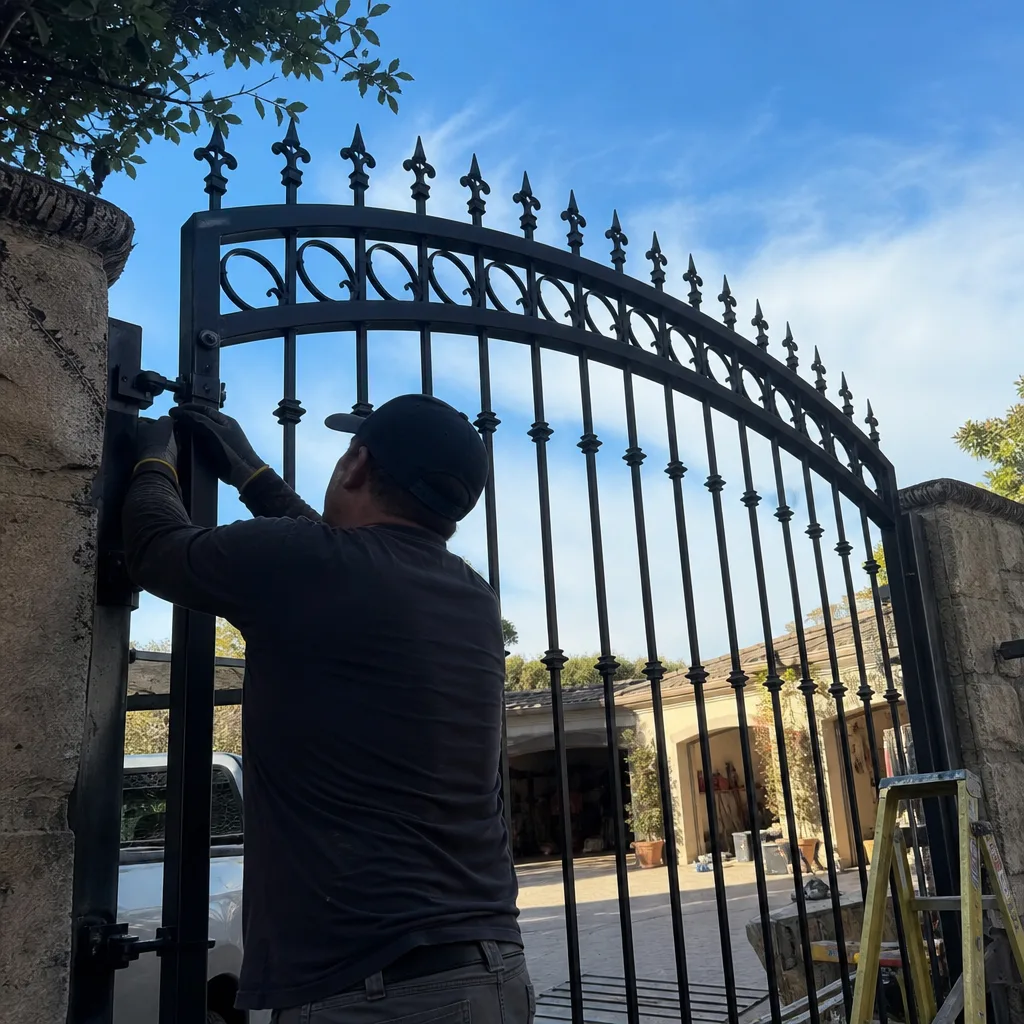
- Replacing a post without checking the footing. Many older Agoura Hills gates sit on undersized footings. Digging out a rusted post and setting a new one in degraded concrete creates a structural problem that the original gate never had. If the footing crumbles during excavation, that’s a permit situation, not a simple swap.
- Trusting a verbal “it’s all permitted.” Ask for the permit number and verify it with the building department. It takes one phone call.
When to Call a Professional
Call our Gate Repair services for any automated gate work that involves the motor, the control board, or the safety devices. The entrapment risk on a misadjusted gate is real, and the liability exposure is yours whether or not the contractor carries insurance. Call for structural work: post replacement, footing work, gate relocation. Call if the property is on a hillside, backs up to open space, or sits in an HOA with architectural review. Call if the gate is the only point of entry and fire access rules may apply. Vance Gate Repair Agoura Hills offers free estimates in Agoura Hills: call (424) 388-2906, and we’ll give you a written price before any work starts.
Frequently Asked Questions
No. Replacing a gate motor, control board, remote receiver, or photo-eye does not require a permit in Agoura Hills because the work doesn’t touch the structure or the electrical supply. The exception is if the repair includes running a new circuit from the electrical panel, which triggers an electrical permit. Call (424) 388-2906 for a written price on motor repair, with no permit surprises.
Expect $150 to $400 for a flat-lot post or footing permit, and $300 to $1,200 extra if hillside grading review applies. Electrical permits for gate circuits run $80 to $200. The total is modest compared to the cost of fixing an open permit during escrow.
A gate itself can be installed without a permit in most California cities as long as the posts, footings, and electrical are not changed. In Agoura Hills, hillside grading and fire-access rules add layers that flatland cities don’t have, so a permit is more likely than in the Valley.
Two independent entrapment protection devices: the operator’s built-in force sensor and an external device like a monitored photo-eye or contact edge. Warning signage on both sides of the gate, and a manual release for fire access. All automated gates in California should meet this standard regardless of permit status.
Repairs that don’t change the gate’s visible appearance usually don’t require HOA approval. Replacing a gate with a different material, color, or height does, and several Agoura Hills HOAs require architectural review before visible changes. Check your CC&R before any modification you can see from the street.
Ask for the permit number and verify it with the Agoura Hills building department before work starts; see How to Hire a Gate Repair Contractor in Agoura Hills: A Step-by-Step Guide for vetting tips. After the job, confirm with the city that the permit was finaled and closed. A contractor who won’t provide the number in writing hasn’t pulled the permit.
The Bottom Line
For more guides & resources, visit our blog. Most gate repairs in California don’t need a permit. The line is structural: replacing a motor is routine, replacing a post is not. UL 325 safety compliance applies to every automated gate whether or not a permit was pulled, and skipping entrapment protection is the most common, most avoidable safety failure we see on existing gates. Agoura Hills adds hillside grading and fire-access layers that flatland unincorporated county work doesn’t face. Document the permitted work, close the permit, and check the HOA before anything visible changes. A gate that’s permitted, inspected, and documented is a gate that won’t resurface as a problem during escrow or a liability after an accident.
Need a written price for gate work in Agoura Hills? Call Vance Gate Repair Agoura Hills at (424) 388-2906. We’ll put the number in writing before any tool comes out, and leave a photo record of every adjustment, every part installed, and every setting verified on your gate.
Written by Adrian Vance, Owner at Vance Gate Repair Agoura Hills, serving Agoura Hills since 2014.