
Last updated September 20, 2026
Free on-site gate assessment - hinges, posts, and your LiftMaster or Nice gate operator checked before anything is quoted
The assessment is free and the quote is the invoice.
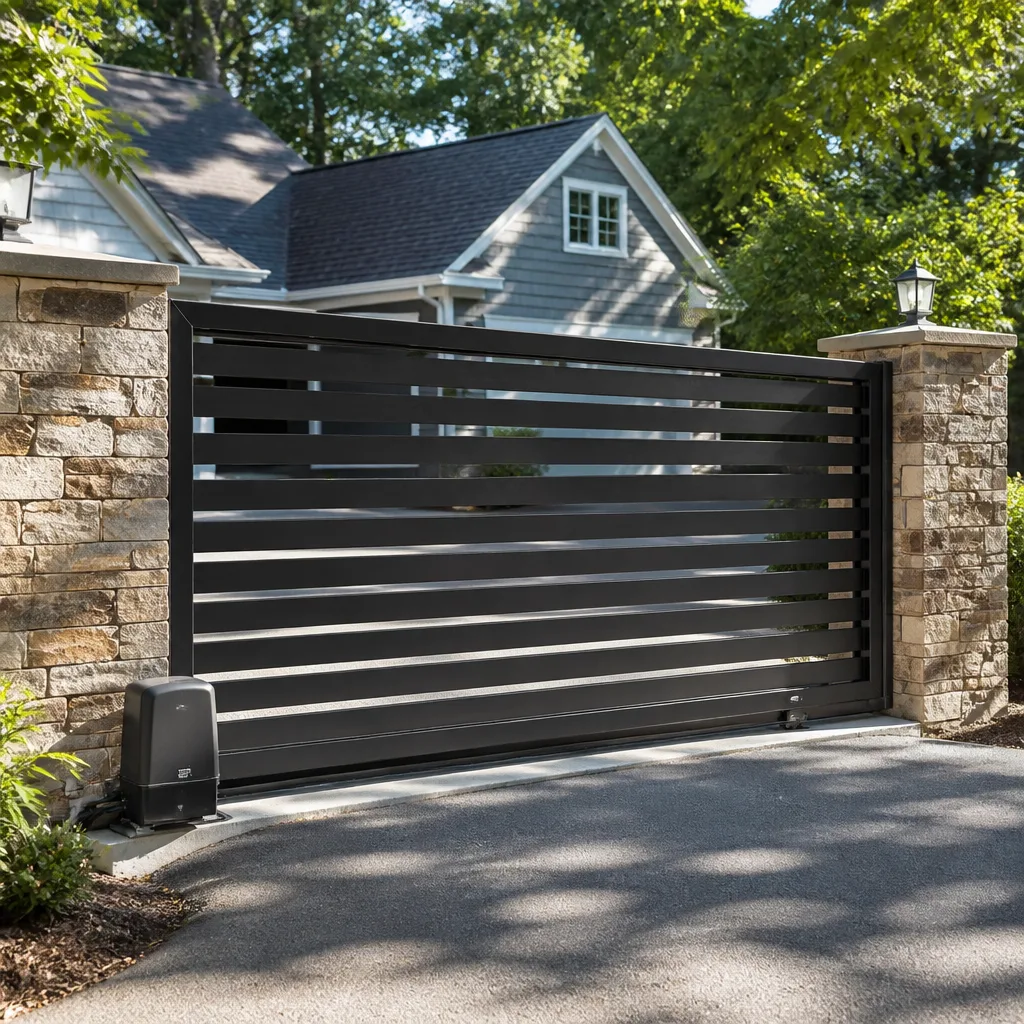
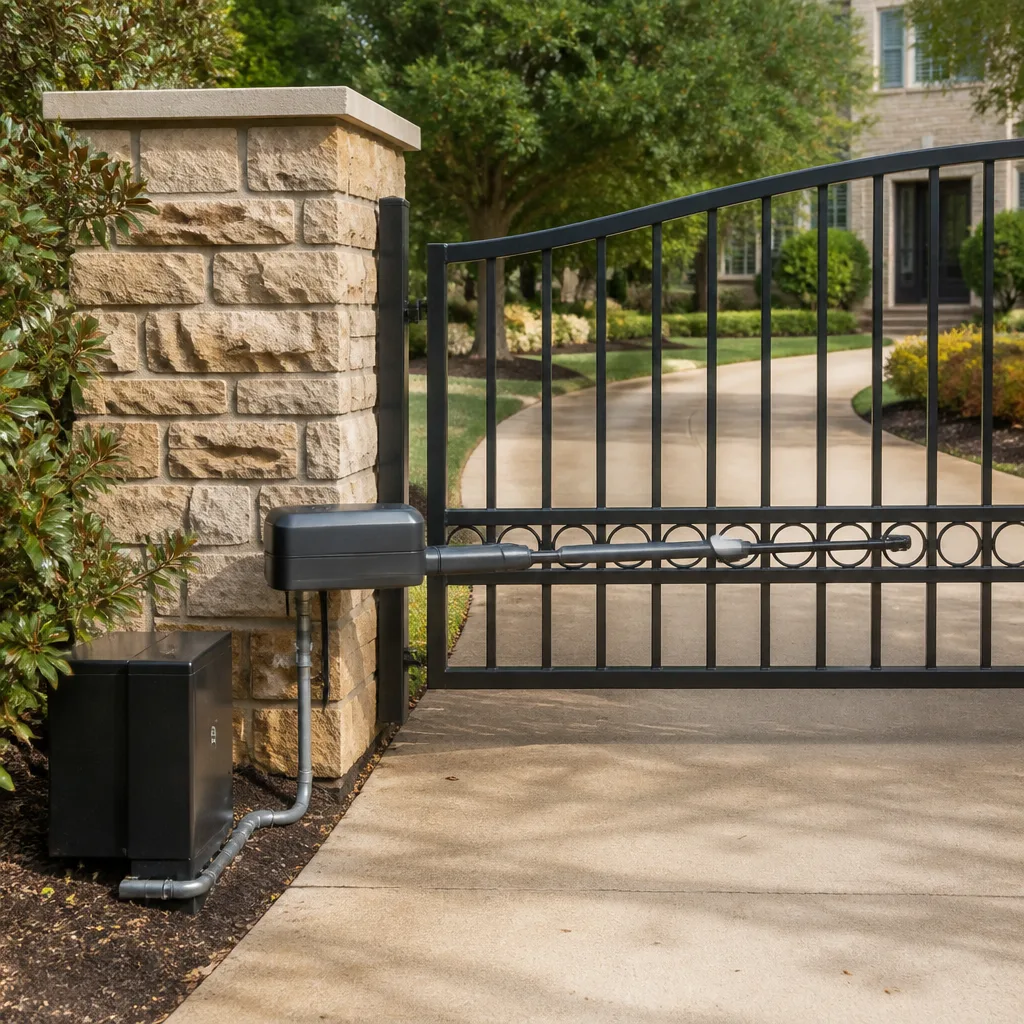
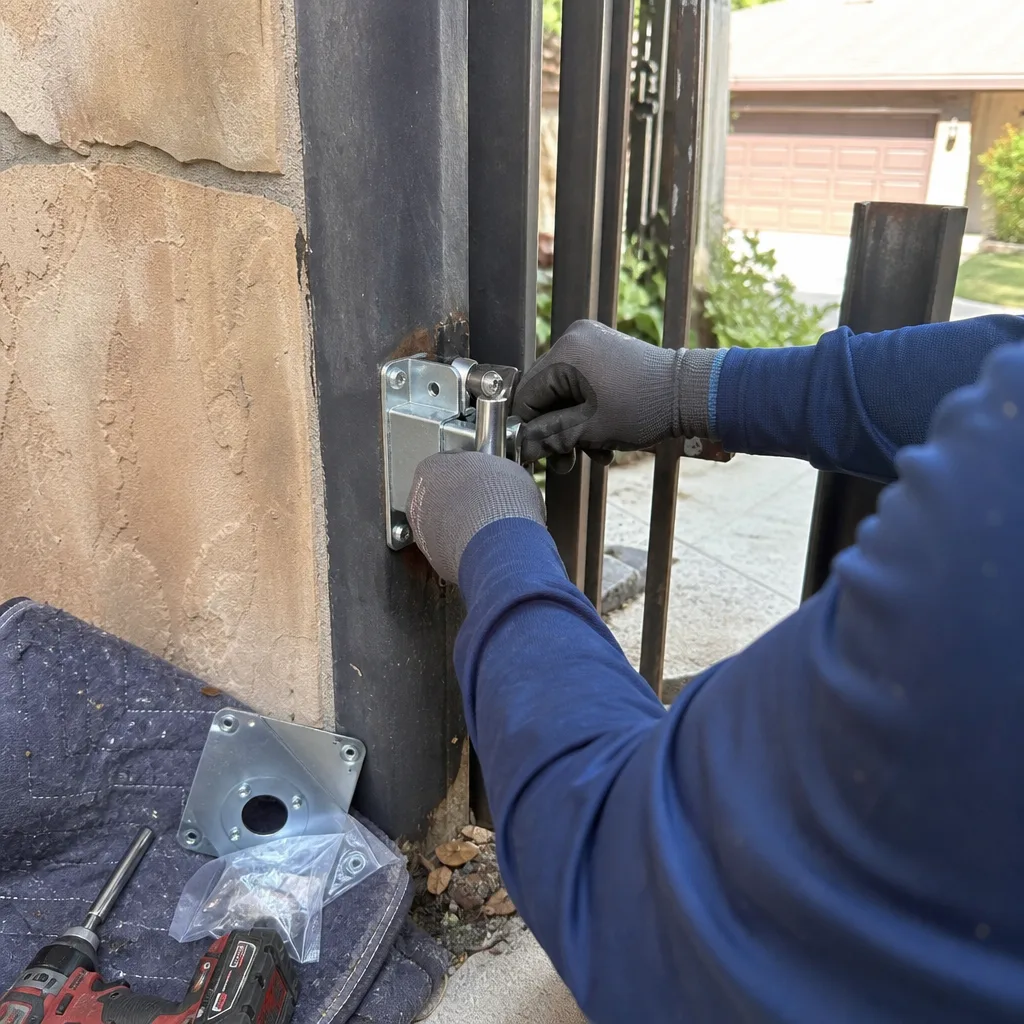
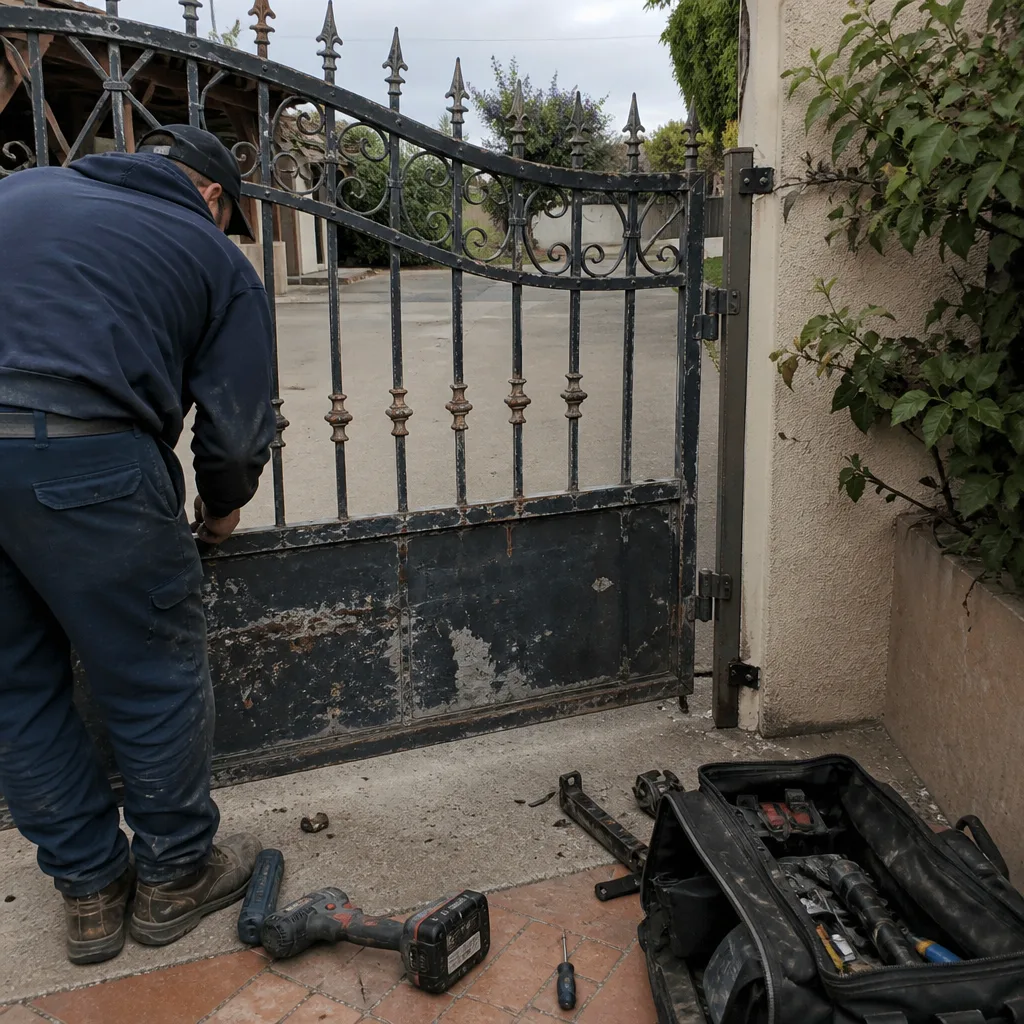 Before
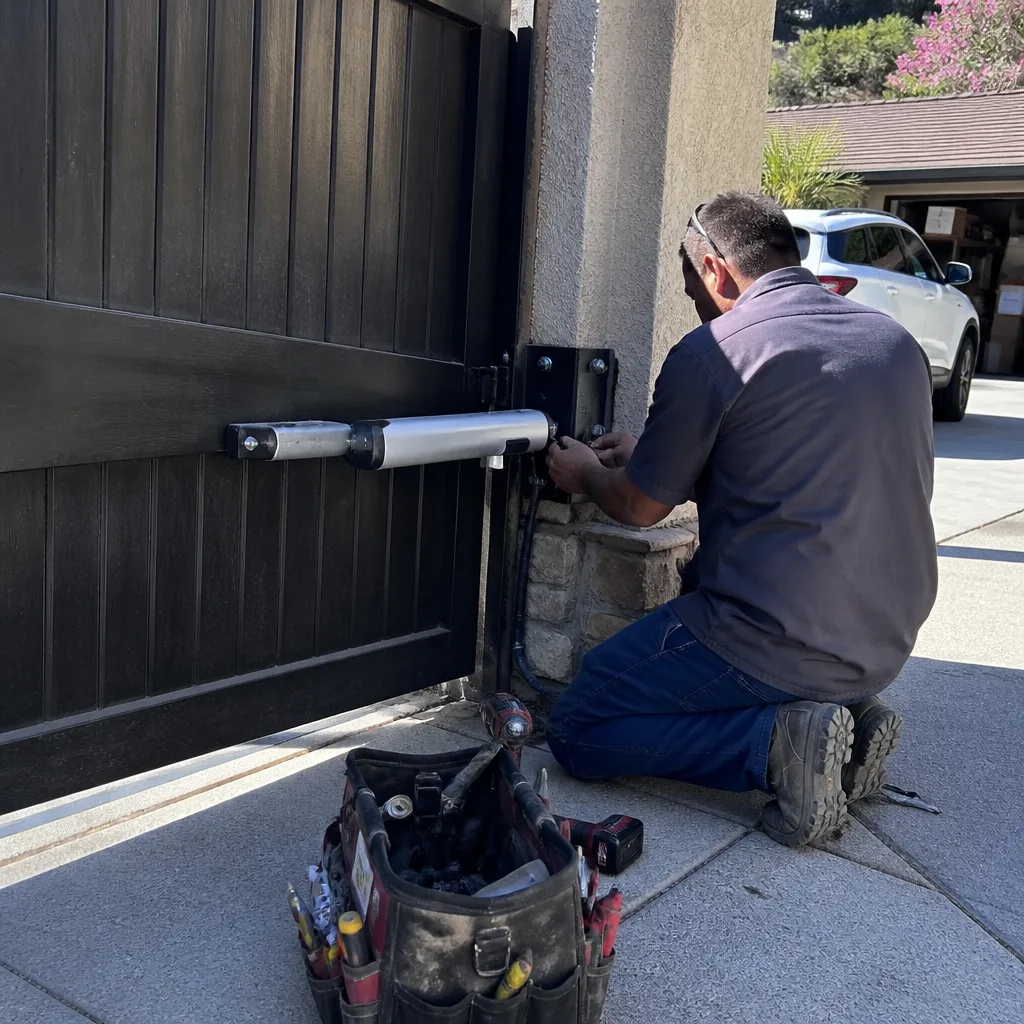 After
After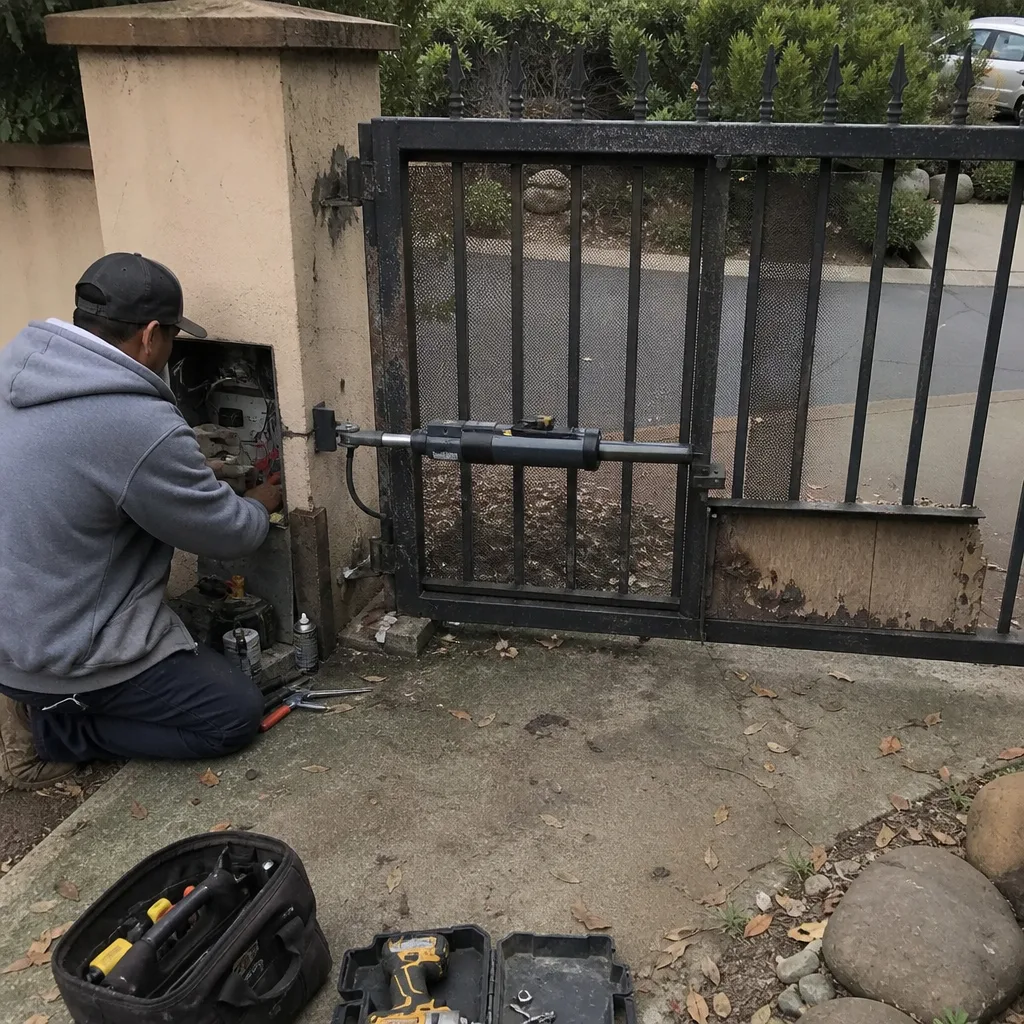 Before
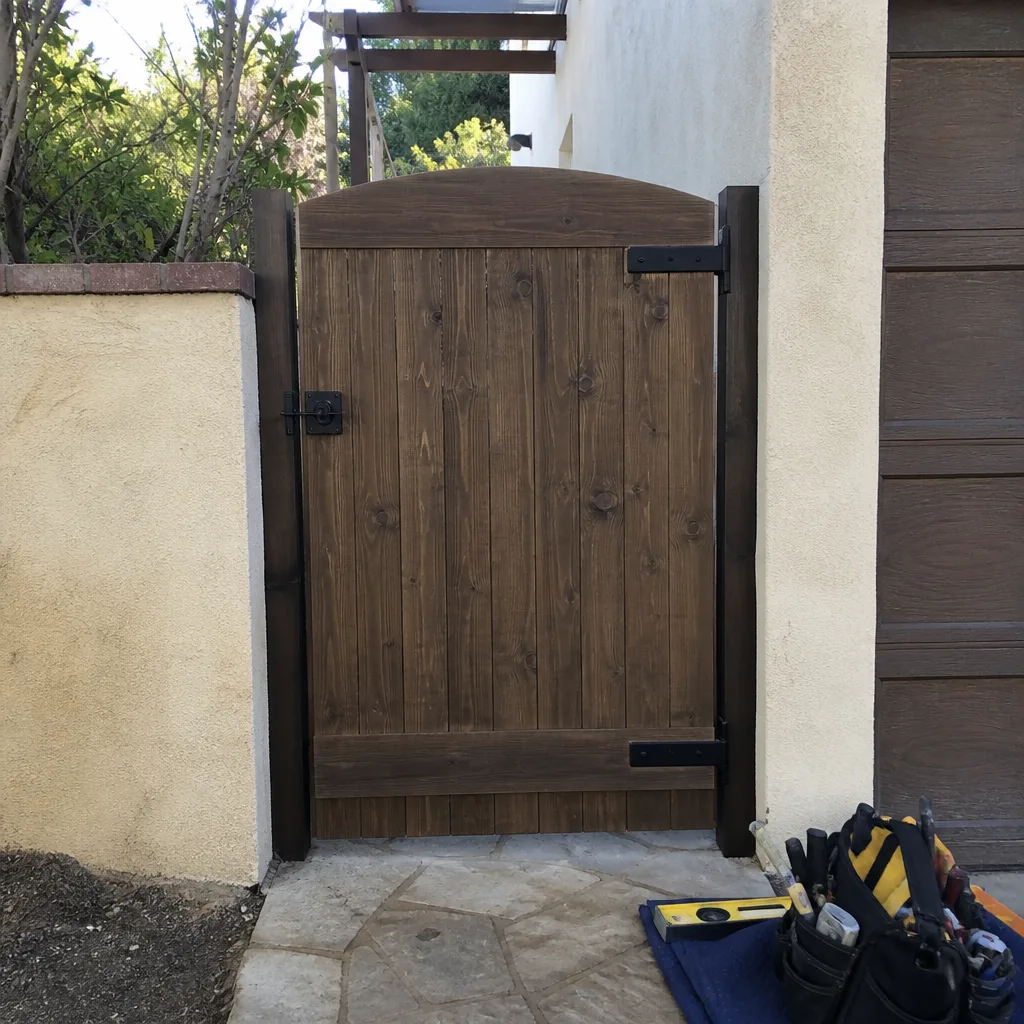 After
After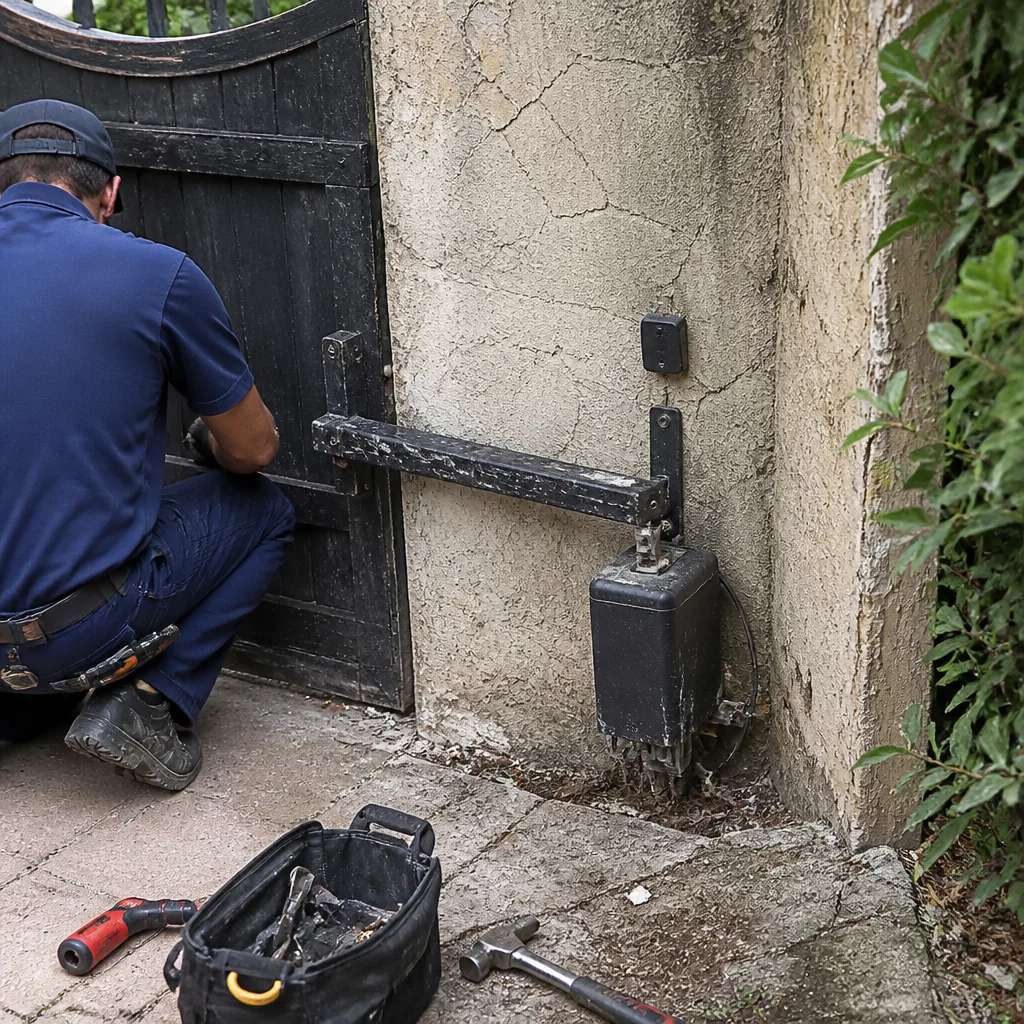 Before
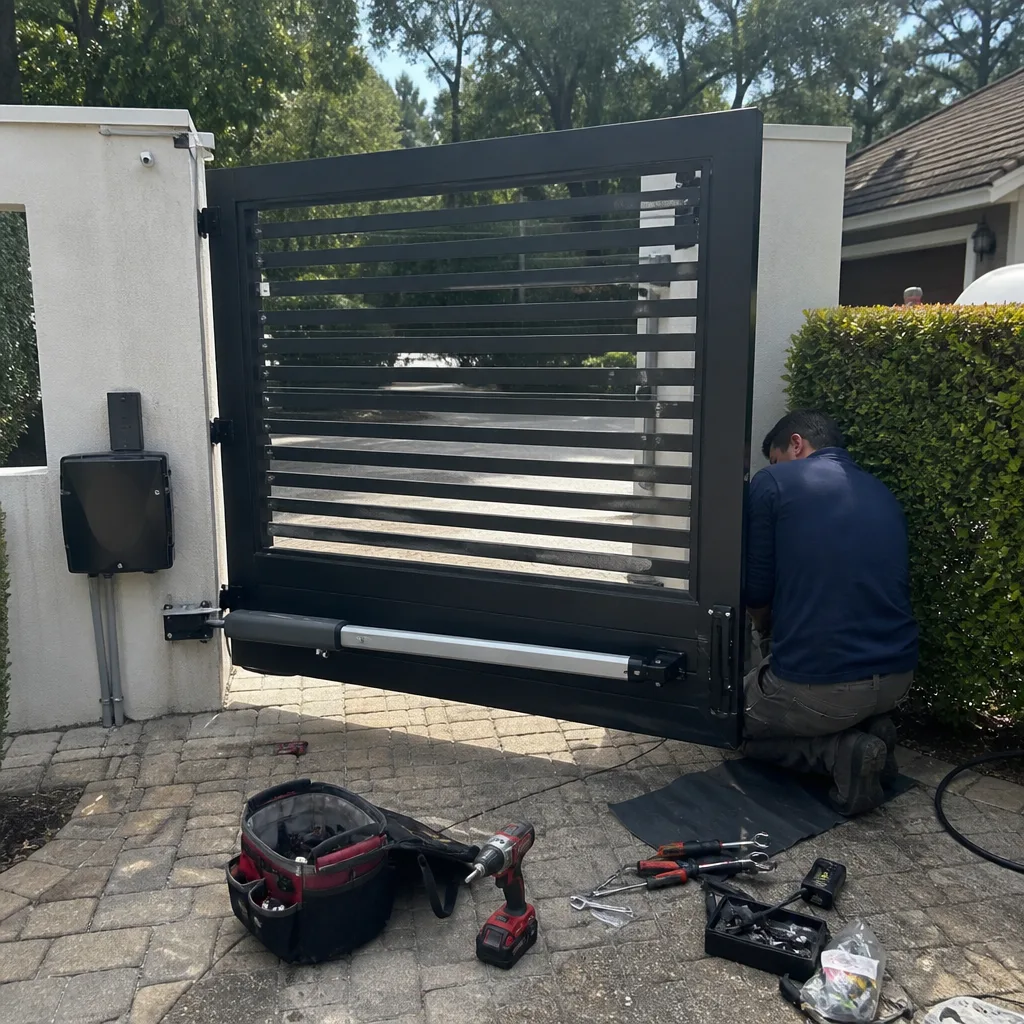 After
AfterGate Repair Warning Signs: A Agoura Hills Homeowner’s Reference Guide
Here’s something most gate guides won’t tell you: a gate that reverses direction halfway through its cycle isn’t malfunctioning. It’s doing exactly what its safety system was designed to do. The photo-eye or safety edge detected something in the path, and the gate stopped and reversed. The real problem is whatever is causing that false obstruction reading, and that’s where the diagnostic work begins. For how to hire a gate repair contractor in Agoura Hills: a step-by-step guide, see our detailed walkthrough. This guide splits every common gate warning sign into two categories: stop using the gate today, or schedule a repair soon. We’ll show you which sounds mean mechanical wear, which ones point to electrical trouble, and how to document what you’re seeing so a technician in Agoura Hills can assess it before ever stepping onto your property.
Quick Answer
Gate warning signs fall into two categories: stop-now problems (grinding with visible metal shavings, a gate that reverses unpredictably, a sagging hinge with exposed weld gaps, or any electrical burning smell) and monitor-and-schedule problems (slow operation, intermittent relay clicking, or a gate that needs a nudge to start on cold mornings). Stop-now signs mean the gate could fail catastrophically or injure someone; monitor signs mean you have days or weeks, not minutes. When in doubt, photograph what you’re seeing and call a gate repair professional in Agoura Hills for guidance.
Table of Contents
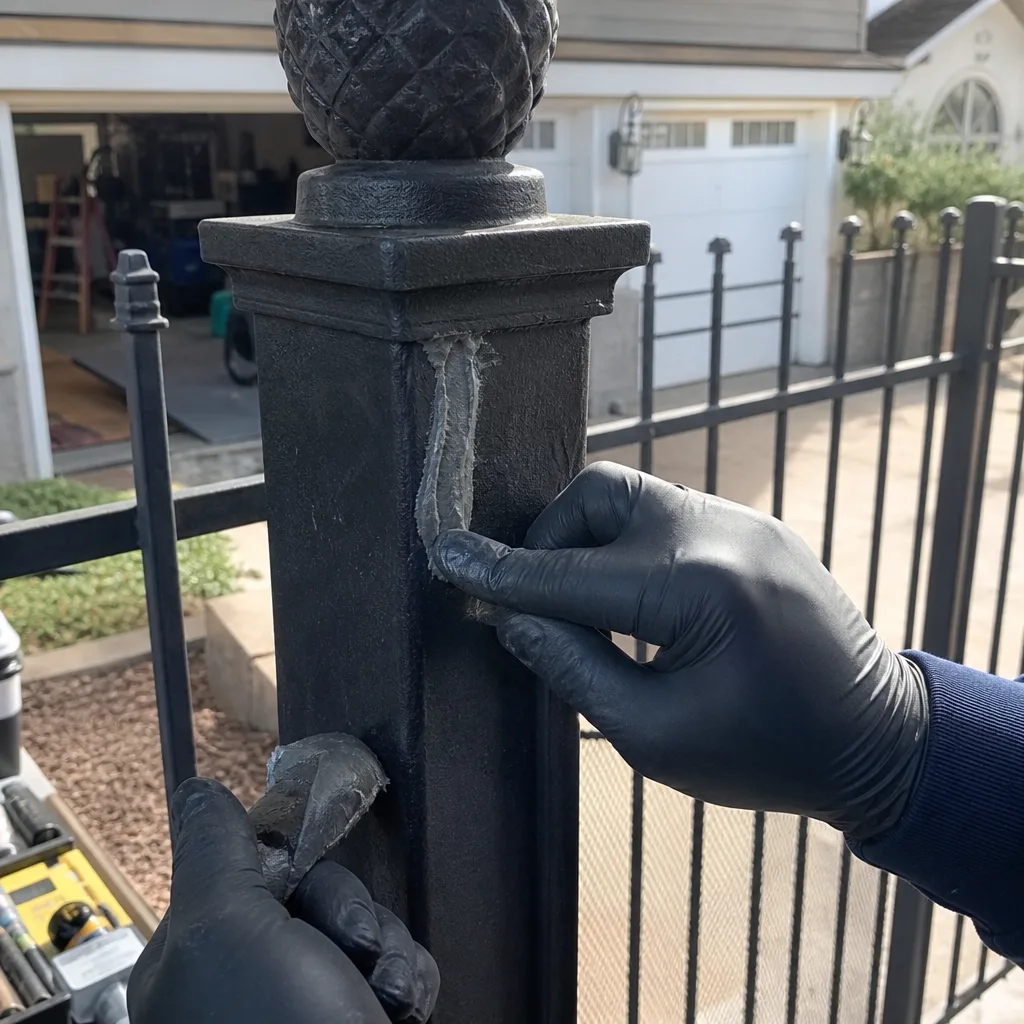
- Stop-Now vs. Schedule-Soon: How to Classify What You’re Seeing
- The Sounds That Tell You What’s Wrong (Mechanical vs. Electrical)
- Why “Works Most of the Time” Is Often the Worst Diagnosis
- Visual Inspection Points You Can Check Yourself
- How to Document a Warning Sign With Your Phone
- What Agoura Hills Homeowners Should Know About Gate Wear
- When Repair Makes Sense and When Replacement Is the Honest Answer
- What a Proper Gate Repair Visit Looks Like
BeforeAfterStop-Now vs. Schedule-Soon: How to Classify What You’re Seeing
Most gate guides give you a list of warning signs with no prioritization. That’s a disservice. A grinding noise and a sagging hinge are not equals. One is an emergency; the other can wait until the weekend. Understanding that difference is what prevents a $400 repair from becoming a $4,000 replacement, and in some cases, what prevents a 600-pound gate from falling onto a car, a pet, or a person.
Stop-Now Signs: Discontinue Use Immediately
- The gate reverses halfway through every cycle. Something is telling the safety system that an obstruction exists when it doesn’t. It could be a misaligned photo-eye, a failing safety edge, or a logic board issue. Until a technician identifies the source, the gate is unpredictable. Unpredictable gates injure people.
- The gate is visibly sagging at the hinge side. A sag means the hinge weld or the gate’s internal frame has begun to fail. The weight is now distributing incorrectly, and every cycle adds stress to a structure that’s already compromised. In Agoura Hills, where wind gusts off the Santa Monica Mountains push against broad gate faces, a sagging hinge can fail completely without warning.
- You see metal shavings or powder on the ground near the gate track or hinges. Metal shavings mean two components are grinding against each other under load. Whatever is wearing down is doing it fast. The shavings are the evidence of metal loss that’s already happened; more is happening every time the gate cycles.
- There’s a burning smell coming from the motor housing. This means electrical insulation is overheating inside the motor or control board. It’s not going to cool down and get better. It’s going to continue degrading until the motor seizes or the board fails, and overheating electrical components can create a real fire hazard in a metal enclosure.
- The gate suddenly runs faster than normal, or slams into the open position. Speed changes indicate a failing capacitor, a worn gear assembly, or a control board sending incorrect voltage. A gate that closes too quickly can strike a vehicle, a child, or a pet before the safety system can respond.
Schedule-Soon Signs: You Have Time, But Don’t Ignore These
- The gate moves noticeably slower than it did six months ago. Slowed operation often means the motor’s capacitor is degrading or the gear assembly is binding. It’s not dangerous today, but it’s the warning shot for a full motor failure. In our experience, a slow gate in Agoura Hills becomes a dead gate within weeks, not months.
- You hear a click, but the gate doesn’t move on the first try. This is typically a relay on the control board firing without enough current to start the motor. We see this often on older Viking and DoorKing boards. It’s a repairable issue now, and a board replacement later if ignored.
- The gate needs a gentle push to get started, especially in the morning. Cold lubrication, a weakening capacitor, or a bearing that’s starting to seize. On Agoura Hills winter mornings, when temperatures drop into the low 40s, grease that was fine in July turns to sludge. Your motor has to work harder, which accelerates wear.
- You notice surface rust forming at weld joints. Surface rust isn’t structural yet, but it’s the beginning of the process that leads to cracking. Treating rust now is cheap. Replacing a cracked gate frame later is not.
Here’s the rule of thumb: if the symptom affects whether the gate can stop safely, it’s a stop-now problem. If the symptom only affects whether the gate starts, it’s a schedule-soon problem. When you’re not sure which category you’re in, photograph the symptom and call us. We’ll tell you honestly which bucket it belongs in.
The Sounds That Tell You What’s Wrong (Mechanical vs. Electrical)
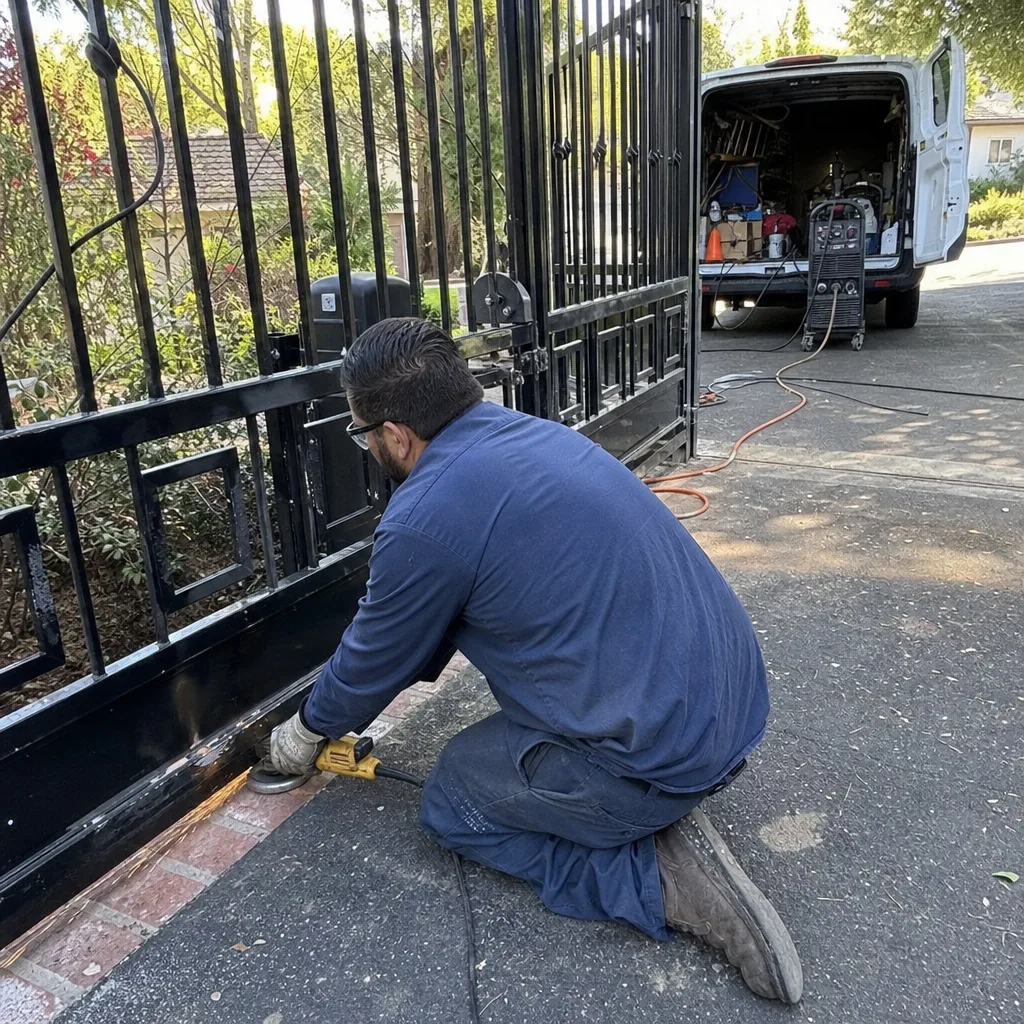
A gate makes noise in two broad categories: mechanical sounds and electrical sounds. The distinction matters because the repair path is completely different. A mechanical sound points to physical components under friction or load. An electrical sound points to the control system, motor windings, or power delivery. Learning to tell them apart saves you from paying for a motor replacement when what you actually need is a hinge bracket.
Mechanical Sounds (Physical Components Under Friction)
- Grinding or growling while the gate moves. This is the sound of metal on metal, usually from a gear assembly or bearing inside the operator. The grease has broken down, or the gears have begun wearing into each other. Grinding means the damage is already happening. It won’t reverse itself.
- Metallic scraping, like a shovel on concrete. This is often the gate itself dragging against the ground, a misaligned roller in the track, or a wheel that’s seized. It can also mean the gate’s frame has shifted and is contacting the post or the fence. Scraping is sometimes repairable by realigning the gate; it can also indicate that the gate’s suspension points have worn and need replacement.
- A rhythmic squeak or chirp with each cycle. The squeak is a bearing or pivot point that’s running dry. The chirp is usually a hinge pin or roller working against its housing without lubrication. Regular lubrication can extend the life of these components, but a squeak that persists after lubrication points to a failing bearing.
- A heavy thunk at the start or end of travel. Thunk means the gate’s limit settings have drifted or a mechanical stop has failed. The gate is traveling to the physical end of its track rather than the intended stopping point. Every thunk is the gate slamming into its own frame. That impact stress travels through the hinges, welds, and motor coupling.
Electrical Sounds (Control System, Motor Windings, or Power Delivery)
- A rapid clicking or chattering sound from the control box. This is a relay firing repeatedly without enough current to start the motor. The relay clicks, the motor doesn’t turn, the relay resets, and the cycle repeats. It’s usually electrical, not mechanical, and it often points to a capacitor, a board relay, or a low-voltage supply problem.
- An intermittent hum that comes and goes without the gate moving. A humming motor with no movement means the motor is receiving power but the start capacitor has failed, or the gear assembly has bound tight enough that the motor can’t turn. The hum is the sound of an electric motor stalling out. If you hear this for more than a few seconds, kill power to the gate operator.
- A single sharp pop when the gate starts or stops. A pop is often a capacitor discharging or a relay arcing. In some older control boards on Elite and Mighty Mule systems, an arcing relay can carbonize the contacts inside the board. The fix early is a relay replacement. The fix late is a board replacement.
- A low, consistent buzz even when the gate is idle. A transformer or power supply that’s vibrating under load. It’s not urgent, but it’s a sign that the power supply is working harder than it should be. We photograph the transformer label so we can confirm the correct replacement spec if it eventually fails.
The important distinction: a grinding gate is a mechanical problem and should stop being cycled to prevent further wear. A clicking relay is an electrical problem and cycling the gate won’t make it worse, but it also won’t fix itself. In both cases, write down what you heard and when you heard it. A twenty-second audio clip on your phone is a diagnostic tool for any technician.
Why “Works Most of the Time” Is Often the Worst Diagnosis
This might be the most counterintuitive idea in this entire guide: a gate that fails completely is often a simpler, cheaper repair than one that works intermittently. Here’s why. A gate that’s completely dead points to a single point of failure, a blown fuse, a tripped breaker, a failed capacitor. Technicians can trace that. A gate that works “most of the time” has a fault that appears only under specific conditions, and those conditions are hard to replicate in a service call. In our experience with intermittent gates in Agoura Hills, the fault is usually thermal, mechanical wear, or a connection loosening with vibration. It surfaces when the sun hits the control box in the afternoon, when temperatures drop overnight, or after a Santa Ana wind event shifts the gate slightly on its mounts.
The Three Most Common Intermittent Failure Patterns
- Temperature-sensitive failures. The gate fails in the afternoon heat or the early morning cold. When the sun hits a dark control box in an Agoura Hills summer, internal temperatures can exceed 150 degrees. Aging solder joints expand, micro-cracks open, and the board stops talking to the motor. When the box cools down, the connection closes and the gate works again. This is a board-level issue and it’s progressive. It fails more frequently over time until it fails permanently.
- Vibration-loosened connections. Every gate cycle sends vibration through the frame, the operator, and the wiring connections. Over years, terminal screws back off by fractions of a millimeter. The connection becomes marginal. The gate works most cycles, then fails on the cycle where the vibration hits just right. A technician who knows to check terminal torque will find these in ten minutes. A technician who swaps the motor without checking connections might leave the problem in place.
- Worn limit switches. The limit switch tells the motor where to stop. When a limit switch wears, the gate might overshoot the close position, trigger the safety reverse, and stop halfway. On the next cycle, it might behave normally. This is common on older Ghost Controls and Linear operators, and the fix is a switch replacement, not an operator replacement.
The bottom line on intermittent operation: don’t wait for it to become permanent. A gate that works sometimes is a gate with an active fault, not a gate that’s “fine most of the time.” Document the conditions when it fails, the time of day, the temperature, whether the sun was on the control box. That information is diagnostic gold for a technician who wants to find the actual fault rather than guess at it. We ask every Agoura Hills customer with an intermittent gate to keep a simple note on their phone: date, time, what the gate did or didn’t do. It routinely cuts the diagnostic time in half.
Visual Inspection Points You Can Check Yourself
You don’t need any tools to spot most developing gate problems. You need a pair of eyes and maybe a flashlight. The goal is to catch visual evidence before a component fails under load. Here are the inspection points we check on every gate visit in Agoura Hills, and you can check them yourself in under ten minutes.
Check 1: The Hinge Gap
Look at where the gate attaches to its post or column. The gap between the gate frame and the post should be consistent from top to bottom of the hinge. If the gap narrows or widens, the hinge or the gate’s internal frame is deforming. Place your finger on the hinge pin and have someone gently rock the gate, or push on the gate face yourself. If you feel movement at the hinge that isn’t the gate swinging, that’s play, and play accelerates into sag.
Check 2: Weld Cracks at the Frame Corners
Walk the perimeter of the gate. Look at the four corners of the frame, the points where the horizontal rails meet the vertical stiles. Weld cracks start as hairline lines exactly at the seam. They’re easiest to spot on a sunny day with the light raking across the surface. Surface rust at a weld joint is an early warning that water has gotten into a micro-crack. In the Agoura Hills climate, which cycles through dry heat, damp coastal fog, and winter rain, these micro-cracks expand and contract constantly. A paint touch-up is cosmetic; a cracked weld is structural.
Check 3: Ground Rod Connections
Look for a green wire running from the gate operator or the control box to a rod driven into the ground nearby, or to a ground clamp on a metal post. This is the system’s earth ground. If the wire is loose, corroded, or disconnected, the control board is operating without proper grounding. Ungrounded boards are more vulnerable to failure from power surges and lightning strikes. In a semi-rural area like Agoura Hills, where power quality can dip and spike, a proper ground is not optional. If you see green corrosion on the clamp or a wire that’s come loose, that’s a legitimate service item.
Check 4: The Photo-Eye Alignment
Most automatic gates have a photo-eye, the small infrared transmitter and reflector pair mounted near the gate’s path, usually a few inches off the ground. Look for debris covering the lens, cobwebs, mud, or even plants that have grown into the beam path. The units should face each other directly. If one is knocked slightly askew, the beam misses the reflector and the gate thinks something is always in the path. The symptom is a gate that refuses to close or reverses immediately after starting to close. Sometimes the fix is a two-second realignment; sometimes the unit’s internal aiming has shifted and it needs replacement. Either way, it’s a quick diagnosis.
Check 5: Track and Wheel Condition (Slide Gates)
For slide gates, run your hand along the track if it’s clean and safe to do so. Look for flat spots on the wheels, debris packed into the track, or visible wheel wobble. A wheel with a flat spot causes a rhythmic thump with every revolution, which you’ll hear as the gate moves. Track debris, including Agoura Hills gravel and decomposed granite from surrounding landscaping, packs into wheel bearings and chews them up. Keep the track clear. It’s the most accessible preventive maintenance on a slide gate system.
How to Document a Warning Sign With Your Phone
Before you call anyone, spend two minutes documenting what you’re seeing. A short video and a few photos are worth more than a ten-minute verbal description. They also serve as a baseline so you can compare against the technician’s after-repair photos and confirm the work addressed what you reported. This is the same documentation philosophy we apply on every visit we make in Agoura Hills, and it works just as well from the homeowner side.
- Take a wide shot of the entire gate from the driveway. This gives context: the gate type, the hinge configuration, the surrounding terrain. It tells the technician whether you have a swing gate, a slide gate, a single or double leaf, and what kind of operator is mounted.
- Take a close-up of the specific symptom. If there’s visible sag, photograph the hinge gap from both sides. If there are metal shavings, photograph them next to a coin or a key for scale. If there’s rust at a weld, get the light raking across the surface.
- Record a ten to twenty second video of the gate cycling. Hold the phone steady. Capture the whole cycle from start to finish, including the sounds. The audio is as important as the video. A grinding sound, a relay click, a thunk at the end of travel, all of it is diagnostic.
- Note the time, date, and temperature. If the gate fails intermittently, this matters. A technician can correlate the failure with thermal conditions, which narrows the diagnostic process substantially.
- Photograph the operator label or the control board cover. The brand, model, and voltage are typically printed on a label. This lets the technician confirm which motor is on the property and which parts to bring for common brands like DoorKing, Ghost Controls, Elite, or Viking.
- Photograph the control box interior only if you’re comfortable doing so. If you’re not comfortable opening the box, don’t. But if you can take a clear photo of the board without touching anything, that photo can answer a lot of questions remotely. Never touch the interior of a control box while the power is live, and never attempt any adjustment yourself.
Send these files when you call. We can often tell a homeowner in Agoura Hills whether they’re looking at a stop-now problem or a schedule-soon problem before we ever roll a truck. And when our technician arrives, the documented “before” state becomes the baseline for the photo log we leave with you when the visit is finished.
What Agoura Hills Homeowners Should Know About Gate Wear
Agoura Hills has a specific set of environmental and practical factors that affect gate longevity. Understanding them means you can spot developing problems earlier than a homeowner in a flatter, calmer, or more urban area. For seasonal gate repair care for Agoura Hills: year-round homeowner’s guide, see our seasonal maintenance breakdown. Here’s what we see on gate calls throughout Agoura Hills, from the Oak Park border down to the 101 corridor.
The Thermal Cycling Problem
Agoura Hills sits in a transition zone. Days can start in the mid-40s and climb past 90 by mid-afternoon, with swings of 40 degrees or more in a single day during transitional seasons. That daily expansion and contraction cycles through every metal component on a gate. Weld joints, hinge points, and the internal frame all flex microscopically with every temperature swing. Over a decade, that’s thousands of thermal cycles. Micro-cracks at welds and hinge pins are the most common visual evidence of thermal fatigue, and they’re exactly the kind of thing a homeowner can spot before they become structural failures.
Wind Loading From the Santa Monica Mountains
Agoura Hills gets wind. The foothills channel gusts that hit broad gate faces with real force. A single-leaf gate that’s eight feet wide can catch hundreds of pounds of wind pressure during a strong gust event. That force transmits directly into the operator gear assembly and the hinge points. The result is accelerated wear on the gear teeth and premature play at the hinges. If your gate is exposed, meaning there’s no wall or dense landscaping blocking the prevailing wind, you should inspect the hinge gap and listen for new sounds after any significant wind event.
Dust and Decomposed Granite
Agoura Hills properties often feature decomposed granite paths and driveways, a popular landscaping material in this area. That fine granite dust is abrasive. It gets into wheel bearings, hinge pins, and gear assemblies. It mixes with grease to form a grinding paste that accelerates wear. If you have decomposed granite anywhere near your gate track, plan on more frequent lubrication and bearing inspection. It’s the difference between a wheel assembly lasting eight years and lasting fifteen.
Rust Progression in the Semi-Coastal Climate
Agoura Hills isn’t beachfront, but it’s close enough to the coast to receive periods of marine layer and fog that push moisture into the canyons. Combined with hot, dry periods that bake that moisture off, the result is an amplified rust cycle. Bare steel rusts faster here than in the high desert, and painted steel rusts at the seams where the paint has already begun to fail. Checking weld seams and bolted connections for emerging rust is annual maintenance for Agoura Hills gates, not optional.
When Repair Makes Sense and When Replacement Is the Honest Answer
We tell Agoura Hills homeowners the same thing we’ve told customers since 2014: the honest answer isn’t always the answer that sells the most product. Sometimes a repair is the right call. Sometimes a replacement is the right call because the gate has reached the end of its structural life and more repairs would just be patching a frame that’s already failing. Here’s how we think about that line.
Repair Is Usually the Right Call When
- The gate frame is straight, the hinges are tight, and the welds are clean. If the structure is sound, replacing components like motors, circuit boards, wheels, or safety edges extends the gate’s life by years at a fraction of replacement cost.
- The problem is isolated to a single component with a known failure mode. A failed capacitor, a worn limit switch, a misaligned photo-eye. These are finite repairs with predictable outcomes.
- The operator is a current product from a brand like LiftMaster, Viking, DoorKing, or Elite, and parts are readily available. There’s no reason to replace an operator that can be repaired with factory parts, and we carry or can source parts for nine major automation brands.
Replacement Is the Honest Answer When
- Multiple weld seams are cracked, or the frame shows visible deformation. A gate that’s structurally compromised is a safety hazard no matter how good the operator is. Welding patches onto a failing frame extends a gate’s life by months, not years, and the cost of repeated welding approaches the cost of a new gate.
- The gate has sagged to the point where the hinge mounts are pulling out of the post, or the post itself is cracked or leaning. This isn’t a gate problem; it’s a foundation problem. A new gate on a failing post is a bad investment.
- The operator is obsolete and parts are no longer manufactured. We can sometimes source rebuilt components, but we won’t install a refurbished board of uncertain provenance and call it a warranty repair. The Haven Standard means we stand behind what we install, and we don’t install parts we can’t vouch for.
We quote both options when the situation calls for it. You get the repair price and the replacement price, in writing, and you decide. That’s the point of a written quote, and it’s how we’ve handled every job since Adrian Vance started this company out of commercial access-control work in 2014.
What a Proper Gate Repair Visit Looks Like
If you’ve read this far, you know what to look for and how to document it. The next question is what to expect when a technician arrives. A proper gate repair visit in Agoura Hills should follow a predictable sequence. Here’s what we do on every visit, and what we believe any gate company should do.
Step 1: Listen and review the documentation. We want to hear what you’ve observed and see the photos or videos you’ve taken. Your documentation from Section 5 becomes the starting point for our diagnostic work. If you called after documenting a reversing gate, we’re already looking for obstruction-system faults before we turn a screw.
Step 2: Test and measure. We cycle the gate, listen to the sounds, check the limit switch positions, test the safety edges, and inspect the physical components. We document the current state with photos before making any adjustment. Under the Haven Standard, every job leaves with a photo record of what was found, what was changed, and what was installed. That record is yours to keep and ours to file in the job record.
Step 3: Write the price before the work starts. This is Haven Standard Clause 1: the written price comes before any tool touches your gate. No verbal estimate followed by an invoice that’s higher than expected. You’ll see the price in writing, and you’ll approve it before we start. If the diagnosis changes and the scope of work changes, you get a new written price before any additional work proceeds. If you have a written estimate from another Agoura Hills gate company, we’ll review it with you at no cost and tell you what you’re actually paying for.
Step 4: Do the work, document the work, and test the result. The technician completes the repair, adjusts the limits, tests the safety systems, and cycles the gate until it’s confirmed working correctly. The final state is photographed and logged. You receive the photo documentation and a written record of part numbers and adjustments. If anything isn’t right within 365 days, we make it right. No argument, no fee, no expiration in that window.
For more on Gate Repair in Agoura Hills, including what we service and how to get a written quote, start there. If you’re considering a new gate rather than a repair, read our guide to Gate Installation in Agoura Hills. And if your warning sign points to the motor or opener, see Gate Motor & Opener in Agoura Hills for brand-specific information. You can also return to the Vance Gate Repair Agoura Hills home page for the full scope of what we do.
Common Mistakes to Avoid
- Ignoring an intermittent problem because the gate “works right now.” Intermittent faults are active faults. They don’t heal. Waiting for a full failure means paying for a board or a motor rather than a relay or a capacitor. In Agoura Hills, the thermal cycling that triggers intermittent failures is constant, so the fault will recur.
- Lubricating a grinding gear. Grinding means metal has already worn. Adding grease silences the symptom without fixing the underlying wear, and it can trap metal particles in the gear assembly, accelerating the damage. If a gear is grinding, it needs to be inspected, not lubricated.
- Adjusting the photo-eye alignment by trial and error. The photo-eye requires precise aim. Random adjustments can send the gate into a constant-obstruction state or, worse, can make the system fail to detect a real obstruction. Safety system adjustments are a job for someone who’s tested commercial access-control systems, and we bring that commercial background to every residential gate in Agoura Hills.
- Painting over a cracked weld. Paint hides the crack visually but does nothing to restore structural integrity. The crack continues to propagate under load. If you see surface rust at a weld seam, the correct response is inspection, not a can of Rust-Oleum.
- Assuming a dead gate means a dead motor. In our experience, a gate that’s completely non-responsive is frequently a power supply issue, a blown fuse, a tripped GFCI, or a failed capacitor, not a dead motor. A technician who diagnoses before replacing will find the actual fault. A technician who replaces the motor and calls it fixed may leave the electrical fault in place, and the new motor will fail the same way.
- Putting off hinge inspection because the gate “looks fine” from the driveway. The hinge gap is only visible when you’re close to the gate, looking at the attachment points. By the time a hinge failure is visible from a distance, the gate has already sagged significantly. Walk up to the gate and look. Two minutes of inspection beats a collapsed gate.
- Deleting your documentation after a repair. Those before-photos are your baseline. If a related problem develops later, the photos help determine whether it’s a new fault or a recurrence of the original issue. We keep a photo record on file for every visit; keeping yours is equally valuable.
When to Call a Professional
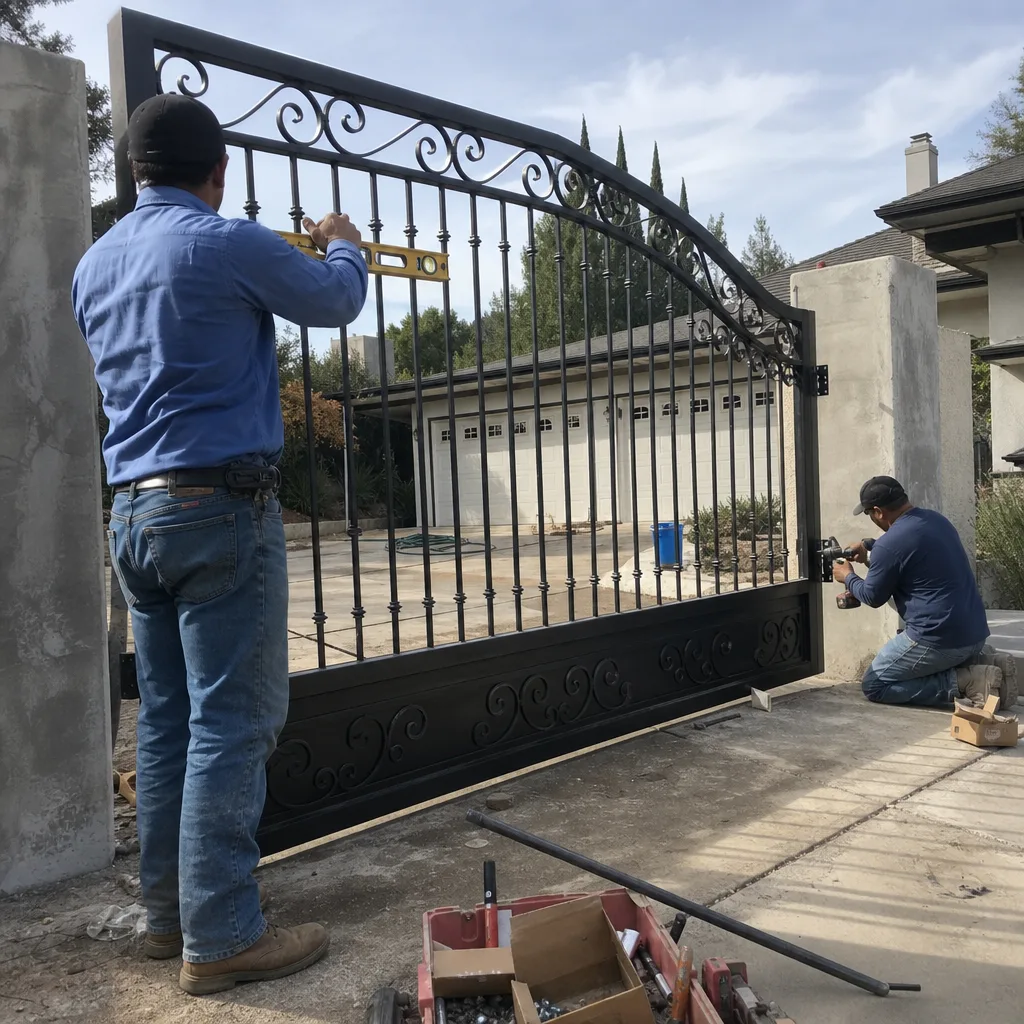
Call a gate professional if you’ve identified any stop-now symptom: a gate that reverses unpredictably, grinding with visible metal shavings, a sagging hinge, a burning smell, or any safety system that isn’t working correctly. These aren’t DIY problems, and the high-tension springs and cables on some gate designs carry enough stored energy to cause serious injury if improperly handled. A trained gate technician knows which components can be safely adjusted and which require disarming the tension system first. Call a professional if your gate is intermittent and you can’t identify the pattern, because intermittent faults are diagnostic puzzles that benefit from experience and measurement tools. And call if you simply want to know where you stand before you spend money. Vance Gate Repair Agoura Hills offers free estimates in Agoura Hills, call (424) 388-2906. We review any written estimate you’ve received from another company at no cost, and a live person answers 24 hours a day, every day.
Frequently Asked Questions
Urgent problems are anything that affects the gate’s ability to stop safely: unpredictable reversing, grinding with metal shavings, sagging hinges, burning smells, or safety systems that don’t test properly. Schedule-soon problems are slow operation, an occasional click without movement, surface rust, or a gate that needs a nudge on cold mornings. If you’re not sure, document the symptom with your phone and call us at (424) 388-2906. A quick conversation with a live person costs nothing and will tell you which category you’re in.
A gate that reverses halfway through closing is responding to a signal from its safety system, typically a photo-eye or a safety edge. The safety system thinks something is in the gate’s path and is reversing to prevent a crush injury. The most common cause is a photo-eye that’s misaligned or obscured, followed by a failing safety edge that’s sending false signals. This is a stop-now problem because the gate is unpredictable until the false signal source is identified and corrected. Call us for a written diagnosis; the fix is often a quick realignment.
Grinding means metal parts are wearing against each other inside the gear assembly, a bearing, or the operator coupling. The grease has broken down and the gears have begun consuming themselves. Continuing to cycle a grinding gate accelerates the wear and can turn a gear replacement into a full operator replacement. Stop using the gate and call us. In Agoura Hills, the combination of thermal cycling and granite dust from decomposed granite driveways makes grinding wear a common failure mode we diagnose and fix regularly.
In many cases, yes. Photos of the symptom, a short video of the gate cycling with sound, and notes on when the problem occurs can often tell us whether you’re looking at an urgent or non-urgent issue before we come out. This isn’t a substitute for an on-site visit, but it helps us come prepared with the right parts and a focused diagnostic plan. Send your documentation when you call (424) 388-2906 and we’ll talk through what we’re seeing.
Yes. We provide a written price before any work begins, and the price you approve is the price you pay. If the diagnosis changes during the visit and additional work is needed, you’ll receive a new written price and approve it before that additional work starts. We also review written estimates from other companies at no charge. That’s the point of a written quote, and it’s how every Vance Gate Repair visit in Agoura Hills works.
We service nine major gate-automation brands, including Viking, Ghost Controls, DoorKing, and Elite, as well as LiftMaster, FAAC, BFT, Linear, and Mighty Mule. You don’t need a contractor who only works on one brand, and you don’t need a contractor who steers you toward replacing your current operator just because they don’t stock parts for it. We work on the motor that’s already on your property and quote repair honestly when repair is the right call. Call (424) 388-2906 with your operator brand and model, and we’ll tell you what parts availability looks like.
The Bottom Line
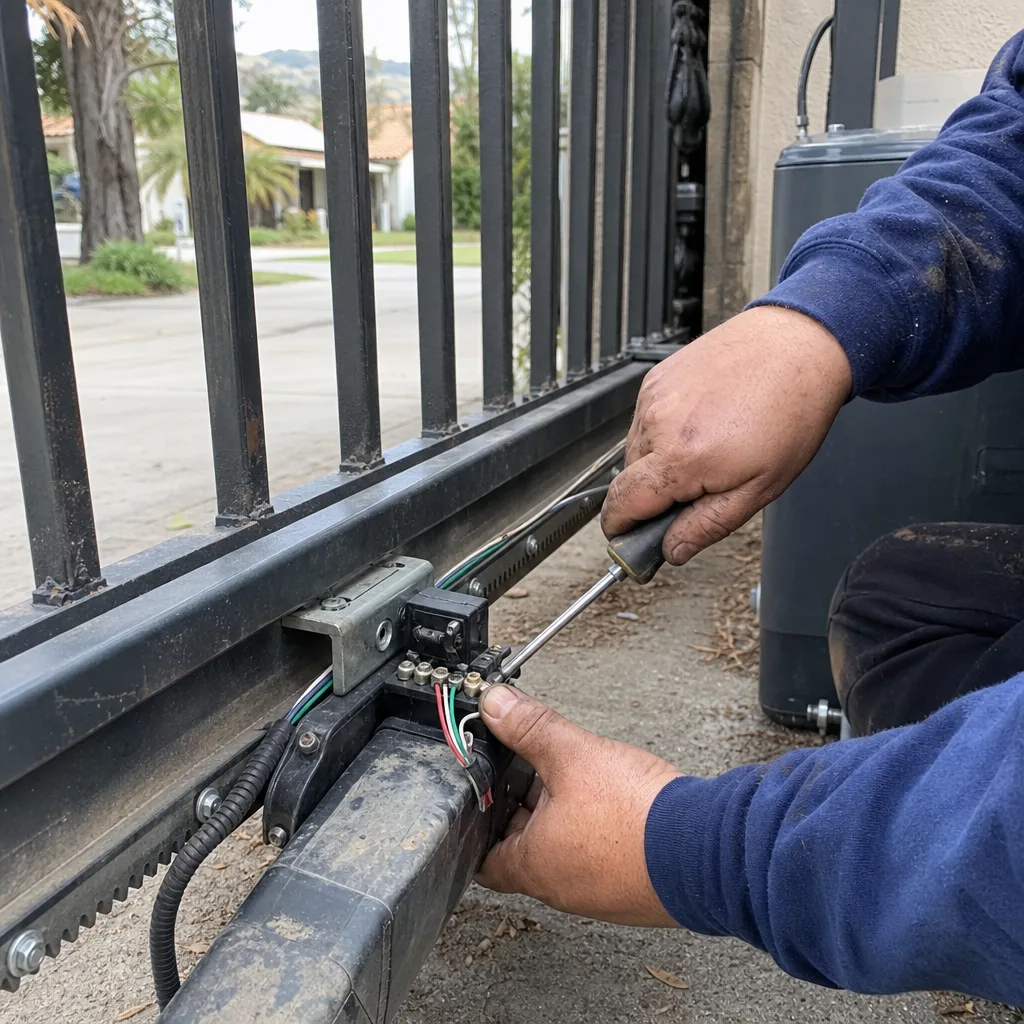
Gate warning signs are the earliest and cheapest repair opportunities you’ll ever get. A hinge gap that’s just starting to open, a relay that clicks on cold mornings, a photo-eye that’s drifted slightly out of alignment, these are all repairable problems today, and all of them become more expensive problems if ignored. The most important piece of advice from this guide: stop using any gate that’s unpredictable, and document everything before you call. A photo and a ten-second video are the fastest path to a correct diagnosis and a written price. In Agoura Hills, where wind, thermal cycling, and granite dust all work against gate hardware, early warning signs show up sooner than elsewhere, so the return on paying attention is higher here than almost anywhere. When you see a sign, act on it. Call (424) 388-2906 for a free estimate and a written price before any work begins.
Written by Adrian Vance, Owner at Vance Gate Repair Agoura Hills, serving Agoura Hills since 2014.