
Last updated September 20, 2026
Free on-site gate assessment - hinges, posts, and your LiftMaster or Nice gate operator checked before anything is quoted
The assessment is free and the quote is the invoice.


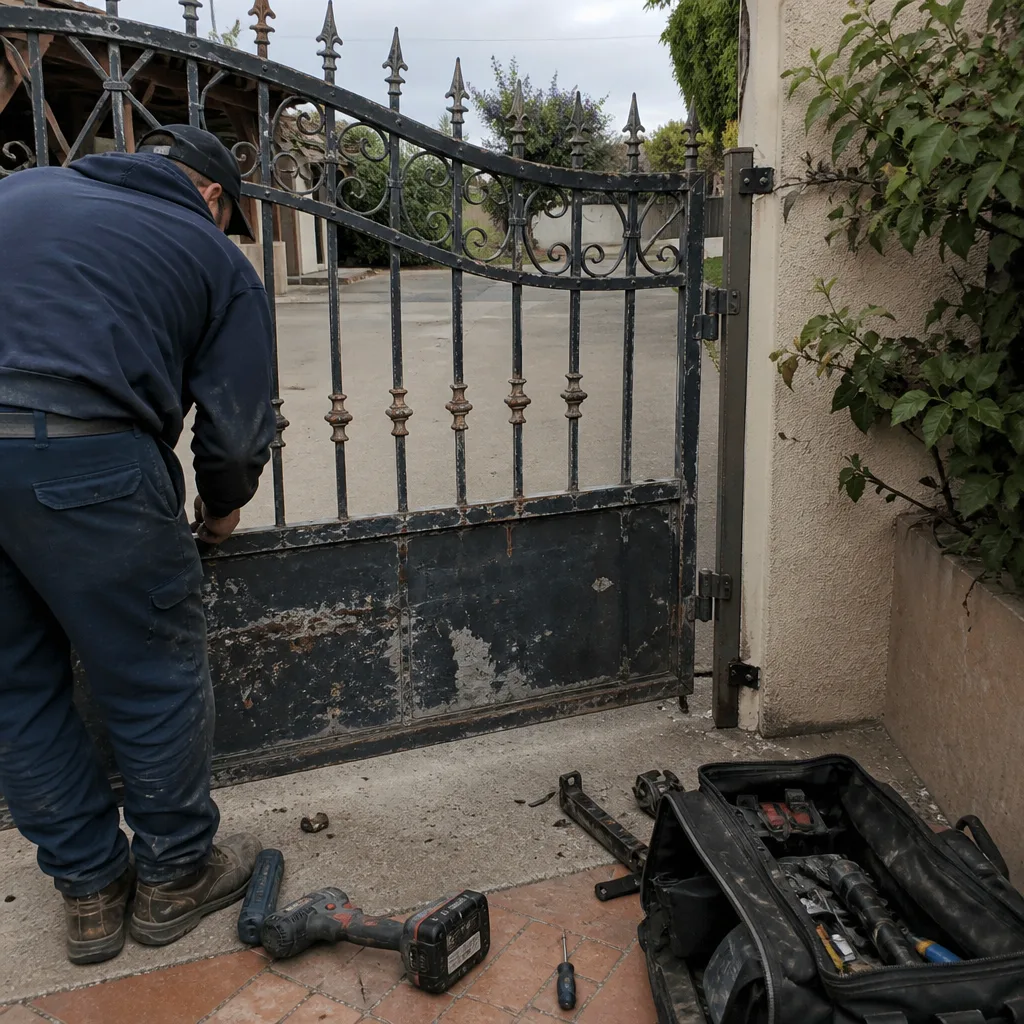 Before
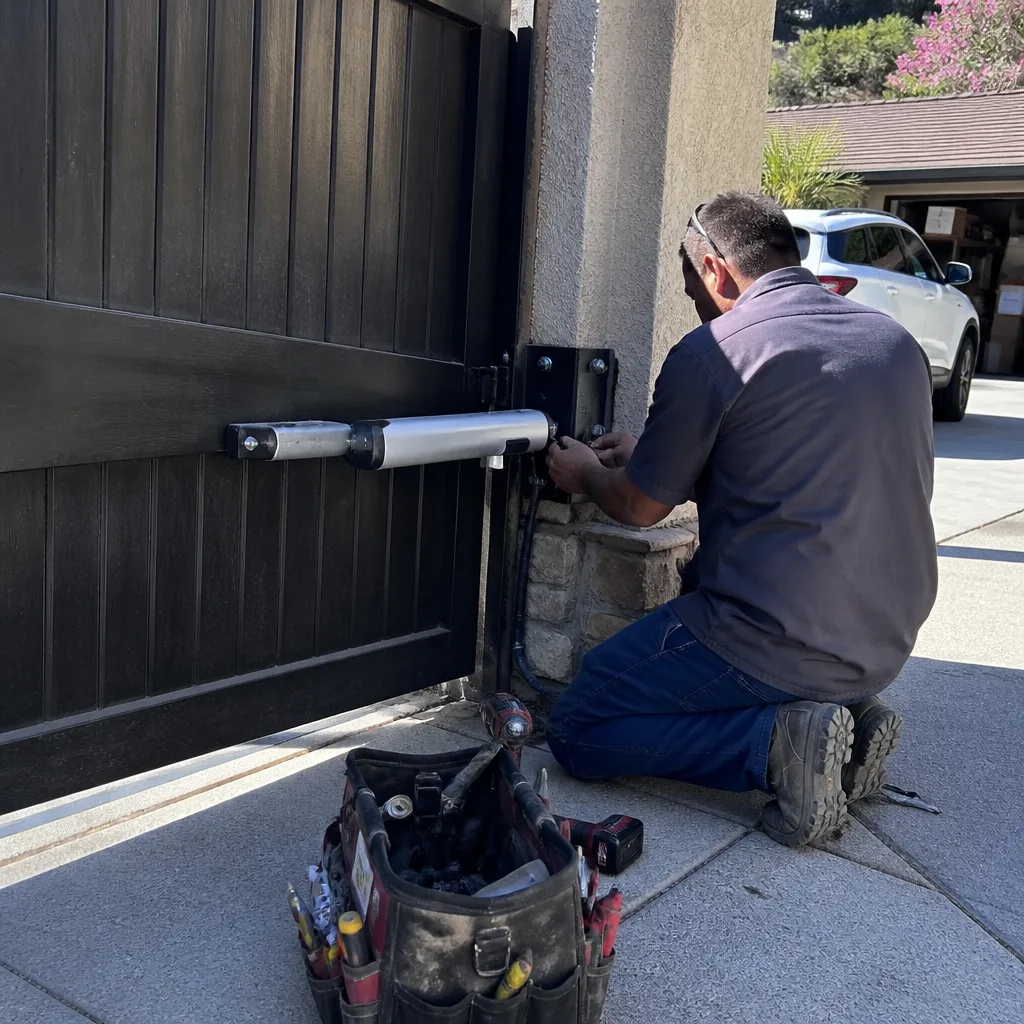 After
After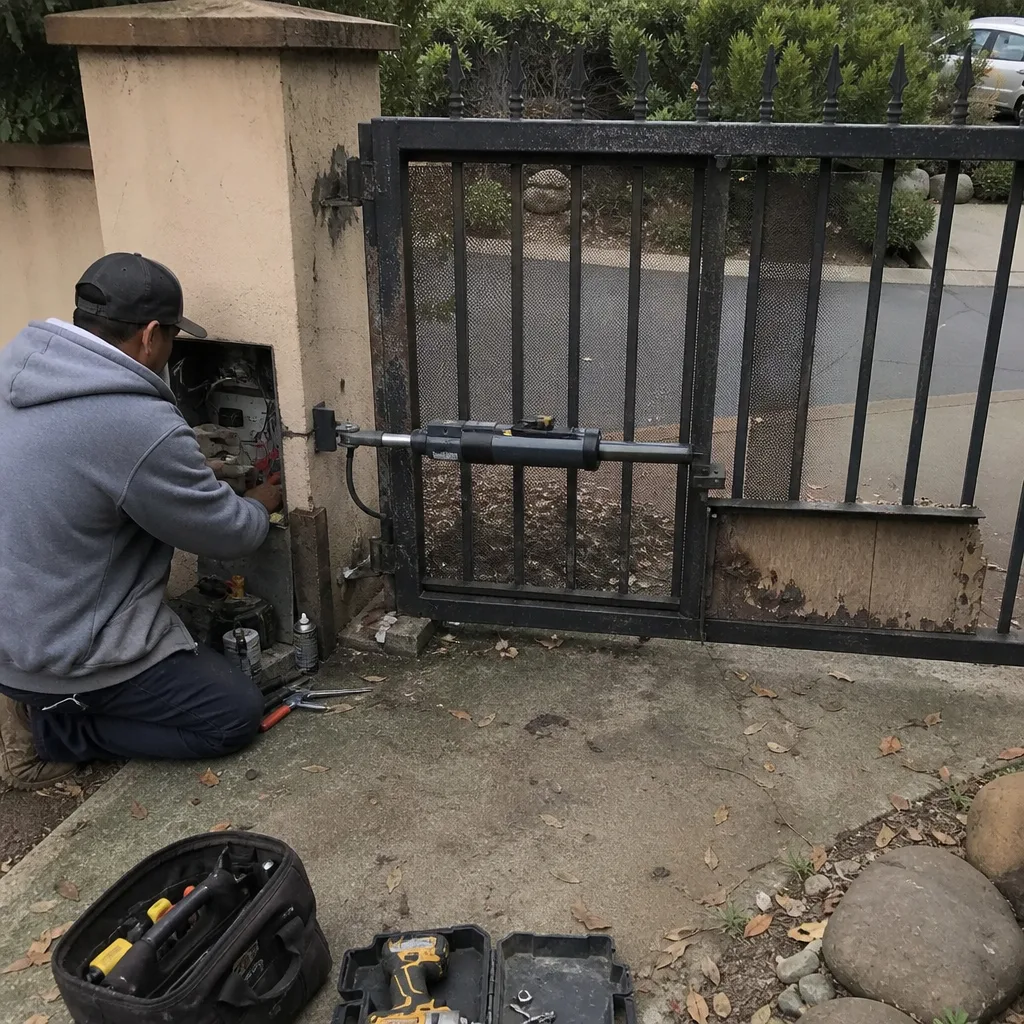 Before
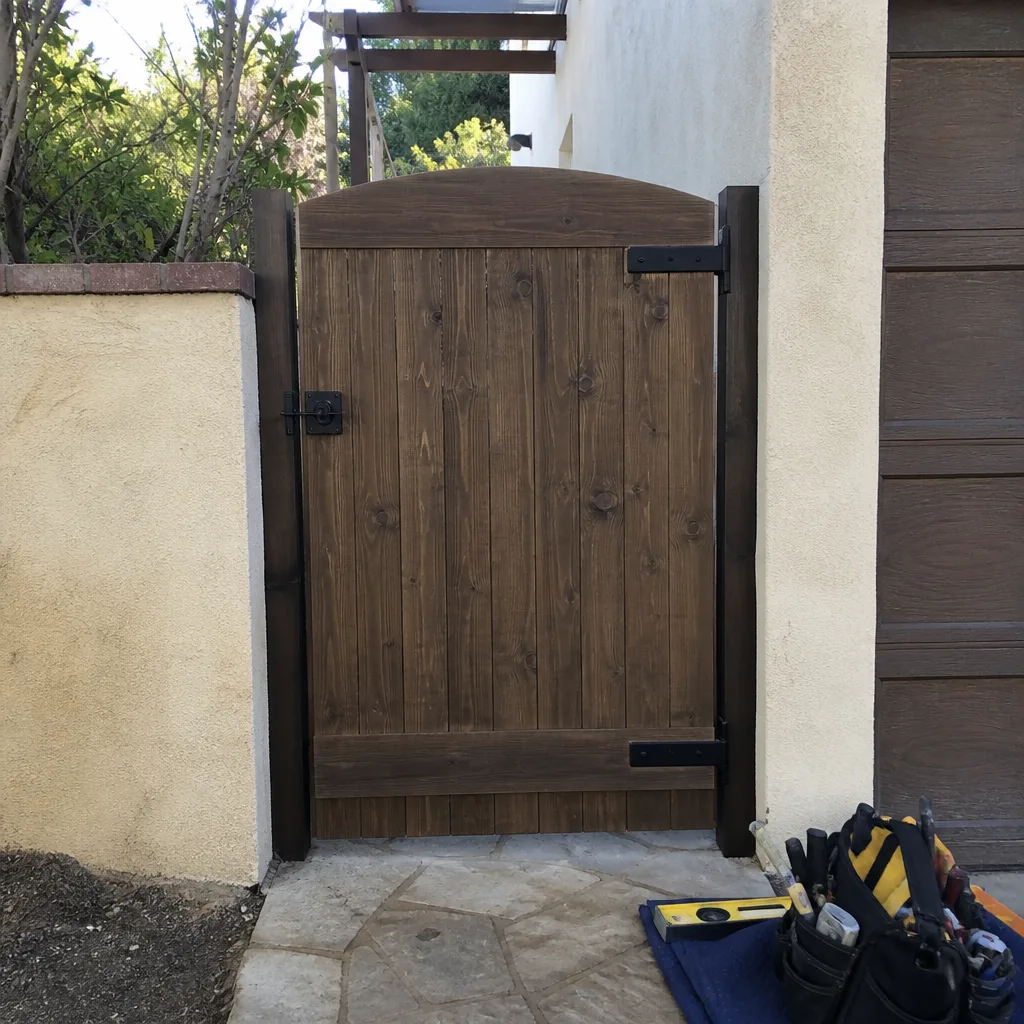 After
After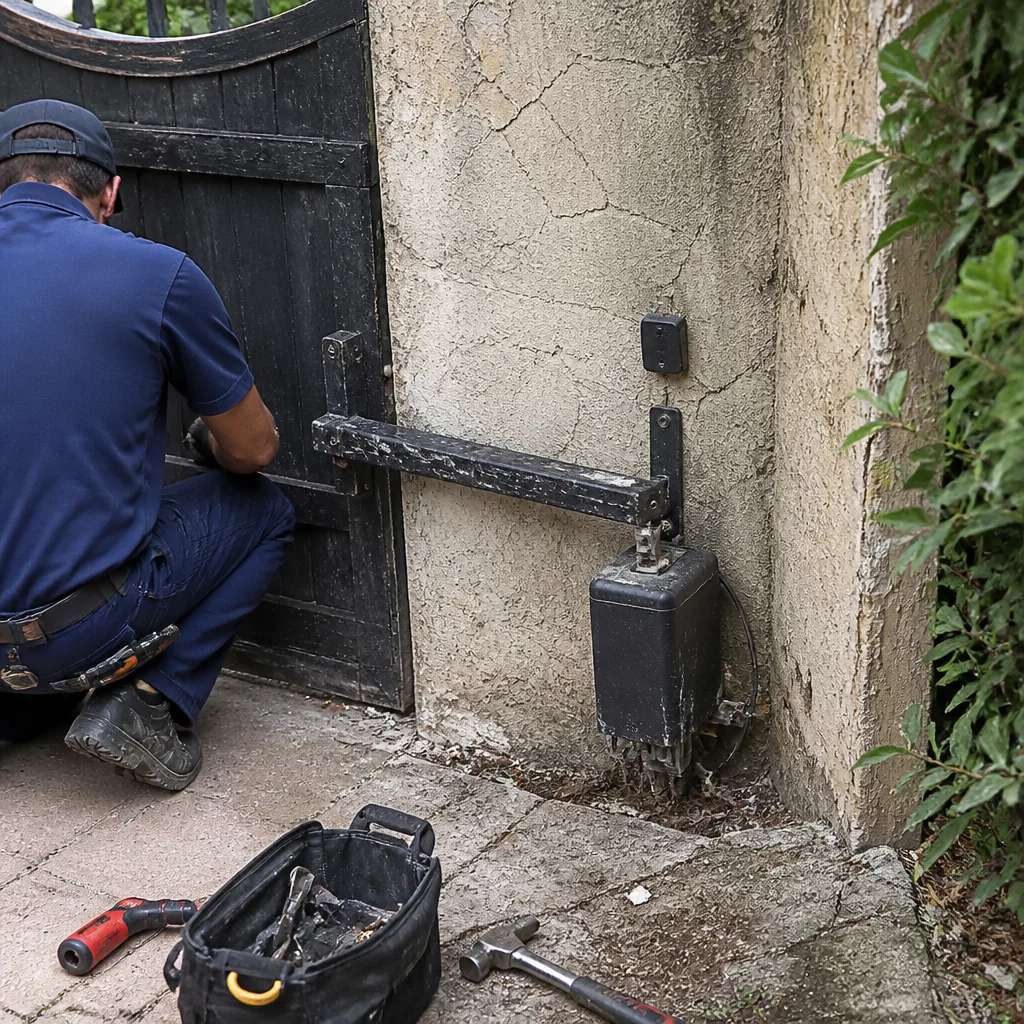 Before
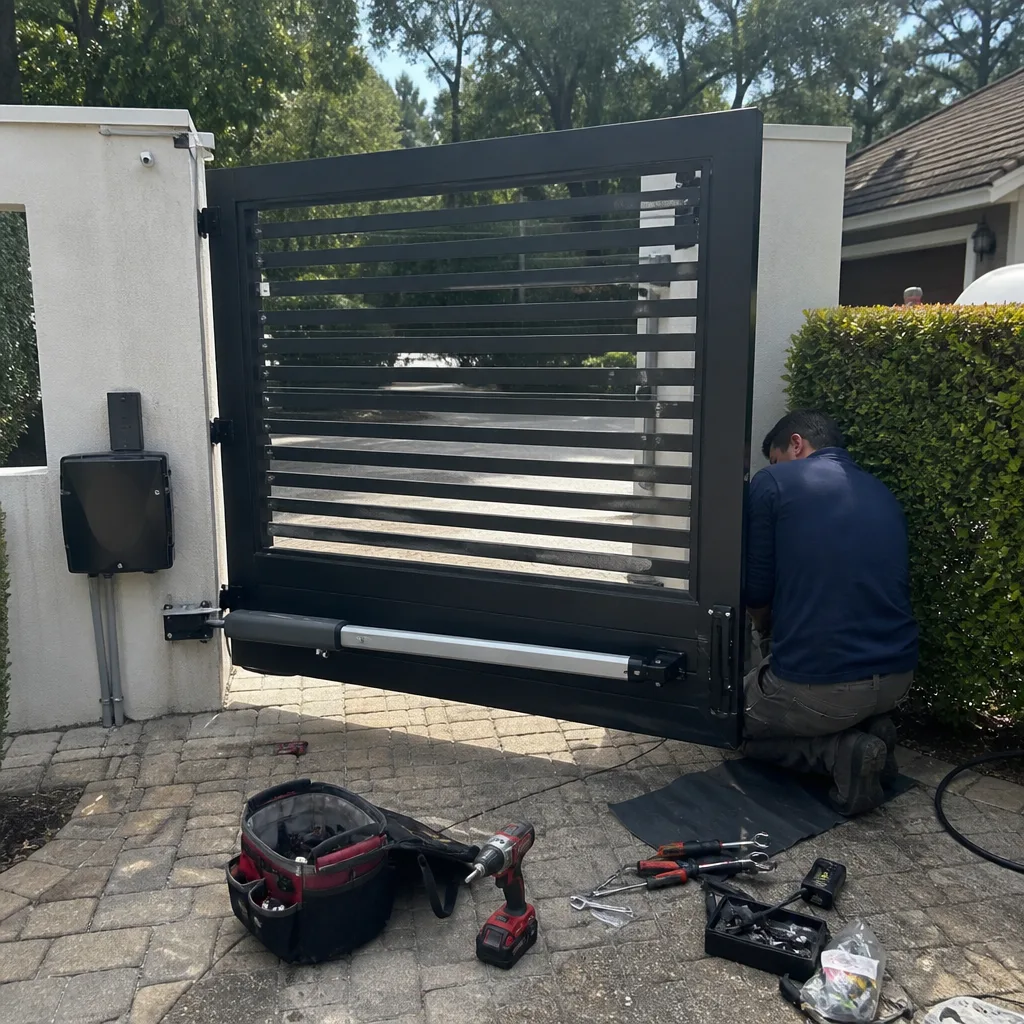 After
AfterSeasonal Gate Repair Care for Agoura Hills: Year-Round Homeowner’s Guide
Gate operators in Agoura Hills fail most often in October. Not because of summer heat. Not because of rain. Because five months of dry dust from the Conejo Valley’s fire season has packed into every unsealed gap on the operator housing, the limit switch assembly, and the control board terminals. Then the first Santa Ana wind arrives, drops the humidity to single digits, and that dust works its way deeper. This guide covers the four real stress seasons for gate hardware in Agoura Hills: fire-season dust accumulation, June marine layer moisture, summer thermal expansion, and winter rain ground shift. For a deeper dive, see The Complete Guide to Gate Repair in Agoura Hills. Each one degrades a different part of the system, and each one has specific measurements you can take yourself before a minor drift becomes a $900 repair.
Quick Answer
Seasonal gate care in Agoura Hills means adjusting your maintenance to four distinct climate patterns: clean and seal operator housings against dust during fire season (June through October), check terminal blocks and low-voltage connections for moisture corrosion during marine layer months (May through July), re-check limit switch settings during peak summer heat expansion (July through September), and measure gate post alignment and ground clearance after the first winter rains (November through February). A working annual rhythm looks like this: seal and clean in June, inspect electrical connections and corrosion in July, adjust limits in August, re-check everything after the first Santa Ana in October, then measure posts and re-align as needed after winter rain.
Table of Contents
- Fire Season and Dust: Why October Is the Real Failure Month
- June Marine Layer: Corrosion You Can’t Always See
- Summer Heat Expansion: Limit Switch Drift and Metal Growth
- Winter Rain and Ground Movement: What to Measure After the First Storm
- Month-by-Month Task Calendar for Agoura Hills Gate Owners
- Common Mistakes to Avoid
- When to Call a Professional
- Frequently Asked Questions
BeforeAfterFire Season and Dust: Why October Is the Real Failure Month
In Agoura Hills, fire season runs roughly June through October. The hillsides dry out, the grasses turn to kindling, and the air carries a fine particulate dust that’s different from ordinary household dirt. It’s not just silica and soil. It contains carbonized plant material, ash from controlled burns, and the kind of ultra-fine grit you only notice when it’s already inside a machine it doesn’t belong in.
Gate operators are low-voltage DC or AC machines, but almost all of them breathe. The operator housing on a swing gate motor or slide gate motor typically has a vent or a cable entry point or a seam where the cover meets the base plate. When the wind pushes that fine dust across a driveway for months, the dust doesn’t just settle on the outside. It gets pulled inside by the heat cycle of the motor and the control board. Then it packs into places where moving parts live.
Here’s the specific damage path we see in Agoura Hills, in order of what fails first:
- Limit switch assemblies - the mechanical or magnetic switches that tell the motor when to stop. Dust gets in the contact gap, and the switch either stops working or reads a false position. The gate stops short, or it over-travels and slams the post.
- Control board terminal strips - the screw terminals where low-voltage wires land. Fine dust mixed with the tiniest bit of humidity forms a conductive paste on the terminal block. This causes intermittent faults that are hard to reproduce because they only show up under load.
- Photo-eye lenses - the infrared safety beams mounted low on the gate posts. Dust on the lens reduces the beam’s effective range. The gate sees a false obstruction and refuses to close, or it reverses mid-cycle.
- Gear reduction oil and grease - on chain-drive slide gate operators and worm-gear swing motors, dust wicks into the oil or grease and turns it into a mild abrasive paste. Over a full season, this accelerates wear on the gear teeth.
What you can do: before October, take five minutes and look at the operator housing. If you see dust streaks around the cover seam or the cable glands, wipe them down with a dry microfiber cloth. Do not use compressed air from a can. Blasting dust deeper into the housing is worse than leaving it alone. If the dust has made its way inside, that’s when a Gate Repair service call makes sense. A technician should open the cover, photograph what’s inside, clean the terminals with a proper contact cleaner, re-torque the terminal screws, and seal the cable entry points with the right weatherproofing material.
For more on how our Gate Repair in Agoura Hills process handles seasonal failures, see the linked page.
June Marine Layer: Corrosion You Can’t Always See
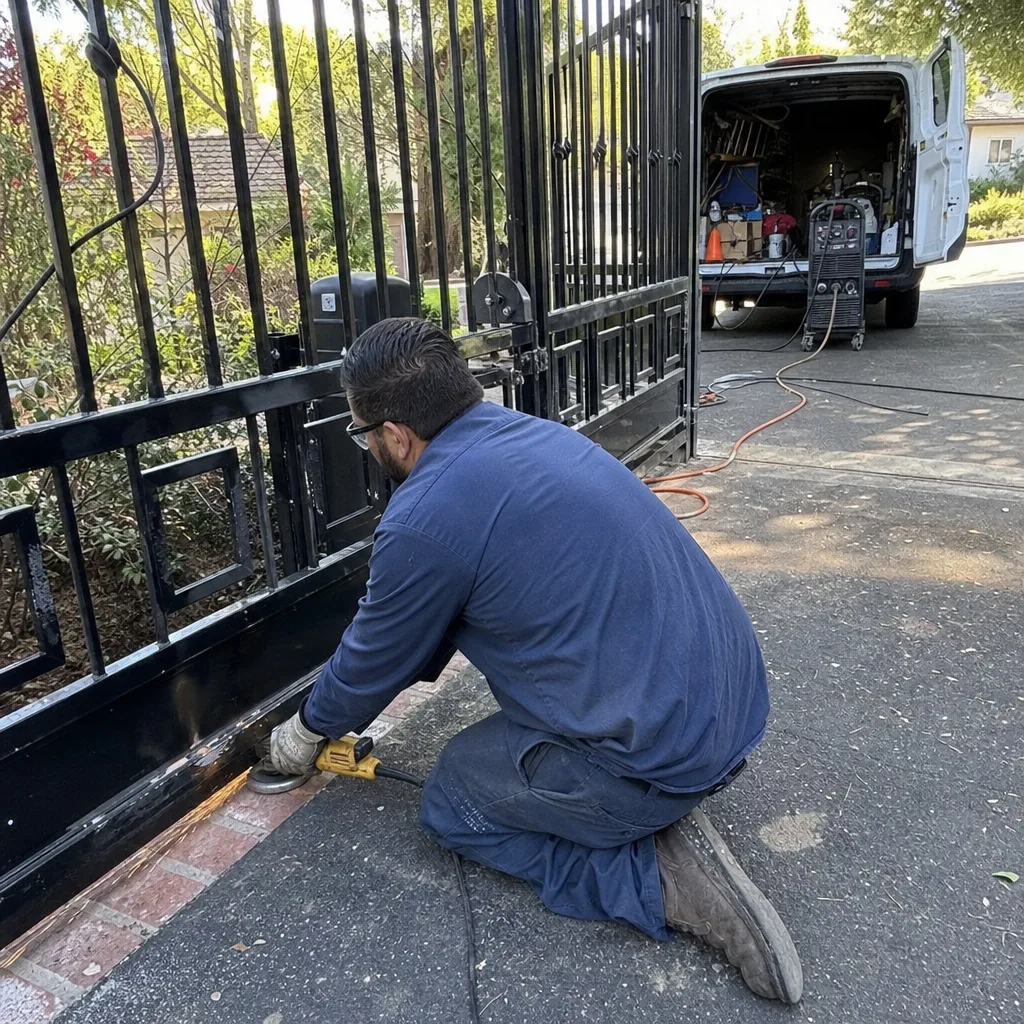
Agoura Hills sits close enough to the coast that the marine layer rolls in during May and June. Mornings are overcast. Overnight humidity spikes. Surfaces that never see rain still get wet from condensation. For a gate operator, this is a corrosion season, and it hits different components than dust season does.
The most vulnerable point is the terminal block. Every gate operator has low-voltage connections: the photo-eyes, the keypad, the loop detector, the push-button, the safety edge. Those connections are usually bare copper wire landed under a screw terminal. When overnight humidity condenses on a terminal block, the copper begins to oxidize. Early-stage oxidation looks like a dull film or a slight greenish tint on the copper. Later-stage oxidation looks like a white or blue-green crust. By the time you can see crust, the connection is already compromised.
What we see in Agoura Hills specifically is a pattern where the marine layer corrosion shows up as an intermittent failure that homeowners describe as “the gate works fine most of the time, but every few weeks it just doesn’t respond.” That’s the classic signature of a terminal block with oxidation. The connection has enough contact area to work normally in dry weather. When the humidity spikes, the oxidized surface becomes a high-resistance junction, the voltage drops, and the control board sees a command it can’t execute.
Here’s the early-stage checklist for marine layer months:
- Inspect the terminal block - turn off the breaker or battery disconnect first, then open the operator cover. Look at the screw terminals. If the copper wire looks dull or greenish, that’s stage one oxidation.
- Check the battery terminals - if your operator has a backup battery, check the battery terminals for the same dull film. Battery corrosion moves faster because of the acid vapor.
- Look at the low-voltage wire jacket - if the wire insulation is cracked or brittle near the entry point, moisture is following the wire inside.
- Check the ground screw - the chassis ground should be clean and tight. A loose or corroded ground is the cause of a surprising number of “phantom” gate faults.
If you find early oxidation, do not scrub it bare and walk away. A trained technician should clean the terminal with contact cleaner, re-land the wire on a clean section if possible, apply dielectric grease to the terminal, and photograph the result. That photo goes in your file. Next time, you don’t have to wonder whether the connection was ever addressed.
The good news: marine layer damage is highly preventable. The bad news: once oxidation has caused intermittent faults, the fix usually requires re-terminating the affected connections, not just wiping them down.
Summer Heat Expansion: Limit Switch Drift and Metal Growth
Agoura Hills summer temperatures routinely hit the high 90s. In a direct-sun driveway, the metal gate itself can reach 140°F or more. Steel and aluminum expand when they get hot. A typical 14-foot steel driveway gate will grow 3 to 5 millimeters in length between a cool spring morning and a scorching July afternoon.
Three to five millimeters doesn’t sound like much. But the limit switch that tells the gate when to stop moving doesn’t know about thermal expansion. The limit is set to a specific position. If the gate physically grows longer in the heat, the gate arrives at the closed position while the motor is still trying to push it past the limit point. The limit switch sees the over-travel and triggers a reversal. Or the gate slams the closed post harder than it should because the mechanical stop point has moved.
Here’s the mechanism, explained plainly: your gate operator is programmed to run the gate until a limit switch tells it to stop. The limit is set based on the physical length of the gate and the position of the posts. If the gate is longer at 2 p.m. than it was when the limit was set at 8 a.m., the relationship between the gate and the limit point shifts. The motor thinks it has 5 millimeters more travel than it actually does. That’s how a gate that works perfectly all spring starts slamming, reversing, or erroring out in July.
The fix is not to reprogram the limit every summer. The fix is to set the limit correctly in the first place, taking thermal expansion into account. That means leaving a small amount of “soft stop” travel at the closed position, so the motor stops before the gate reaches the mechanical post, and the thermal growth gets absorbed in that soft-stop gap rather than in a hard impact.
What to watch for in Agoura Hills during July through September:
- The gate slams the closed post and bounces back.
- The gate reverses before reaching the closed position and the motor shows a fault LED.
- The gate runs slower at 3 p.m. than it does at 8 a.m. (heat also increases motor resistance).
- The gate stutters or “hunts” at the closed limit in the afternoon, but works fine in the morning.
If you’re seeing any of these, the limit switches need to be re-set for thermal compensation. On LiftMaster and FAAC operators, this is done through the control board’s limit learn procedure. On Mighty Mule and Ghost Controls units, the process is slightly different but the concept is the same: set the limit to stop short of the physical post, leaving a small gap that closes up as the gate grows in the heat.
For gate owners in Agoura Hills who’ve noticed this behavior but haven’t fixed it yet, we cover the same seasonal drift on our Gate Motor & Opener in Agoura Hills page.
Winter Rain and Ground Movement: What to Measure After the First Storm
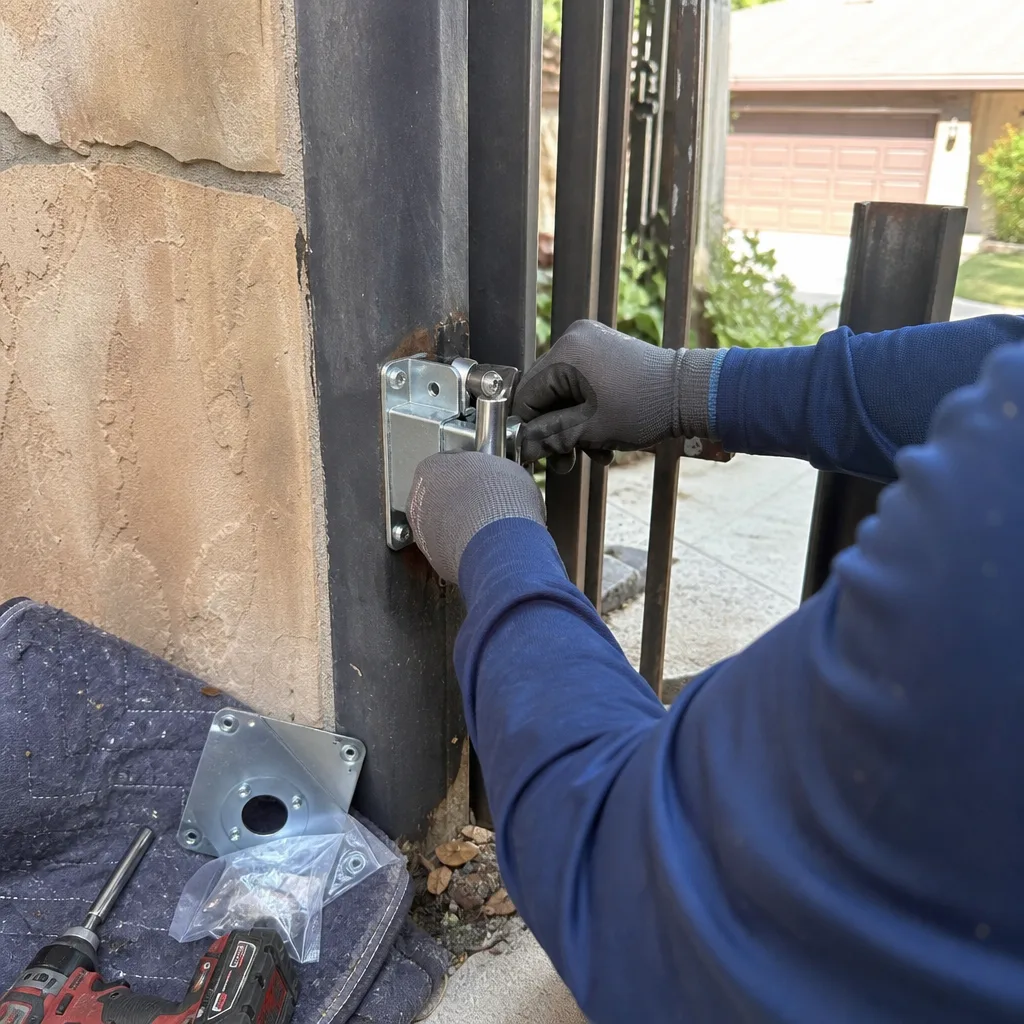
Agoura Hills gets most of its rainfall between November and March. When the ground saturates, two things happen. First, the soil expands. The clay-heavy soil in the Conejo Valley swells when it’s wet, and that swelling pushes on the gate posts. Second, the water adds weight to the soil, and on sloped lots, saturated soil can move. Even a quarter-inch of post movement at the base translates to an inch or more at the latch line, because the gate post is a lever.
The measurement that matters after the first significant rain is simple: check the gap between the two gate leaves at the closed position, and check the gap between the gate and the closed post. If the gap was even in October and it’s pinched tight in December, the posts have moved. Tolerance depends on the gate. For a typical swing gate, a gap change of more than a quarter inch at the latch line usually means the operator is now fighting the alignment. For a slide gate, the rail or the v-wheel track is the tell: if the gate rides up on the v-wheel or scrapes the track, the post or the track has moved.
What to do after the first heavy rain in Agoura Hills:
- Close the gate fully and look at the seam where the two leaves meet. It should be even top to bottom. If the top gap is wider than the bottom gap, the post has moved at the base.
- Check the ground clearance at the free end of the gate. If the gate used to clear by two inches and now barely clears by half an inch, the post or the hinge side has settled.
- Listen to the operator over two or three open-close cycles. A gate that’s fighting a shifted post makes a different sound: harder impacts, a change in motor pitch, or a slight grinding at the end of travel.
- Check the photo-eye alignment - post movement knocks the beam out of alignment. The gate will refuse to close or reverse halfway.
If the posts have moved, re-alignment is the fix. On a swing gate, this sometimes means adjustable hinges. On a slide gate, it usually means re-shimming the track and re-tensioning the chain. This is not a DIY adjustment; a misaligned gate under tension can snap back, and the motor can be damaged if it’s forced to run against a post that’s no longer where the limit switch expects it to be. If you need a professional, our Gate Installation in Agoura Hills page covers what a post-rest or re-alignment looks like.
Month-by-Month Task Calendar for Agoura Hills Gate Owners
Here’s the working rhythm that fits Agoura Hills’ actual climate. These are specific, measurable tasks, not generic “inspect and lubricate” suggestions.
January
- Measure the gate gap at the closed position after the December rains. Note the measurement in a notebook or on your phone.
- Check the ground clearance at the free end of the gate.
- Wipe down the operator housing and check for water entry stains around the cover seam.
February
- Check the photo-eye lenses after the last rain. Clean with a dry cloth. Re-align if the beam is off.
- Inspect the chain or belt tension on slide gates. A loose chain after ground movement is common.
- Look at the gate hardware: hinge bolts, bracket bolts, wheel bearings. Re-torque anything that’s loose.
March
- Run a full cycle test: open, stop, reverse, close. Watch for shuddering or hesitation.
- If your operator has a backup battery, test it by cutting AC power for one full cycle.
- Check the keypad and push-button for water damage from the winter rains.
April
- Grease the hinge points and wheel bearings with the correct product for your gate (not WD-40; use a proper lithium or silicone grease).
- Inspect the control board for signs of dust or insects. If the operator housing has a foam gasket, check it for cracks.
May
- This is marine layer month. Check the terminal block for early oxidation (dull copper film or green tint).
- Apply dielectric grease to the terminal screws if the connections are clean.
- Check the battery terminals if your operator has a backup battery.
June
- Fire season begin. Clean the exterior of the operator housing and the cable entry points.
- Check the photo-eye lenses for dust. Wipe with a dry microfiber cloth.
- If the operator has a fan or cooling vent, make sure it’s not obstructed.
July
- Peak heat. Run the gate at 3 p.m. and watch the closed limit. If it slams or reverses, the limit is drifting with thermal expansion.
- Anything that looks wrong in the heat but works in the morning is a thermal issue, not a coincidence.
August
- Re-test the limit positions in peak heat. If the limit was set in the spring, it may need a thermal-compensation adjustment.
- Check the operator motor temperature after a full cycle. It should be warm, not hot to the touch.
September
- Dust accumulation peak. Wipe down the operator housing again. Check the cover seal and cable glands.
- Run a full cycle and listen for any change in motor pitch. A high-pitched whine on a slide gate often means the track is dirty or the chain is too tight.
October
- Santa Ana month. This is the highest-failure month in Agoura Hills. Do a full inspection: terminal block, limit switches, photo-eyes, cover seal, and hardware tightness.
- If anything was marginal in September, fix it before the wind season peaks.
November
- First rain likely. Before the rain, check the operator housing for any gap that could let water in.
- After the rain, measure the gate gap at the closed position. Compare to your January measurement from last year.
December
- Heaviest ground movement month. Check the gate gap and ground clearance again.
- If the gate moved more than a quarter inch since October, schedule a re-alignment check.
Common Mistakes to Avoid
- Using compressed air to clean the operator housing. You’ll push dust deeper into the gearbox and the control board. Use a vacuum with a soft brush attachment if you must clean inside, or better yet, have a technician do it with the right tools.
- Lubricating the gate track on a slide gate with WD-40. WD-40 is a solvent, not a lubricant. It strips the existing grease and leaves the track dry. Use a proper silicone or lithium grease.
- Ignoring that the gate slams in the afternoon but works fine in the morning. That’s not a mystery. That’s thermal expansion. The limit switch is set wrong for the summer heat. Fix it in the heat, not in the cool.
- Re-tightening hinge bolts without checking post alignment. If the posts have moved, tightening the hinge bolts just locks in the misalignment. The gate will still bind, and now the hardware is under more stress.
- Waiting for the “check engine” light equivalent. Gate operators don’t have a check engine light. By the time the gate stops working completely, the root cause has usually been building for months. The October failure started in June.
- Replacing the whole operator when the limit switch or a terminal block fails. On most of the brands we service - LiftMaster, FAAC, BFT, Mighty Mule - the failure is a serviceable component, not the motor. A proper diagnosis saves you the cost of a motor you didn’t need.
When to Call a Professional
Some gate issues are safe to identify and monitor. Others need a trained technician. Call a professional if the gate is slamming against the post hard enough to shake the post base, if the motor is hot to the touch after a single cycle, if you see visible arcing or burnt insulation on any wire, if the gate has moved more than a quarter inch at the closed gap since the last rain, or if you have any doubt about the safety edges and photo-eyes working properly. A gate under spring tension or chain tension can release suddenly, and the safety systems are there to protect people, not just the gate. Vance Gate Repair Agoura Hills offers free estimates in Agoura Hills. Call (424) 388-2906 and we’ll put a written price in your hand before any work starts.
Frequently Asked Questions
For most residential gates in Agoura Hills, a full service visit once a year is adequate, but the timing matters more than the frequency. Schedule it for early October, before the Santa Ana winds arrive. That’s when the cumulative damage from fire-season dust is at its peak, and a technician can clean, re-torque, and re-set everything before the highest-stress month of the year. If your gate is exposed to direct sun and dust from a dirt lot or open hillside, consider a second visit in April to address marine-layer corrosion. Call (424) 388-2906 and we’ll give you a written price for a one-time seasonal service or a twice-yearly maintenance plan.
Most residential gate service calls in Agoura Hills run between $150 and $350, depending on the operator type and whether any parts need replacement. See our DIY vs Professional Gate Repair: The Agoura Hills Homeowner’s Decision Guide to decide what’s right for your situation. A routine seasonal service that includes cleaning, terminal inspection, limit check, and hardware re-torque typically falls on the lower end. If the technician finds oxidation that needs re-terminating or a limit switch that needs replacement, the price goes up accordingly. Vance Gate Repair Agoura Hills quotes a flat written price before any work starts, so you’ll know the number before you approve anything.
This is almost always thermal expansion. Your gate’s metal grows 3 to 5 millimeters in peak afternoon heat, and that growth changes the relationship between the gate and the limit switch. The switch was set for a cooler gate length, so the motor over-travels or the gate slams the post in the afternoon. The fix is to re-set the limits with a thermal compensation gap. Call (424) 388-2906 for a free estimate, and we’ll show you the exact limit readings before and after the adjustment.
The single most important thing is to make sure the operator housing is properly sealed. Check the cover seam, the cable entry points, and any vent or cooling opening. If dust is getting in, it will find the limit switches and the terminal block. Wipe down the photo-eye lenses with a dry cloth, and check that the gate hardware is tight. October is the highest-failure month in Agoura Hills specifically because five months of dust has accumulated by then. A pre-October service call is the best insurance.
You can safely do the external checks: wiping down the housing, cleaning the photo-eye lenses, measuring the gate gap after rain, and listening for changes in the motor sound. You should not open the operator housing and work on the terminal block, limit switches, or any wiring unless you know how to isolate power and work safely around a gate that can move under its own power. The mechanical components of a gate operator are under tension, and the electrical components carry line voltage. When in doubt, call (424) 388-2906 and we’ll schedule a service visit.
Vance Gate Repair Agoura Hills services nine major gate-automation brands, including LiftMaster, FAAC, BFT, Mighty Mule, Linear, Viking, Ghost Controls, DoorKing, and Elite. We don’t steer you toward a replacement just because your current motor isn’t the brand we’re most familiar with. If the motor on your property can be repaired, we’ll repair it and give you the written record of what was done. If it can’t, we’ll show you why and give you a written price for the replacement before you decide.
The Bottom Line
Gate care in Agoura Hills is a rhythm, not a checklist. Fire season dust packs into the operator housing from June through October and causes most of the failures you’ll see when the Santa Anas arrive. Marine layer humidity corrodes terminal blocks between May and July. Summer heat expansion drifts the limit switches on every metal gate. Winter rain moves the posts and throws off the alignment. If you measure, clean, and check these things on the calendar laid out above, you’ll catch most problems before they become breakdowns. And when something does fail, get a written price before the work starts, and a documented record of what was found and what was done. That’s the standard for gate work in Agoura Hills, and it’s the only way we work. Call (424) 388-2906 for a free estimate.
Written by Adrian Vance, Owner at Vance Gate Repair Agoura Hills, serving Agoura Hills since 2014. Browse our more guides & resources for additional maintenance tips.