
Last updated September 20, 2026
Free on-site gate assessment - hinges, posts, and your LiftMaster or Nice gate operator checked before anything is quoted
The assessment is free and the quote is the invoice.
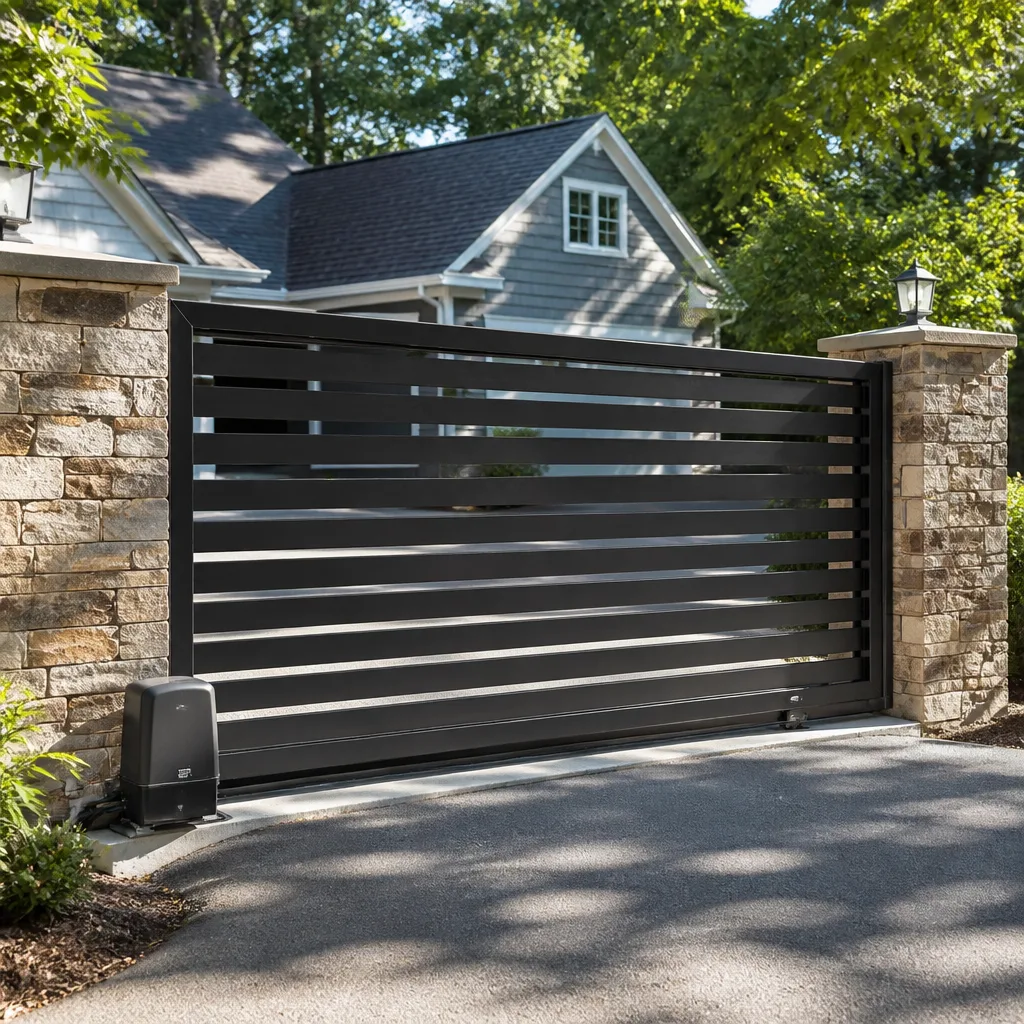
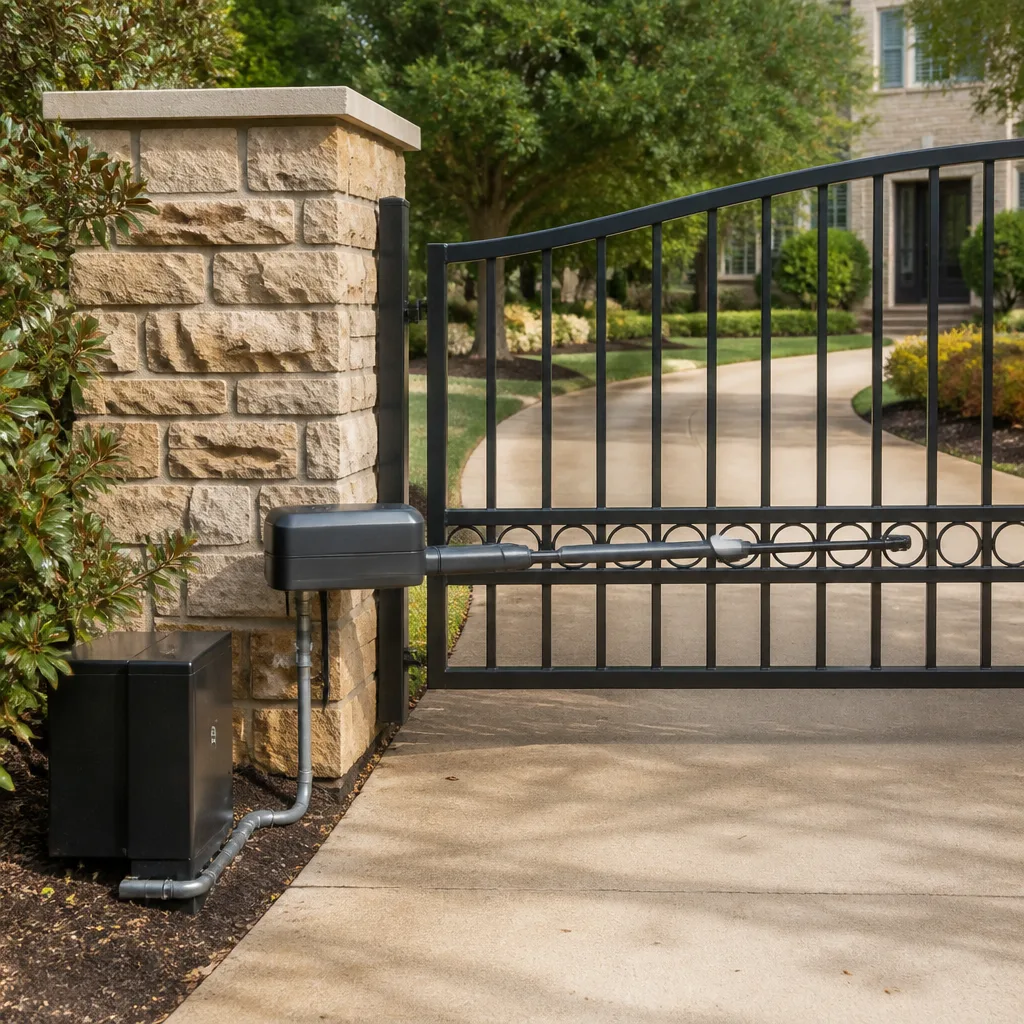
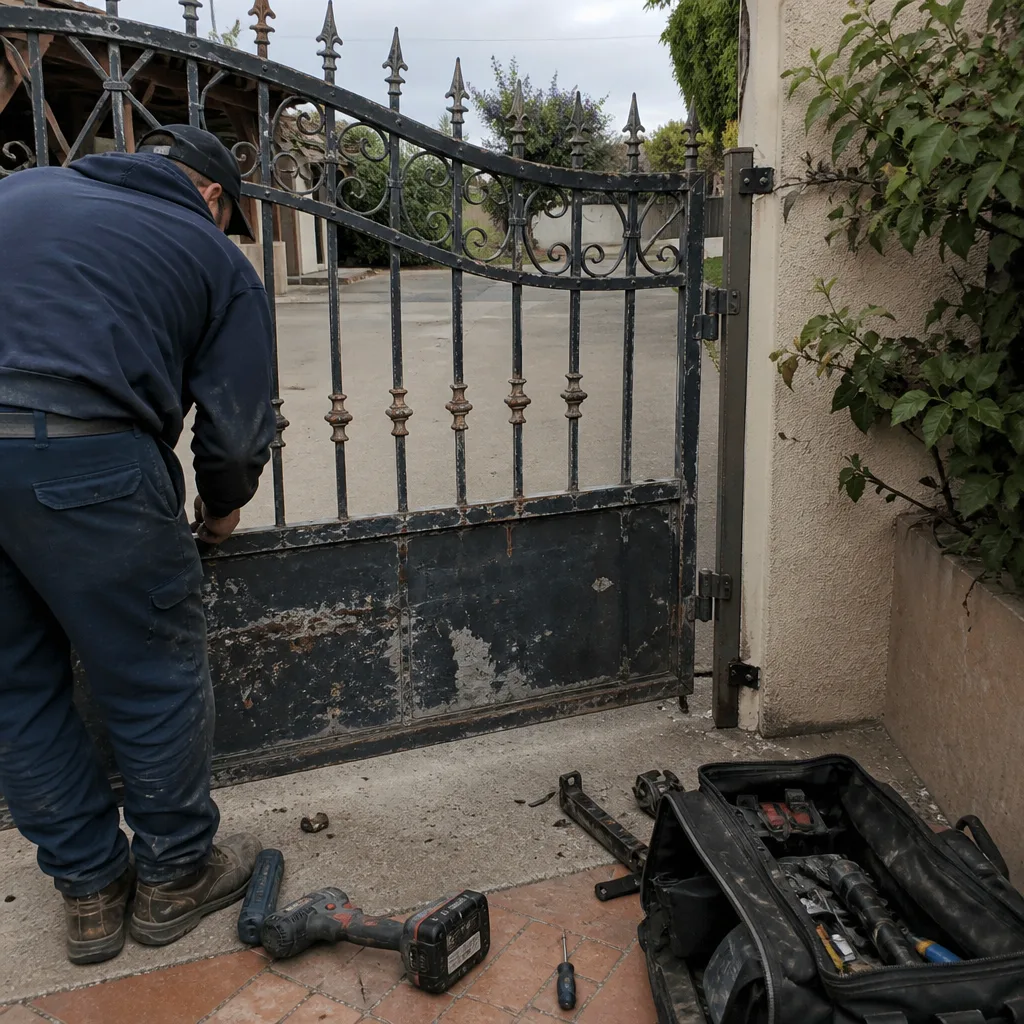 Before
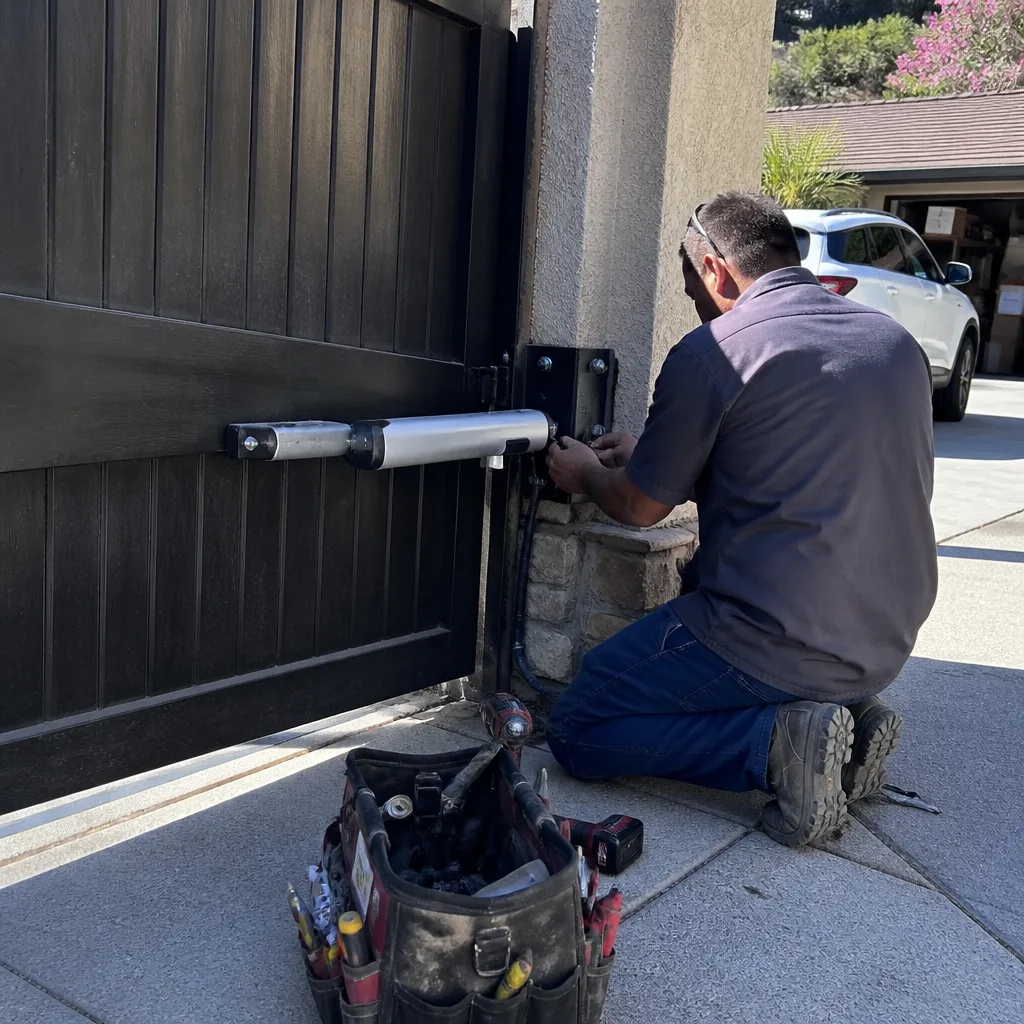 After
After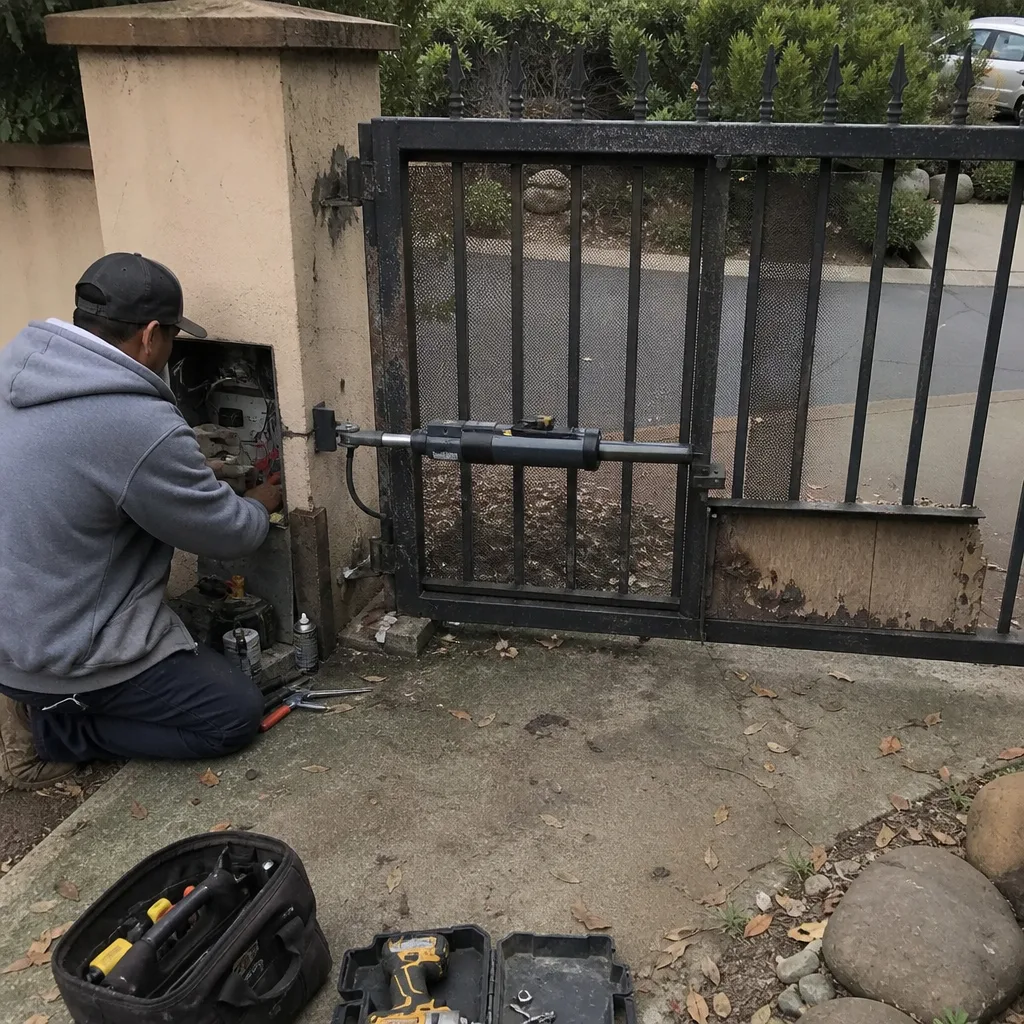 Before
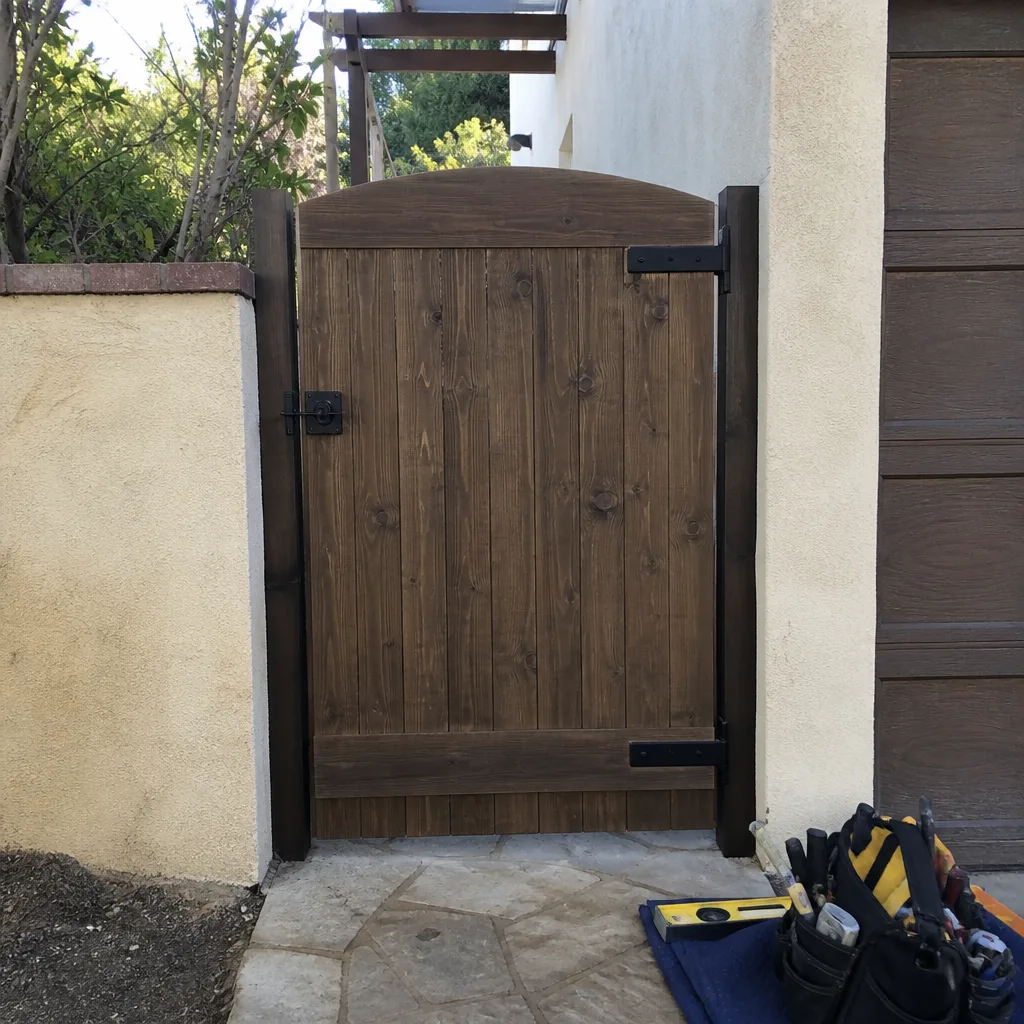 After
After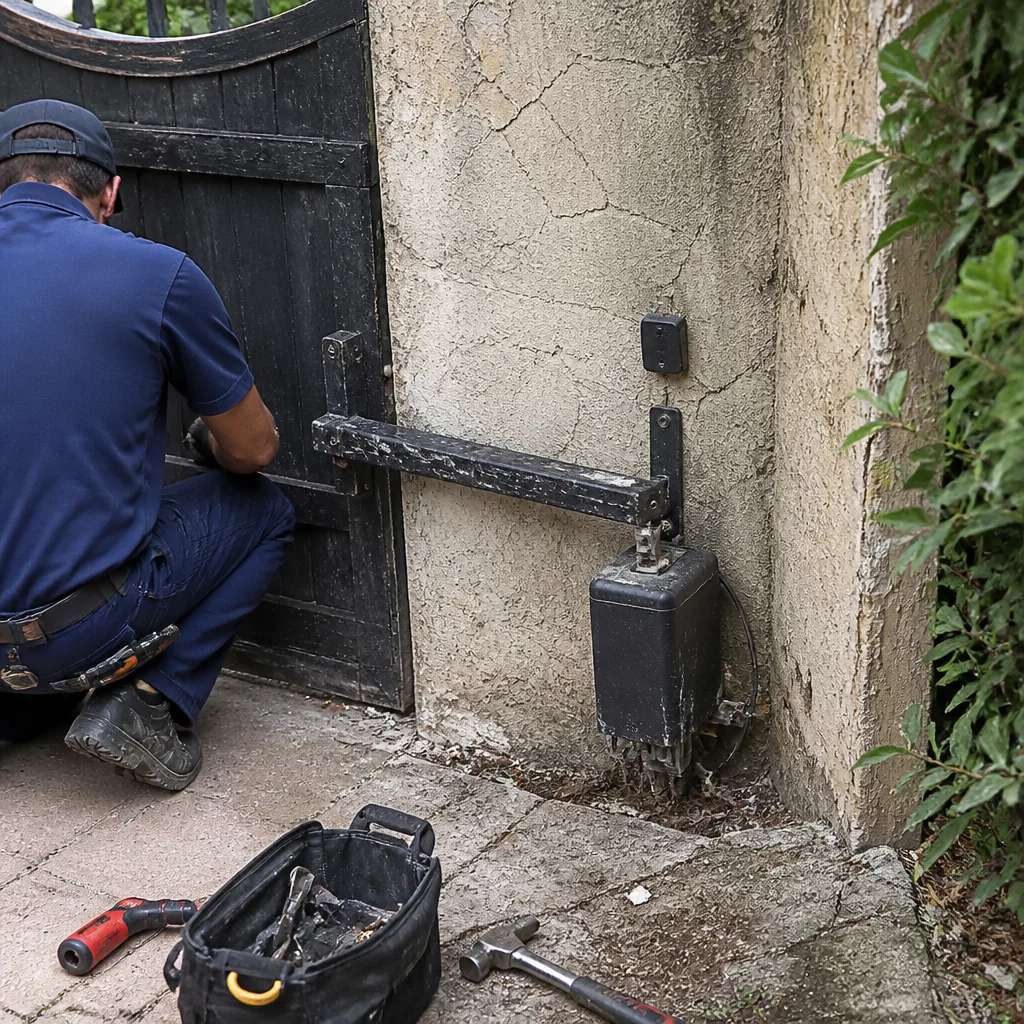 Before
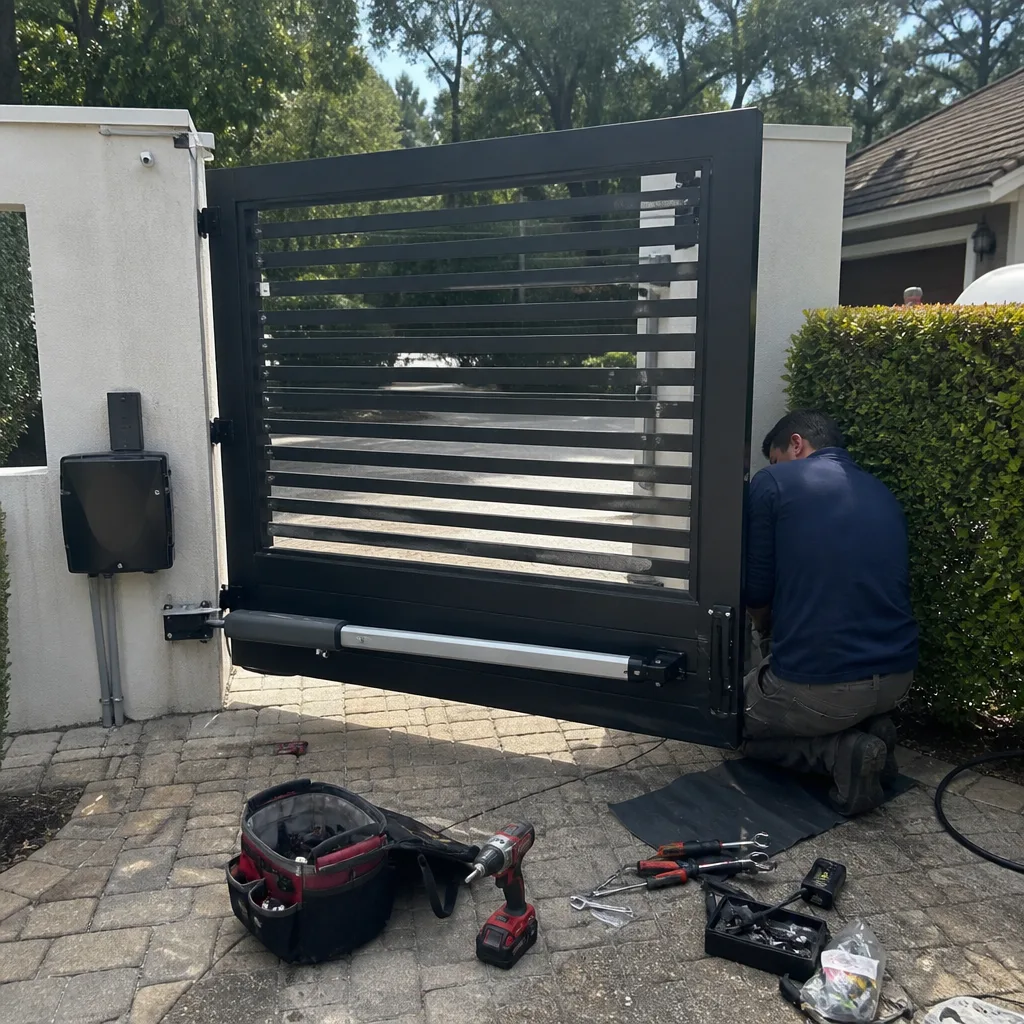 After
AfterThe Complete Guide to Gate Repair in Agoura Hills
Here’s a statistic that surprises most homeowners: in Agoura Hills, the most common gate repair call isn’t a failed motor. It’s a twelve-dollar limit switch that a previous technician adjusted, never documented, and left for the next guy to diagnose from scratch. The gate stops mid-travel, the homeowner assumes the worst, and a second service call gets billed to rediscover something the first technician already knew. This guide walks through every component of a gate system in Agoura Hills, how the local climate stresses each one, what documentation a competent technician should leave behind, and how to avoid paying twice for the same gate repair.
Quick Answer
Gate repair in Agoura Hills typically costs between $145 and $400 for most component replacements, while full operator replacements run $1,200 to $3,800 depending on brand and capacity. The three most common causes of failure in this area are limit switches losing calibration, ground connections corroding in canyon moisture, and hinge welds fatiguing from heat cycles. A reputable technician should hand you a written price before any work starts and a documented photo record of every adjustment when they leave, as detailed in our Gate Repair Cost Breakdown: The Agoura Hills Homeowner’s Reference for 2026.
Table of Contents
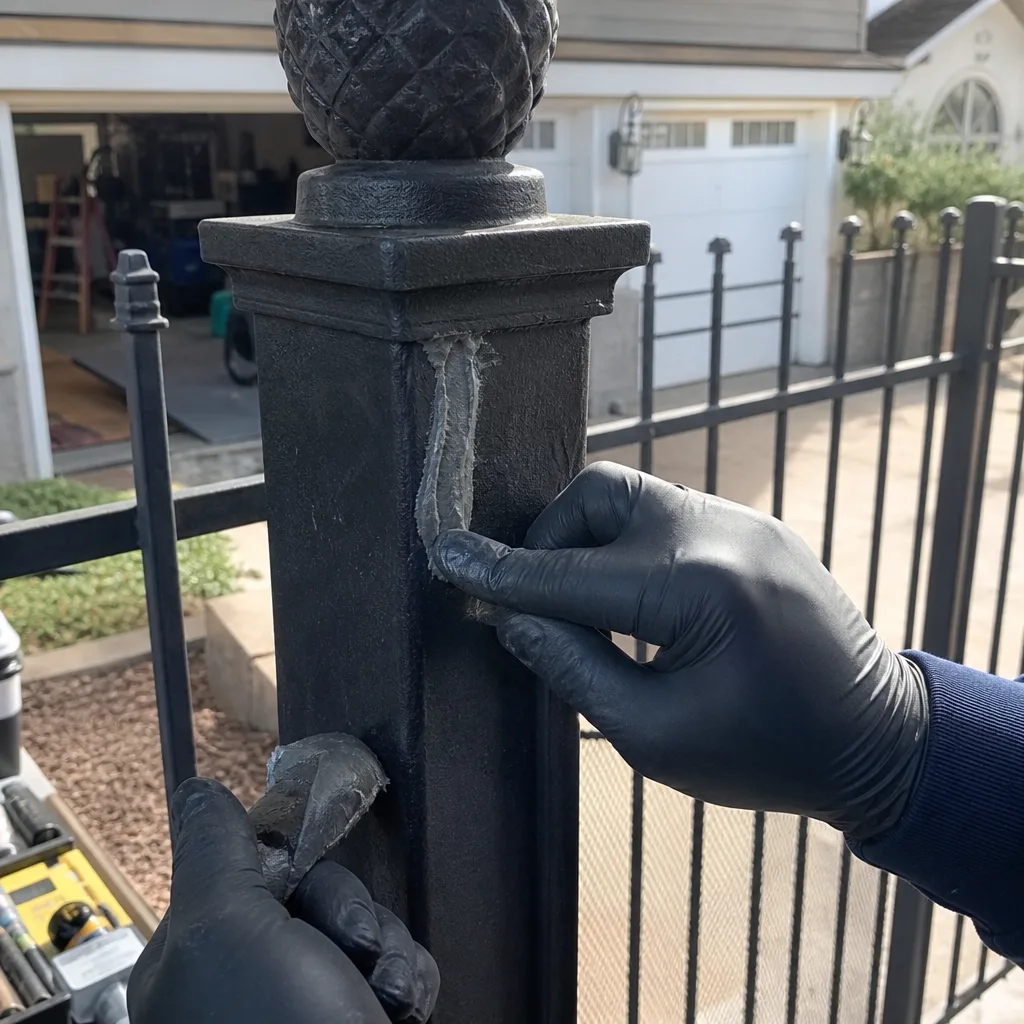
- Swing Gate vs. Slide Gate: What Fails First in Agoura Hills
- The Three Most Overlooked Failure Points: Limit Switches, Grounds, and Hinge Welds
- How the Santa Monica Mountains Microclimate Affects Gate Hardware
- What a Complete Service Record Looks Like (And Why Most Companies Don’t Leave One)
- Operator Repair vs. Operator Replacement vs. Structural Gate Repair
- Red Flags in a Technician’s Workflow
- How Much Does Gate Repair Cost in Agoura Hills?
- Common Mistakes to Avoid
- When to Call a Professional
- Frequently Asked Questions
- The Bottom Line
BeforeAfterSwing Gate vs. Slide Gate: What Fails First in Agoura Hills
Before we get into failure modes, it helps to understand the two dominant gate types in Agoura Hills and the component hierarchy of each. A swing gate is hinged on one side and moves through an arc. A slide gate runs on a track or cantilever rail and moves laterally. Both use an operator motor, a control board, limit switches that tell the motor where to stop, photo-eyes for obstruction detection, and a power source. But the failure patterns are different, and a homeowner who knows which parts fail first can ask better questions when the technician arrives.
Swing Gate Components, Ranked by Failure Frequency
In our experience repairing gates across Agoura Hills, the swing gate components that fail most often are not the ones homeowners expect. The order matters because it tells you where to look first and what questions to ask.
- Limit switches – These small mechanical or magnetic sensors tell the operator when the gate has reached its open or closed position. They drift out of calibration from repeated cycling and temperature swings. A gate that stops short, overtravels, or reverses for no reason is usually a limit switch problem, not a motor problem.
- Hinge welds and hinge bearings – A swing gate weighing 400 to 800 pounds hangs entirely on its hinges. Over years of heat cycles and daily use, welds crack at stress points and bearings wear into oval shapes. The gate begins to sag, scrape the ground, or bind against the post.
- Ground connection at the operator – The ground wire that ties the operator to the earth rod corrodes faster in Agoura Hills than in drier inland areas. When the ground degrades, the control board behaves erratically: phantom openings, false obstruction trips, intermittent dead spots.
- Photo-eye alignment – The infrared beam that stops the gate if a car or child crosses the path gets bumped by wind, landscaping, or passing vehicles. Misalignment by as little as two inches causes the gate to refuse to close or to reverse unexpectedly.
- Operator motor – Yes, motors do fail, but usually after years of service and often because a cheaper component upstream was ignored. A motor that burns out because the gate hinge was binding for six months is a symptom, not the root cause.
Slide Gate Components, Ranked by Failure Frequency
- Track debris and roller wear – Slide gates in Agoura Hills accumulate dust, decomposed granite from driveways, and leaf litter from oak trees. Rollers grind through this debris daily. Worn rollers cause the gate to shudder, stall, or strain the motor.
- Limit switch magnets – On many slide gate operators, the limit is set by two small magnets clamped to the gate rail. Vibration loosens the clamps, the magnets drift, and the gate stops in the wrong place or slams against the end stop.
- Ground connection – Same issue as swing gates, but slide gate operators are often mounted near retaining walls or landscape irrigation where soil moisture is higher. Corrosion at the ground lug is common within five to seven years.
- Chain or belt tension – Slide gate operators transfer force through a chain or belt. These stretch over time and require tensioning. A loose chain causes jerky movement and excessive wear on the sprocket.
- Operator motor and gearbox – Again, these fail last unless the upstream maintenance issues were ignored for years. A gearbox that runs dry because nobody greased the reduction gears will destroy itself, but the root cause was a skipped service interval.
What’s notable here is that the motor, the most expensive single component, is the last thing to fail in both systems. If a technician opens the cover, points at the motor, and tells you the whole operator needs replacing without checking the limit switches, the ground, and the mechanical load, you are about to pay for a shortcut. The gate motor and opener specialists in Agoura Hills who do the job correctly will check the cheap stuff first and show you the evidence of what they found.
The Three Most Overlooked Failure Points: Limit Switches, Grounds, and Hinge Welds
Ask any homeowner in Agoura Hills what they think is wrong with their gate and most will say the motor is dead. In roughly two-thirds of the service calls where we open the operator cover and inspect the system, the motor is fine. The problem is one of three smaller, cheaper components that almost never get documented on the invoice because the previous technician fixed it in five minutes without writing anything down.
Limit Switches: The Twelve-Dollar Problem That Causes Thousand-Dollar Misdiagnoses
A limit switch is exactly what it sounds like: a switch that limits travel. On a swing gate, it’s typically a mechanical switch inside the operator arm that trips when the gate reaches its open or closed position. On a slide gate, it’s often a magnetic reed switch triggered by a magnet on the rail. When the switch drifts out of position, the gate does things that look catastrophic: it stops mid-travel, reverses for no reason, opens but won’t close, or closes but won’t open.
The part itself is inexpensive, typically $12 to $40 depending on the brand and whether it’s mechanical or magnetic. The labor to access it, test it, recalibrate it or replace it, and verify the full travel cycle is usually $95 to $180. That’s a normal, honest repair. What’s not honest is a technician who “resets” the switch without documenting the new setting, because six months later when it drifts again, the next technician starts from zero. You pay for the diagnosis twice.
A proper limit switch repair includes: reading the current switch position before any change, testing both open and closed travel, setting the new position, cycling the gate five to ten times to verify, photographing the final setting, and writing the before-and-after readings on the service record. If any of those steps are missing, the repair is incomplete. In neighborhoods like Old Agoura and Morrison Ranch, where many homes have custom gates that were installed by the builder’s subcontractor, this documentation gap is the single biggest reason homeowners end up paying for repeat service calls.
Ground Connections: The Silent Corrosion Problem
Every gate operator has a ground wire, usually a bare copper conductor that runs from the chassis to a copper rod driven into the soil. Its job is to provide a path for stray electrical current and to stabilize the control board’s electronics. When the ground connection corrodes, which it does faster in Agoura Hills than in the dry inland valleys, the control board receives unstable voltage readings. The symptoms are maddeningly intermittent: the gate works fine for a week, then refuses to open one morning, then works again by afternoon.
The reason Agoura Hills sees more ground corrosion than, say, Woodland Hills or Thousand Oaks is simple: the air here holds more moisture. The Santa Monica Mountains trap marine layer fog in the canyons on summer mornings, and nighttime temperatures drop enough to cause condensation on metal surfaces even in summer. A ground lug that corrodes at a rate of oxidation per year in a dry climate can corrode two or three times faster here. If the operator is mounted on a concrete pad near irrigation lines or landscape lighting transformers, the corrosion accelerates further.
Diagnosing a ground fault takes ten minutes with a multimeter and should cost $85 to $150 including the repair. The fix is usually cleaning the lug and wire, applying dielectric grease, tightening the connection to spec, and sometimes re-landing the ground to a fresh section of the bus bar. A technician who skips this check and sells you a new control board because the board is “frying” has possibly missed the root cause. The new board will fry too.
Hinge Welds: The Structural Problem That Masquerades as an Electrical Problem
Here’s a scenario we see regularly in Agoura Hills: a homeowner calls about a gate that’s running slow and tripping the obstruction sensor. They assume the motor is weak or the photo-eye is dirty. The actual problem is a hinge weld that cracked three months ago and has been growing ever since. The gate is now sagging enough that the far edge drags against the ground or scrapes the post, and the motor is working against enough resistance to overheat the overload sensor and trip the safety system.
Hinge weld failures are a heat-and-weight phenomenon. Agoura Hills summers routinely push above 100 degrees. Steel expands in the heat and contracts at night. Over thousands of cycles, this thermal expansion and contraction fatigues the weld joints at the hinge attachment points. Add the weight of a solid iron or steel gate, and those welds are carrying a significant load every single day. When they crack, the gate drops a quarter-inch, then half an inch, then enough that the automation system can’t compensate.
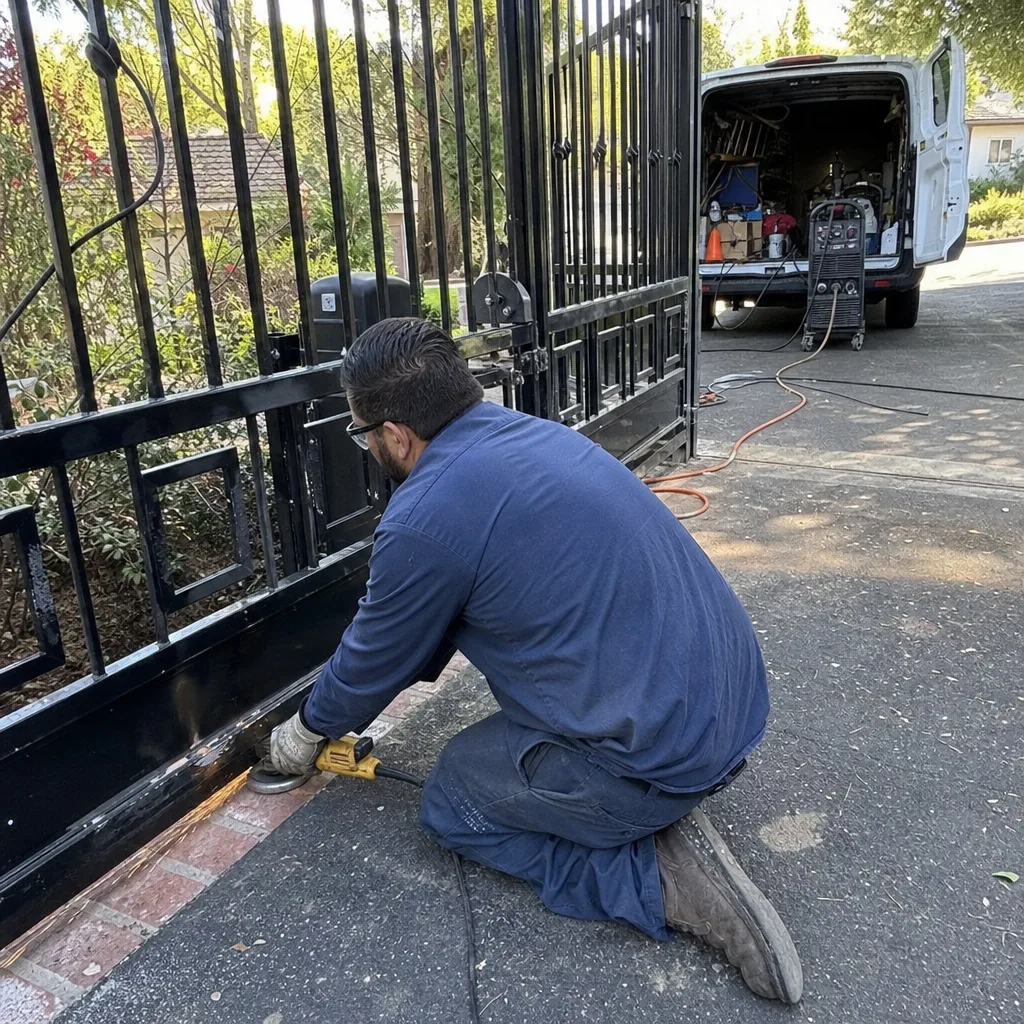
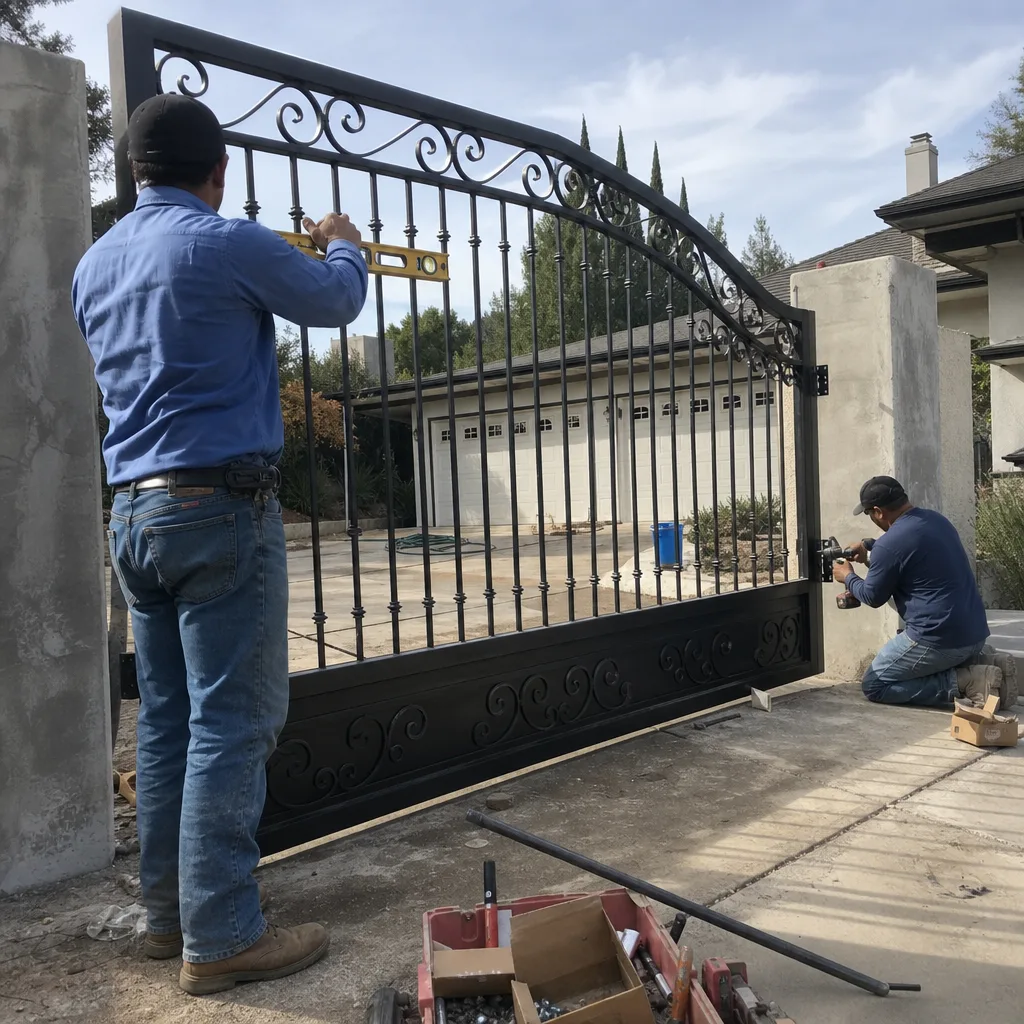
A structural hinge repair involves grinding out the old weld, re-welding with the gate properly supported, and often reinforcing the hinge plate with additional gusset material. The cost runs $250 to $600 depending on the severity and accessibility. It’s not a fifteen-minute fix, and it’s not something a general handyman should attempt. A bad weld repair can fail catastrophically, and a multi-hundred-pound gate coming off its hinges is a serious safety risk. If your gate is sagging, scraping, or showing cracks at the hinge, the gate repair technicians in Agoura Hills who understand structural welding should be your first call, not the second or third.
How the Santa Monica Mountains Microclimate Affects Gate Hardware
Agoura Hills sits right where the Santa Monica Mountains meet the Conejo Valley, and that geography creates a specific set of conditions that gate hardware responds to in predictable ways. Understanding these local factors helps you anticipate problems before they strand you outside your own driveway.
First, there’s the marine layer. In the summer months, low clouds push through the canyons off the coast, especially along the Agoura Road corridor and up into Liberty Canyon. These clouds deposit fine moisture on metal surfaces every morning. If your gate operator housing has any gap in the weather seal, condensation forms inside the enclosure. If there’s a scratch or chip in the powder coat on the gate frame, that moisture finds bare metal and starts oxidizing. This is why a five-year-old gate in Agoura Hills will often show more surface corrosion than an identical gate in Westlake Village two miles north.
Second, there’s the heat. Daytime temperatures in August and September regularly exceed 100 degrees in the valley floor neighborhoods. Gate operators generate their own heat during operation, and when the ambient temperature is already high, the control board and capacitor run close to their thermal limits. Heat is a contributing factor to capacitor failure, which manifests as a gate that hums but doesn’t move. A capacitor is a $40 to $90 part, and replacing it is a straightforward repair. But if the heat caused the capacitor to fail because the operator’s cooling vents are clogged with dust, the vent cleaning is the real repair, not just the capacitor swap.
Third, there’s the dust. Agoura Hills has significant wildland interface, which means dry grasses, decomposed granite, and fine particulate dust move through the air on any windy day. This dust coats the photo-eye lenses, clogs cooling vents, fills track channels on slide gates, and works its way into the limit switch contacts. Dust is also abrasive: it accelerates wear on rollers, bearings, and the hinge cups that support the gate’s weight.
The practical takeaway is that gate maintenance in Agoura Hills is not optional same as anywhere else. A gate that would run for years without attention in a coastal climate may need photo-eye cleaning and limit switch verification every 12 to 18 months here. The homes along Kanan Road and up into the Calabasas Highlands hillsides see more wind, more dust, and more frequent temperature swings than the flatter neighborhoods near the freeway. When we schedule preventive maintenance, the frequency is individualized based on where the property sits relative to the canyons.
What a Complete Service Record Looks Like (And Why Most Companies Don’t Leave One)
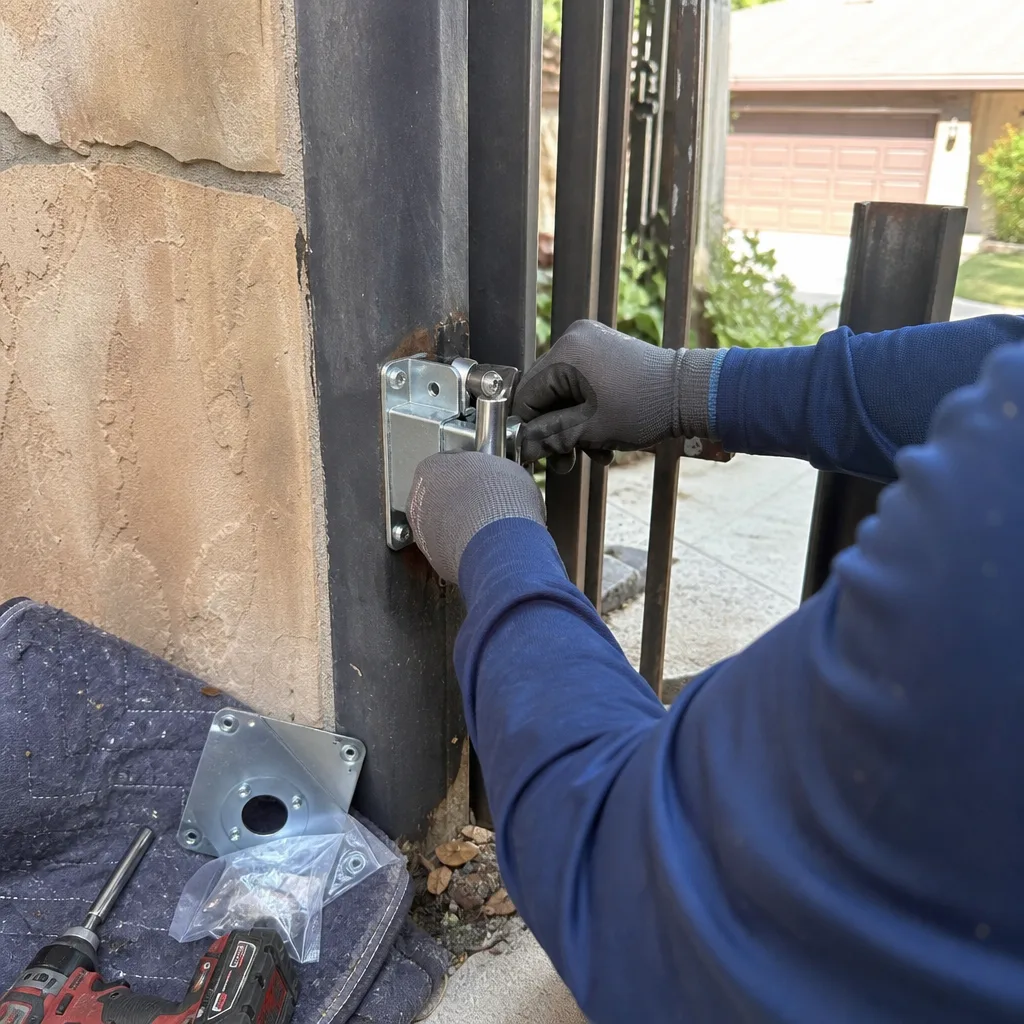
Here’s a question most homeowners never think to ask: what paperwork should I receive after a gate repair? The answer matters because the absence of documentation is the single largest hidden cost in the gate repair industry. If the next technician has to rediscover what the previous technician already knew, you pay for that rediscovery.
A complete service record includes four things.
- What was found. The technician should write down the specific readings and observations: limit switch position in degrees or marks, ground resistance in ohms, hinge wear assessment, operator cycle count if the board tracks it, photo-eye alignment status, and any visible corrosion. This is not a paragraph of vague language. It’s a data record.
- What was done. Every adjustment, every part replaced, every setting changed. If the limit switch was moved from 180 degrees to 174 degrees, that exact change gets written down. If a capacitor was replaced, the part number and the old part’s test reading get recorded.
- Photo documentation. At minimum, photos of the operator interior before and after, the final limit switch position, the ground connection, and any repaired structural components. These photos belong to you. They are evidence of the work that was performed.
- Parts used. Manufacturer, model number, and ideally the serial number of any replacement part. When a Ghost Controls control board gets replaced, the next technician should be able to look at the record and know exactly what’s in the housing without opening it.
Most companies don’t leave this record because it takes time and creates accountability. A written record means the next technician can verify the previous work. It means the customer can hold the company to the promise that was made. It means a five-minute diagnosis can’t be re-billed as a fresh mystery six months later. This is precisely why we built our entire service model around a written record. Adrian Vance started in commercial access control, where a gate failure at an industrial facility means a security breach and a documented service log is not optional, it’s a compliance requirement. That same standard applies to every residential gate we touch in Agoura Hills.
When you hire a gate repair company, ask directly: will you provide photographic evidence of the work and written documentation of every adjustment? If the answer is a vague promise, you already know something about how the next call will go. The Vance Gate Repair Agoura Hills team has been documenting every single job since 2014 because we’ve seen what happens to homeowners who never got that record from the last guy.
Operator Repair vs. Operator Replacement vs. Structural Gate Repair
One of the most expensive misunderstandings in gate repair is the conflation of three distinct categories of work. When a homeowner describes a problem, a technician hears one of these three things, and if the technician is in a hurry or working on commission, the answer always becomes replacement. Here’s how to think about each category so you can evaluate the recommendation intelligently.
Operator Repair
Operator repair means fixing a component within the automation system while leaving the operator, the gate structure, and the existing wiring in place. Common examples: replacing a bad capacitor, cleaning a corroded ground lug, recalibrating a limit switch, replacing a worn belt or chain, replacing a photo-eye, or repairing a damaged wire splice. These repairs typically cost $145 to $400 and can usually be completed in a single visit. The key question to ask any technician recommending more expensive work is: “What specifically has failed that makes repair impossible?” If the answer is vague, get a second opinion. For help deciding, see our DIY vs Professional Gate Repair: The Agoura Hills Homeowner’s Decision Guide. Speaking of which, we offer a free second opinion on any written estimate from another company. Bring the paperwork, and one of our background-checked, uniformed technicians will review it at no cost.
Operator Replacement
Operator replacement means installing a new automation unit, either because the motor or gearbox has failed beyond economical repair, or because the existing operator no longer supports the weight, duty cycle, or safety features required for the gate. Valid reasons for replacement include: a failed gearbox where the replacement part costs more than the operator, a control board that’s no longer manufactured, a motor with burned windings, or a gate that has been modified or enlarged and now exceeds the operator’s rated capacity. Operator replacement in Agoura Hills typically runs $1,200 to $3,800, including labor, depending on whether it’s a Mighty Mule unit on a residential swing gate or a heavy-duty DoorKing slide gate operator rated for ten times the duty cycle. The physical gate stays in place unless there’s a structural problem.
Structural Gate Repair
Structural gate repair addresses the gate itself rather than the machinery that moves it. This includes re-welding cracked hinges, straightening a sagging frame, replacing worn hinge bearings or pivot cups, repairing a slide gate track that’s been damaged by a vehicle, or reinforcing the gate posts. Structural work is often the underlying cause of what looks like an operator problem. A gate that’s binding on its hinges will burn out a good motor. A slide gate with a damaged track will chew through rollers. When a technician says the operator needs to be replaced, the right follow-up question is: “Is the gate structure square, level, and moving freely?” If that question wasn’t checked, the diagnosis is incomplete. If you’re considering a new gate installation in Agoura Hills rather than repairing the existing one, the decision should start with a structural assessment of the posts, hinges, and foundation, not a conversation about motor brands.
Red Flags in a Technician’s Workflow
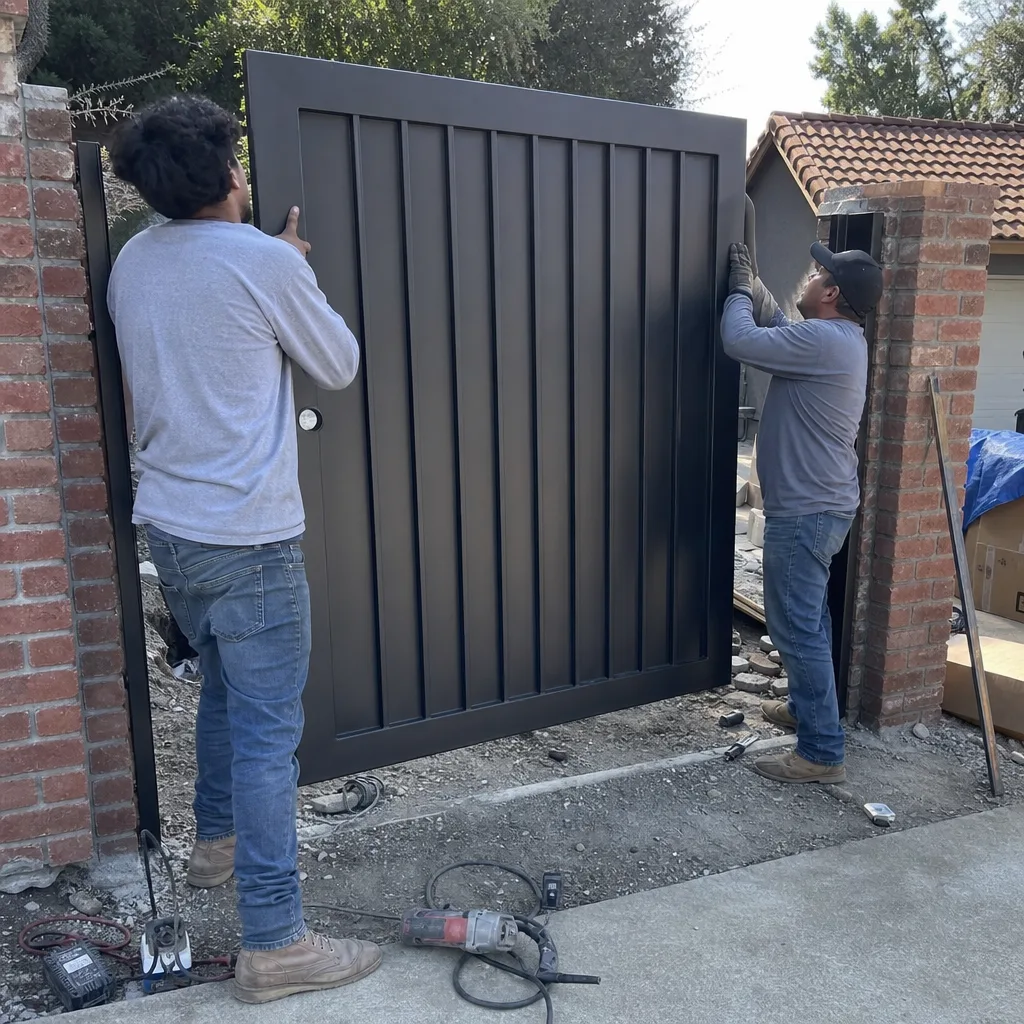
Most homeowners in Agoura Hills are not gate technicians, and that’s fine. You don’t need to understand electrical schematics to spot the behavioral patterns that predict a bad experience. Here are the workflow red flags that signal you’re about to pay twice for the same repair.
- No written price before work starts. If the technician says they’ll “run the numbers” or “figure it out as we go,” you are exposed to invoice creep. A written price before any tool is picked up is the single most important protection you have as a customer. If a company can’t produce it, find one that can.
- No diagnostic testing performed. A technician who listens to the symptom and immediately recommends an operator replacement without opening the housing to check limit switches, ground resistance, and mechanical binding is not diagnosing, they’re selling. In Agoura Hills, where limit switch drift and ground corrosion are so common, skipping the cheap checks is not a defensible workflow.
- Leaves no documentation. If the technician can’t or won’t tell you what part they replaced, what setting they changed, and what the readings were before and after, you have no way to know what was done. This isn’t about being difficult; it’s about protecting your right to understand the work performed on your property.
- Pressure to replace rather than repair. Some operators genuinely need replacement, but a technician who steers every conversation toward a new operator without quantifying the specific failure is not acting in your interest. Ask: “What specifically has failed, and what would it cost to repair that component versus replacing the whole unit?” A good technician can answer that question with numbers.
- Doesn’t check the structure for binding. A technician who replaces a gate operator without verifying that the gate swings or slides freely is ignoring the most common root cause of operator failure. If the hinge is binding or the track is damaged, the new operator will be working against the same resistance that killed the old one. Expect to replace it again.
The underlying principle is simple: evidence. A technician who operates on evidence, documents everything, and shows you the proof has no reason to hide anything. A technician who operates on assertion, keeps no record, and expects you to trust the recommendation because they’re the expert is often betting on information asymmetry. Don’t take that bet.
How Much Does Gate Repair Cost in Agoura Hills?
Pricing transparency is rare in this industry, and we think it shouldn’t be. Here are the price ranges we quote in Agoura Hills for the most common repairs, based on the work we’ve done across thousands of service visits since 2014. These are written prices, agreed before the work starts. The price you’re quoted is the price you pay, no matter how long the job takes or what surprises the technician finds inside the housing.
| Repair Type | Typical Cost Range | Time on Site |
|---|---|---|
| Limit switch recalibration or replacement | $95 - $220 | 45-90 minutes |
| Ground connection repair | $85 - $150 | 30-60 minutes |
| Capacitor replacement | $120 - $240 | 30-60 minutes |
| Photo-eye realignment or replacement | $110 - $260 | 45-90 minutes |
| Chain or belt tensioning (slide gates) | $90 - $180 | 30-60 minutes |
| Hinge weld repair (single hinge) | $250 - $600 | 2-4 hours |
| Track repair or roller replacement (slide gates) | $180 - $450 | 1-3 hours |
| Operator replacement (standard residential) | $1,200 - $3,800 | Half-full day |
| Structural gate repair (major re-weld or realignment) | $400 - $1,200 | Half-full day |
These ranges reflect the mainstream brands we service most often in Agoura Hills, including Ghost Controls, DoorKing, Elite, and Mighty Mule. Higher-capacity operators, custom gate geometries, and properties with difficult access will push toward the upper end or beyond. The point is not that every job fits neatly in a box, but that you should be able to see the box before the work starts. Any company that can’t show you a written price range for the repair you need has a reason to keep it hidden.
One more thing worth saying directly: the price you’re quoted is the price you pay. No invoice bigger than the quote. No change orders without your explicit approval in writing. This shouldn’t be a differentiator, but in our experience in Agoura Hills, it is.
Common Mistakes to Avoid
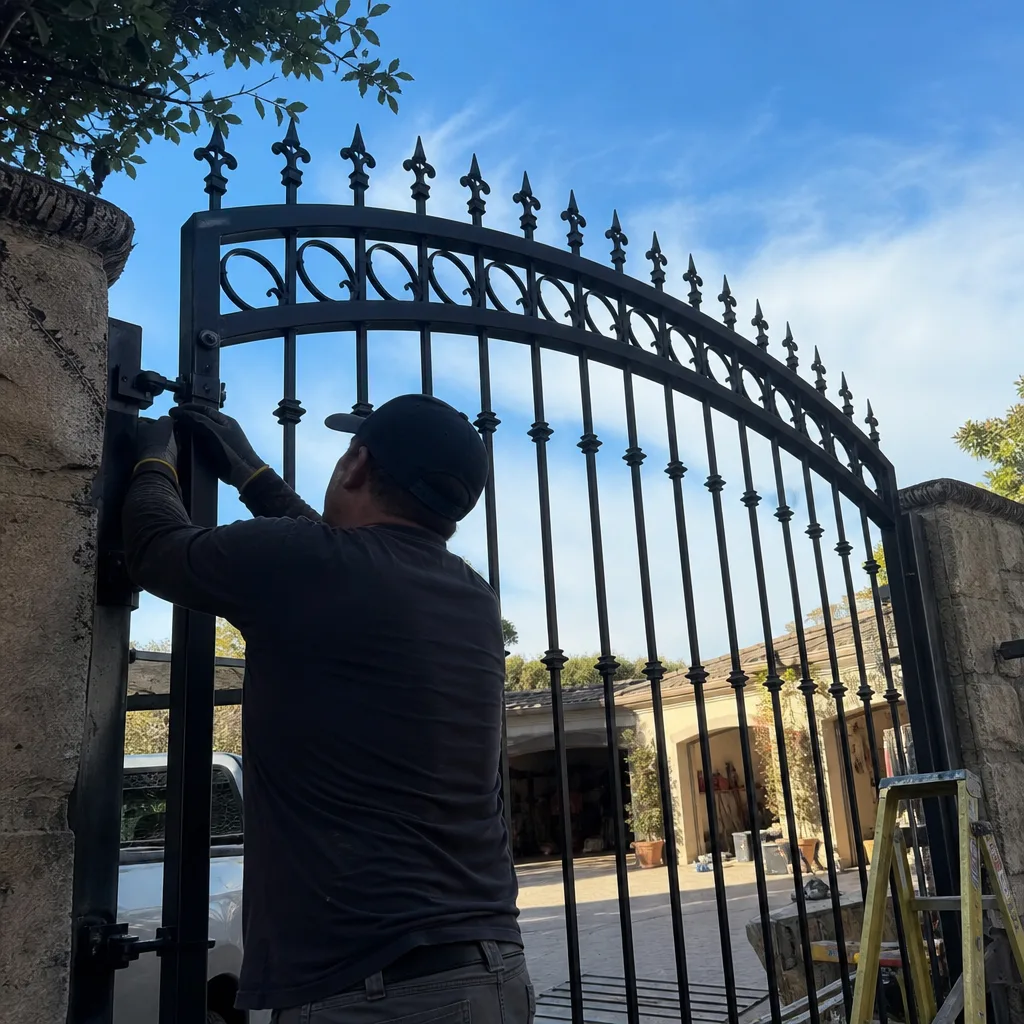
- Paying for the same diagnosis twice. If you hired a technician and received no written record of what was found, the next technician starts from zero. Always ask for documentation and keep it. A complete service record turns a re-diagnosis into a five-minute verification.
- Replacing the operator when a limit switch is the problem. In our experience across Agoura Hills, a significant percentage of operator replacement recommendations are actually limit switch or ground failures. The operator motor works fine. Always ask what specifically failed and why repair isn’t viable.
- Ignoring a sagging gate until the motor burns out. A gate that scrapes or binds is telling you something. Wait long enough and the motor will overheat, the safety circuit will trip repeatedly, and you’ll be paying for a structural repair and an operator repair on the same job.
- Hiring a general handyman for structural welding. Gate welds carry hundreds of pounds of dynamic load. A poor weld on a hinge can fail without warning and send a gate off its pivots. This is skilled work that requires a qualified welder, not a generalist.
- Choosing a technician based on price alone. The cheapest quote often means the diagnostic work is being skipped or the documentation step is being dropped. You save $50 on the service call and spend $400 rediscovering the problem in six months.
- Skipping preventive maintenance because the gate still opens. In the heat and dust of Agoura Hills, waiting for a failure is the expensive strategy. Photo-eye cleaning, limit switch verification, and ground testing every 12 to 18 months cost a fraction of the emergency repair.
- Not asking for the price in writing before work begins. If the price is verbal, the invoice is negotiable in the wrong direction. A written price protects both parties and ensures there are no surprises when the work is done. It’s the only way we’ve ever operated.
When to Call a Professional
Some gate problems can wait, and some can’t. If your gate is suddenly stopping mid-travel, reversing unexpectedly, or failing to respond to the remote or keypad, that’s an urgent issue. A gate that’s moving unpredictably is a safety hazard, especially if you have children, pets, or elderly family members using the driveway. If your gate is sagging visibly or the hinges are making grinding noises, call before the structural damage compounds. And if your gate operator is humming but the gate isn’t moving, that’s typically a capacitor or a mechanical bind, either of which gets worse with further attempts to operate the gate.
We recommend calling a professional any time you’re unsure what’s failing, because the wrong guess often makes the real problem more expensive to fix later. For more guides & resources, explore our blog. Vance Gate Repair Agoura Hills offers free estimates in Agoura Hills, and every visit includes a written price before work starts and a documented photo record before we leave. Call (424) 388-2906 and a live person will answer, day or night.
Frequently Asked Questions
Most gate repairs in Agoura Hills cost between $145 and $400, with the most common repairs being limit switch recalibration, ground connection repair, capacitor replacement, and photo-eye realignment. Full operator replacement runs $1,200 to $3,800 depending on brand and capacity, and structural repairs like hinge re-welding run $250 to $600 per hinge. Every job we quote includes a written price agreed before the work starts, so the price you’re quoted is the price you pay. Call (424) 388-2906 for a free estimate on your specific gate.
For most common repairs, yes. Limit switch adjustments, ground repairs, capacitor replacements, and photo-eye realignments are typically completed in a single visit, usually within one to two hours on site. If your gate is stuck open or closed and creating a security issue, call (424) 388-2906 and a live person will answer and schedule the soonest available dispatch. We don’t promise a specific arrival time until we understand the problem, but emergency access failures are prioritized.
We service the major brands found on residential gates in Agoura Hills, including Ghost Controls, DoorKing, Elite, and Mighty Mule, along with several other common automation systems. We don’t push replacement toward a preferred brand; we repair whatever motor is already on your property when repair is the right call. If the operator has genuinely failed beyond economical repair, we’ll show you the evidence and discuss replacement options from the same brand or a comparable alternative.
At minimum, you should receive a written description of what was found, what was adjusted or replaced, and before-and-after photographs of any components that were serviced. We leave this documentation on every single visit, including part numbers for installed components and specific readings like limit switch positions and ground resistance measurements. This record means the next technician can verify the previous work instead of re-diagnosing it from scratch, which saves you money on every future service call.
The combination of heat, marine layer moisture, and dust in Agoura Hills accelerates corrosion at ground connections, drift in limit switches, and fatigue at hinge weld points. Gates near the canyons see more moisture and wider temperature swings than those in flatter neighborhoods, which compounds the stress on both electrical and structural components. Preventive maintenance every 12 to 18 months mitigates most of these failures and costs significantly less than an emergency repair.
The decision comes down to three questions: Is the structure square, level, and moving freely? Is the operator or its components repairable at a reasonable cost relative to replacement? And is the existing operator rated for the gate’s weight and duty cycle? A competent technician will answer all three with evidence before recommending replacement. We offer a free second opinion on any written estimate from another company, so you can get an independent assessment before committing to a major expense.
The Bottom Line
Most gate failures in Agoura Hills are not motor failures. They’re limit switches that drifted, ground connections that corroded, and hinge welds that fatigued in the heat. The homeowner who understands this can direct a technician to check these systems first, avoid a premature operator replacement, and hold every technician to a standard of documentation that prevents paying twice for the same diagnosis. When the technician leaves, the only way to know what was actually done is to see a written record of it. If you’re dealing with a gate problem in Agoura Hills, get the price in writing before the work starts and demand the photo record after. That’s how the job should go, every single time.
Written by Adrian Vance, Owner at Vance Gate Repair Agoura Hills, serving Agoura Hills since 2014.